Choosing the right scanner can make checkout faster, reduce misreads, and simplify inventory work across your store. The best handheld barcode scanners for retail should fit your POS setup, scan reliably, and hold up to daily use.
In this roundup, we focused on practical options for counter service, stockroom tasks, and mobile scanning so you can match the scanner to your workflow, not the other way around.
Best 10 Handheld Barcode Scanners for Retail Picks for 2026
NETUM Bluetooth Barcode Scanner

- Bluetooth, 2.4G wireless, and wired modes
- Reads 1D barcodes from paper or screens
- Stores up to 100,000 scans offline
Best For: Retail teams needing flexible device compatibility and offline capture
Inateck BCST-70 Bluetooth Barcode Scanner

- Fast setup with broad device compatibility
- 115+ ft range and 180-day standby
- TPU case with 6 ft drop resistance
Best For: Retail stores wanting a durable scanner with long standby life
NetumScan USB 1D Barcode Scanner

- USB plug-and-play wired connection
- Scans 1D barcodes from paper and screens
- Built to handle repeated 2 m drops
Best For: Retail counters and inventory stations that want simple wired scanning
Eyoyo EYH2 Handheld USB Wired 2D 1D Barcode Scanner

- USB plug-and-play connection
- Reads 1D, 2D, and screen codes
- Durable body with drop resistance
Best For: Retail counters that need a simple wired scanner
Tera D5100 2D Wireless Barcode Scanner

- 2.4G wireless plus USB wired mode
- 2200mAh battery with level indicator
- IP54 protection and anti-shock cover
Best For: Retail and warehouse users who want wireless flexibility
NetumScan Handheld USB 1D Barcode Scanner with Stand
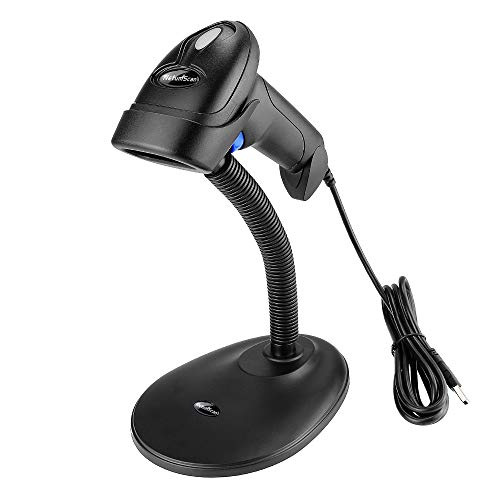
- Reads 1D codes from paper and screens
- Handles smudged or reflective labels
- USB plug-and-play with included stand
Best For: Stores that mainly scan 1D barcodes at POS
USB Barcode Scanner with Stand
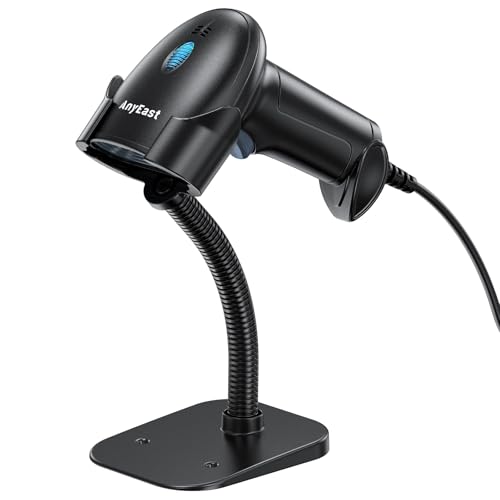
- Plug-and-play USB connection with no driver setup
- Adjustable stand for hands-free auto-sensing scans
- Reads 1D and 2D codes on labels, paper, and screens
Best For: Retail counters and inventory stations needing hands-free use
Tera Wireless Scanner with Screen

- Color screen and keypad for on-device settings
- Bluetooth, 2.4G wireless, and USB wired support
- Reads 1D/2D codes including PDF417 and Data Matrix
Best For: Users who want settings visibility and broad code support
Versatile Wireless Pick – NETUM Bluetooth Barcode Scanner
If you want handheld barcode scanners for retail that can move between checkout counters, mobile devices, and backup offline use, this NETUM model covers a lot of ground. It supports Bluetooth, 2.4G wireless, and wired connections, reads 1D barcodes from paper or screens, and includes storage mode for scanning when you’re out of range.
Best For: Retail teams that need a flexible scanner for mixed devices and occasional offline scanning.
Pros:
- Works with Windows, Mac, Android, iOS, Linux, and multiple Bluetooth modes
- CCD sensor reads 1D and stacked barcodes, including codes on screens and through shrink wrap
- Storage mode can hold up to 100,000 barcodes when disconnected
- 2600mAh battery is rated for long use between charges
Cons:
- Setup requires scanning the correct setting barcodes from the manual
- Not compatible with some POS systems, including square POS, Divalto, DoorDash, and Lightspeed POS
Overall, this is a practical all-rounder if your retail workflow needs broad compatibility and multiple connection options. The mix of screen scanning, offline storage, and long battery life makes it especially useful for busy environments.
Long-Range Workhorse – Inateck BCST-70 Bluetooth Barcode Scanner
Among handheld barcode scanners for retail, this Inateck model stands out for easy setup and strong everyday reliability. It connects in seconds, supports common desktop and mobile platforms, and is built for fast 1D scanning with a long wireless range and extended standby time.
Best For: Retail stores that want a durable Bluetooth scanner with long standby life and simple deployment.
Pros:
- Connects quickly and works with POS, iOS, Android, Windows, Mac OS, Linux, and Raspberry Pi
- Reads blurry or broken 1D barcodes under strong or dim light
- 180-day standby time and more than 115 ft connection distance
- TPU protective case and 6 ft drop resistance for tougher work environments
Cons:
- Designed for 1D barcodes rather than 2D scanning
- Feature set is practical rather than advanced, so it may not suit specialty workflows
If your retail floor needs a dependable scanner that can take a beating and stay ready, this is a strong candidate. It focuses on the basics that matter most: quick setup, sturdy construction, and steady scan performance.
Wired Retail Essential – NetumScan USB 1D Barcode Scanner
If you need handheld barcode scanners for retail with simple plug-and-play operation, this wired NetumScan model keeps things straightforward. It connects by USB, scans 1D codes from paper or screens, and is aimed at common retail tasks like inventory tracking, file management, and POS use.
Best For: Retail counters and back-of-house stations that want a no-fuss wired scanner.
Pros:
- USB plug-and-play design with no wireless pairing needed
- CCD sensor reads 1D barcodes from paper and screen, including smudged or reflective codes
- Supports trigger, auto-induction, and continuous scanning modes
- Ergonomic ABS body is rated for repeated 2 m drops
Cons:
- Wired-only setup limits mobility at the counter or in the aisle
- 1D decoding only, so it is not intended for 2D barcode workflows
This is a sensible pick when you want dependable scanning without worrying about batteries or wireless setup. Its strengths are durability, broad 1D support, and the simplicity of a direct USB connection.
Hands-Free Checkout Pick – Symcode Bluetooth Wireless Barcode Scanner
For retail teams comparing handheld barcode scanners for retail with hands-free flexibility, this Symcode model brings a useful auto-sensing stand plus multiple connection options. It can switch between manual and automatic scanning, store codes offline, and handle both 1D and 2D barcodes on labels, paper, and screens.
Best For: Busy checkout lanes and mixed scanning tasks that benefit from hands-free mode.
Pros:
- Included stand enables automatic hands-free scanning when the scanner is placed on it
- Supports Bluetooth, 2.4G wireless, and USB wired connections
- Stores over 50,000 barcodes offline for later upload
- Reads 1D and 2D codes, including damaged or poorly printed labels
Cons:
- More complex than a basic wired scanner if you only need simple point-and-scan use
- Wireless and hands-free features may be more than some small retail setups need
This model is a strong fit if speed matters at the counter and you want the option to scan hands-free without changing devices. Its multi-connection support and offline storage make it adaptable for both checkout and broader retail workflows.
Wired Counter Scanner – Eyoyo EYH2 Handheld USB Wired 2D 1D Barcode Scanner
If you want handheld barcode scanners for retail that stay simple and dependable, the Eyoyo EYH2 is built around wired plug-and-play use. It reads common 1D and 2D codes, supports screen scanning for mobile coupons and loyalty cards, and connects by USB without driver installation.
Best For: Countertop retail, convenience stores, and POS stations that want a straightforward wired scanner for everyday checkout and basic inventory tasks.
Pros:
- USB plug-and-play setup with no driver or software installation
- Reads a wide range of 1D and 2D barcodes, including QR, DataMatrix, and PDF417
- Supports scanning from smartphone screens for mobile payments and digital coupons
- Durable ABS body is rated to withstand drops from about 5 ft / 1.5 m
Cons:
- Wired design limits movement at the register
- Notes mention some small, blurry, or dense 2D codes may not scan well
- Not compatible with Square POS or Square register systems
Overall, this is a practical retail barcode scanner if you want a low-maintenance USB model for standard checkout workflows. It leans more toward reliability and broad code support than premium wireless convenience.
Wireless Flex Scanner – Tera D5100 2D Wireless Barcode Scanner
For handheld barcode scanners for retail where mobility matters, the Tera D5100 stands out with both 2.4G wireless and USB wired modes. It supports 1D, 2D, and QR codes, includes a battery level indicator, and uses a 2200mAh battery designed for longer continuous use.
Best For: Retail teams, warehouse counters, and checkout setups that want a cordless scanner with battery visibility and backup wired connection.
Pros:
- 2.4G wireless and USB wired connectivity for flexible use
- 2200mAh battery with a visible battery level indicator
- Supports a broad set of 1D, 2D, QR, and digital barcodes
- IP54 protection and anti-shock silicone cover add everyday durability
Cons:
- Wireless setup adds a dongle and battery management to track
- Not compatible with Square systems
- Bulkier than a basic wired scanner due to the protective housing
This model makes sense if your retail workflow benefits from moving away from the counter without giving up a wired fallback. The battery indicator is especially useful for busy shifts where uptime matters.
1D POS Workhorse – NetumScan Handheld USB 1D Barcode Scanner with Stand
If you only need handheld barcode scanners for retail that focus on 1D checkout work, the NetumScan USB CCD model is a strong basic option. It is designed for paper and screen scanning, handles smudged or reflective barcodes, and connects through simple USB plug-and-play use.
Best For: Retail, supermarket, and inventory environments that mainly scan 1D barcodes at the point of sale.
Pros:
- Advanced CCD sensor reads 1D codes from paper and screens
- Can handle damaged, fuzzy, smudged, or reflective barcodes
- USB plug-and-play setup works with common operating systems
- Includes a stand for hands-free POS or sensing use
Cons:
- 1D-only scanner, so it is not suited for QR or other 2D codes
- Wired USB connection limits range and mobility
- Listing warns that the merchant name shown may be a faker, so buyers should be cautious
As a straightforward retail barcode reader, this NetumScan model is best for shops that mainly process UPC and other 1D labels. Its durability and paper/screen reading help it cover everyday register work without unnecessary extras.
Best with Extra Features – Bluetooth 1D/2D Barcode Scanner
If you need handheld barcode scanners for retail that can move between counters, shelves, and mobile devices, this 3-in-1 model is built for flexibility. It supports Bluetooth, 2.4G wireless, and USB wired use, and its 1D/2D decoding covers common retail labels as well as QR and Data Matrix codes.
Best For: Retail teams that want one scanner for checkout, floor work, and mobile device compatibility.
Pros:
- Works in Bluetooth, 2.4G wireless, or USB wired mode.
- Reads a wide range of 1D and 2D codes, including QR, DataMatrix, and PDF417.
- Supports Windows, Mac OS, Linux, Android, iPhone, iPad, laptops, POS systems, and tablets.
- Includes a 2600mAh battery for long scanning sessions and offline storage mode for saved scans.
Cons:
- Not compatible with Square.
- Wireless features and offline storage add setup complexity compared with a basic USB scanner.
This is a strong choice if you want a scanner that can adapt to different retail workflows without being tied to one connection type. The tradeoff is that buyers who only need simple wired checkout scanning may not use its extra modes.
Hands-Free Counter Choice – USB Barcode Scanner with Stand
For handheld barcode scanners for retail that can also sit at a counter, this USB model with an adjustable stand is practical and easy to deploy. It is plug-and-play over USB, supports hands-free auto-sensing scanning, and reads both 1D and 2D codes on labels, paper, and screens.
Best For: Retail counters, inventory areas, and shared workstations that benefit from hands-free scanning.
Pros:
- Plug-and-play USB setup with no driver installation required.
- Adjustable stand enables hands-free auto-sensing scanning.
- Advanced CMOS sensor reads most 1D and 2D barcodes on labels, paper, and screens.
- Offers trigger, auto-sensing, and continuous scanning modes plus customizable barcode settings.
Cons:
- USB wired design limits mobility compared with wireless scanners.
- Not compatible with Square system.
This scanner makes sense when you want a simple retail tool that can switch between handheld use and fixed-position scanning. Its biggest advantage is convenience at a workstation, while the corded design keeps it best suited to stationary tasks.
Feature-Rich Retail Pick – Tera Wireless Scanner with Screen
If you want handheld barcode scanners for retail with more on-device control, this Tera model adds a color screen and setting keypad on top of wireless convenience. It supports Bluetooth, 2.4G wireless, and USB wired connections, and it is designed to read ordinary and high-density codes, including difficult PDF417 labels.
Best For: Retail, warehouse, and mobile users who want a scanner with on-device settings and broad code support.
Pros:
- Color screen and keypad let you adjust language, volume, connections, and view stored totals.
- Three connection options: Bluetooth, 2.4G wireless, and USB wired.
- Reads 1D and 2D codes, including PDF417, Data Matrix, QR, and Aztec.
- Includes a charging cradle and 2500mAh battery for all-day use.
Cons:
- Feature set may be more than needed for simple checkout-only tasks.
- Wireless setup and screen menus may take longer than a basic wired scanner.
This model stands out if you value visibility into scanner settings and stored counts right on the device. It looks especially well suited to teams that need a flexible scanner for retail, tablets, phones, and general inventory work.
How We Picked the Best Handheld Barcode Scanners for Retail
We prioritized Handheld Barcode Scanners for Retail that balance speed, scan accuracy, and compatibility with common POS systems. We also looked for useful features like wired, Bluetooth, and 2.4G wireless options, support for 1D and 2D codes, screen scanning, and stand-based hands-free operation.
Durability, battery life, and ease of setup mattered as well, since retail teams need gear that works reliably during peak hours with minimal training.
Quick Comparison
If you want the simplest setup, wired USB scanners are usually the easiest choice for fixed checkout lanes. If you need to move around the sales floor or stockroom, Bluetooth or 2.4G wireless models offer more freedom. For retailers scanning QR codes, mobile coupons, or digital tickets, a 2D scanner is the safer long-term pick.
Key Buying Factors for Handheld Barcode Scanners for Retail
1. Code Support
Make sure the scanner reads the symbologies you use every day. Many retail environments still rely on 1D UPC/EAN barcodes, but 2D support is increasingly important for QR codes, loyalty apps, returns, and mobile payments.
2. Connection Type
USB wired models are dependable and usually plug-and-play. Bluetooth and 2.4G wireless scanners are better when staff need mobility or when the counter is crowded. Check the claimed range and whether a cradle or dongle is included.
3. Scanning Performance
Look for fast first-time reads, support for screen scanning, and the ability to handle slightly damaged or low-contrast labels. In retail, a scanner that reads quickly and consistently is more valuable than one with extra features you may never use.
4. Ergonomics and Workflow
Comfort matters if employees scan all day. A lightweight body, responsive trigger, and a stable stand can reduce fatigue and improve throughput at the register or in inventory counts.
5. Battery and Durability
For wireless models, battery life and charging method are key. If the scanner will be used in stockrooms or active sales areas, durability features like drop resistance or an IP rating can add peace of mind.
Who Should Buy Which Handheld Barcode Scanners for Retail?
Small retailers with a single register often do best with a basic USB wired scanner. Shops that need flexible checkout lanes or mobile price checks should lean toward Bluetooth or 2.4G wireless options. If you sell from phones, tablets, or process QR-based workflows, choose a 2D model. For retail teams managing both checkout and backroom inventory, a versatile scanner with stand support and multiple connection modes is usually the smartest all-around choice.