The best voice recorders for interviews make it easier to capture clear answers, revisit important details, and produce accurate notes without relying entirely on memory.
This roundup compares 10 options across recording quality, storage, transcription tools, portability, privacy, and ease of use so you can choose the right recorder for your workflow.
Best 10 Voice Recorders for Interviews Picks for 2026
Best Compact Traditional Recorder

- Stereo microphone with three recording modes
- Voice-activated recording and slim design
- USB connectivity with 4GB storage
Best For: Lightweight, standalone interview recording
Best AI Interview Workflow
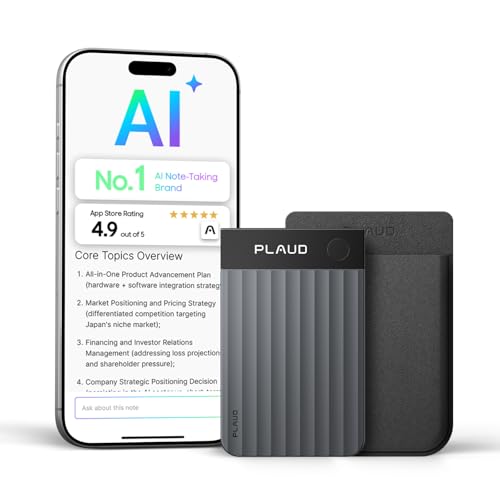
- AI transcription in 112 languages with speaker labels
- Beamforming microphones and automatic recording modes
- 64GB storage with 30-hour battery life
Best For: Professionals who need transcripts and structured interview notes
Best High-Capacity Value Recorder

- 64GB storage for extended recording sessions
- Seven-level gain adjustment and noise reduction
- WAV/MP3 recording with Type-C computer transfer
Best For: Long interviews and local audio file management
Best Privacy-Focused AI Recorder
Comulytic Note Pro AI Recorder

- Triple-mic capture with adaptive recording and noise reduction
- 113-language transcription with summaries and action items
- 64GB storage, 45-hour battery, and AES encryption
Best For: Portable, multilingual interview capture with AI notes
Best Offline AI Recorder

- Offline transcription in five languages
- Interview mode with six-mic noise reduction
- Up to 190 hours of stated recording time
Best For: Interviewers needing offline transcription and extended battery life
Best AI Interview Note Taker

- Transcription in 113 languages with summaries
- 3072Kbps recording and noise reduction
- 128GB storage with wired OTG transfer
Best For: Users who want recordings converted into organized AI notes
Best for Playback Control

- Dual-mic PCM recording up to 1536Kbps
- 16 playback speeds with A-B repeat
- Password protection and large stated storage
Best For: Users who manually review interviews and need flexible playback
Best Overall Value

- Stereo recording with noise reduction
- Up to 20 hours of continuous recording
- Voice activation and A-B repeat
Best For: Simple, portable interview recording with flexible playback
Best for Maximum Storage

- Stores up to 9,296 hours
- Up to 54 hours of battery life
- Folder organization and voice activation
Best For: High-volume interview recording and long-term file storage
Best for Simple Operation

- Three-click controls for easy use
- 64GB storage with 30-hour battery life
- USB transfer and A-B repeat
Best For: Beginners who want a compact, uncomplicated recorder
Best Compact Traditional Recorder – Sony ICD-UX570
The Sony ICD-UX570 is a practical choice among voice recorders for interviews when you want a compact, familiar recorder rather than app-based transcription. Its built-in stereo microphone, voice-activated recording, and three recording modes provide useful flexibility for different interview settings.
Best For: Interviewers who want a lightweight standalone recorder with stereo capture and simple USB connectivity.
Pros:
- Built-in stereo microphone with wide, narrow/focus, and normal recording options
- Voice-operated recording can help reduce unnecessary silent sections
- Slim, lightweight design with USB hardware connectivity
- Quick-charge feature can provide up to one hour of recording after a three-minute charge
Cons:
- Only 4GB of built-in storage
- Supplied notes list a short digital recording-time figure, so verify battery and recording specifications before purchase
- No built-in transcription or AI summarization features
The ICD-UX570 suits buyers who prioritize straightforward recording and portability. Choose it over newer AI-focused devices if you prefer to manage and review audio files yourself.
Best AI Interview Workflow – Plaud Note Pro
The Plaud Note Pro is designed for buyers who want voice recorders for interviews that can also turn conversations into organized notes. Its multi-microphone system, automatic recording modes, and AI transcription with speaker labels make it especially suited to interview workflows that continue beyond capturing audio.
Best For: Professionals who want interview recordings automatically transcribed, summarized, and converted into action items.
Pros:
- Four MEMS microphones and a VPU with AI beamforming for room-wide voice capture
- Transcription in 112 languages with speaker labels
- AI summaries can identify action items, decisions, and follow-ups
- 64GB storage, 30-hour battery life, and automatic transfer to the Plaud app
Cons:
- Key transcription and summarization features depend on the Plaud app and plan limits
- No headphones jack
- Privacy and consent still need to be handled before recording conversations
This is a strong fit when the value of an interview recorder includes reducing post-interview note-taking. The free Starter Plan includes 300 minutes per month of AI transcription, while higher usage may require an upgrade.
Best High-Capacity Value Recorder – EVISTR L357 64GB Recorder
The EVISTR L357 is a conventional digital option among voice recorders for interviews, with substantial local storage and controls aimed at quick recording. Its adjustable gain, voice activation, and WAV or MP3 support make it useful when you want flexible audio capture without relying on cloud services for the basic recording.
Best For: Students, journalists, and interviewers who need long recording capacity, physical controls, and easy computer file transfer.
Pros:
- 64GB capacity can store up to 4,660 hours at the stated 32Kbps setting
- Adjustable seven-level recording gain and PCM noise reduction
- Voice activation can reduce silent sections and conserve storage
- Supports WAV and MP3, playback controls, and Type-C transfer to Windows or Mac
Cons:
- AI transcription and automatic summaries are not included
- Voice activation may omit quiet passages if sensitivity is set too low
- Its many settings may require more setup than a simple one-button recorder
The L357 is appealing for long interviews and frequent file archiving because it combines high capacity with local playback and transfer. It is a better match for hands-on audio management than for buyers seeking an automated note-taking system.
Best Privacy-Focused AI Recorder – Comulytic Note Pro AI Recorder
The Comulytic Note Pro combines a pocket-sized recorder with AI transcription and note assistance, making it a modern option among voice recorders for interviews. Its triple-mic array, adaptive recording, local storage, and encrypted data handling target professionals who want both convenient capture and organized follow-up.
Best For: Professionals, journalists, and multilingual users who want portable AI transcription with a privacy-focused workflow.
Pros:
- Triple-mic array with AI noise reduction and stated range of up to 5 meters
- 64GB local storage, 45-hour continuous recording, and 107-day standby
- Transcription in 113 languages with summaries, action items, and to-do lists
- AES encryption and CCPA-compliant privacy claims, plus three magnetic accessories
Cons:
- Cloud sync and app storage depend on the selected plan
- Advanced features such as deeper analysis and the assistant require the optional Premium Plan
- AI workflows require use of the Comulytic app
The Note Pro stands out for combining long battery life, fast Wi-Fi syncing, and AI-generated interview notes. Its plan structure is worth reviewing if you need advanced analysis rather than only the stated free transcription and basic summaries.
Best Offline AI Recorder – iFLYTEK 302Pro
For shoppers comparing voice recorders for interviews, the iFLYTEK 302Pro stands out for offline transcription, configurable recording modes, and long battery life. Its interview mode, six-microphone noise reduction, playback timeline, and smart bookmarks are useful when you need to capture and review conversations efficiently.
Best For: Interviewers, journalists, and professionals who want offline five-language transcription and extended recording time.
Pros:
- Transcribes speech offline in English, Chinese, Japanese, Korean, and Russian.
- Offers interview, conference, speech, and intelligent recording modes.
- Includes AI noise reduction, smart bookmarks, and timeline playback.
- Provides up to 190 hours of stated recording time and supports multiple audio formats.
Cons:
- Recognition may be affected by background noise or accents.
- The device has no headphone jack.
- The microphone should not be covered during recording.
The 302Pro is a strong fit when offline processing and long runtime matter more than compact simplicity. Its transcription and export tools can reduce follow-up work, though results should still be checked for accuracy.
Best AI Interview Note Taker – EVISTR L359 AI Recorder
The EVISTR L359 is one of the more feature-rich voice recorders for interviews, combining high-bitrate audio capture with app-based transcription, summaries, speaker identification, and AI insights. Its one-touch controls, privacy lock, and wired phone connection support a straightforward recording-to-notes workflow.
Best For: Professionals and students who want AI-assisted transcription and summaries after recording interviews, meetings, or lectures.
Pros:
- Supports transcription in 113 languages and generates smart summaries and mind maps through the AI DVR Link app.
- Records up to 3072Kbps with intelligent noise reduction and voice-activated recording.
- Offers 128GB of storage and a lightweight 65g design.
- Includes password encryption, a HOLD switch, and wired OTG transfers without Bluetooth.
Cons:
- Continuous recording is stated at up to 33 hours per charge.
- AI transcription and summaries require processing through the AI DVR Link app.
- Its microphone operation is listed as mono/speech recognition rather than stereo.
The L359 is a practical choice if your priority is turning interview audio into organized notes. It offers an unusually broad AI feature set, but buyers should plan to use the companion app for the transcription workflow.
Best for Playback Control – Aiworth E36 Voice Recorder
For buyers seeking straightforward voice recorders for interviews, the Aiworth E36 emphasizes clear dual-microphone recording, extensive storage, and detailed playback controls. Variable speed, A-B repeat, voice activation, and password protection make it useful for reviewing interviews carefully and managing private recordings.
Best For: Interviewers, students, journalists, and note-takers who prioritize playback flexibility, storage, and file privacy.
Pros:
- Uses dual microphones and supports up to 1536Kbps PCM recording.
- Includes 136GB of stated combined memory and voice-activated recording.
- Offers 16 playback-speed levels plus A-B repeat for reviewing specific passages.
- Provides three-digit password protection and a 3.5mm headphone jack.
Cons:
- Continuous recording is stated at up to 45 hours per charge.
- The supplied notes list MP3 as the recording format, with no AI transcription feature.
- Storage figures vary between the listed specifications and product description.
The E36 makes the most sense for users who manually review recordings and want precise control over playback. It lacks the AI transcription features of the other options, but its storage, privacy controls, and speed adjustment are useful for detailed interview editing.
Best Overall Value – HoTiyan 16GB Voice Recorder
For shoppers comparing voice recorders for interviews, the HoTiyan 16GB model offers stereo recording, voice activation, and straightforward three-button operation. Its compact design, rechargeable battery, and MP3/WAV support make it a practical option for interviews, meetings, and lectures.
Best For: Interviewers who want simple controls, stereo recording, and flexible playback features.
Pros:
- Sensitive microphone, noise reduction, and stereo recording support.
- Voice activation can reduce silent sections and conserve storage.
- Rechargeable battery supports up to 20 hours of continuous recording.
- Includes A-B repeat, variable playback speed, password protection, and file timestamps.
Cons:
- Its 16GB capacity is lower than the other options in this roundup.
- Recording capacity depends on the selected quality and format.
The HoTiyan is a well-rounded choice when ease of use and useful playback tools matter more than maximum storage. Its stereo microphone mode and compact 1.6-ounce body are especially convenient for portable interview recording.
Best for Maximum Storage – EVIDA 128GB Voice Recorder
Among voice recorders for interviews, the EVIDA 128GB model stands out for its exceptionally large storage capacity and selectable recording formats. It also provides voice activation, password protection, bookmarks, and organized folder storage for users managing many recordings.
Best For: Frequent interviewers, students, and professionals who need extensive storage and long battery life.
Pros:
- 128GB capacity is rated for up to 9,296 hours of recording.
- Supports MP3 at 128 or 192 kbps and WAV at 1536 kbps.
- Up to 54 hours of continuous recording on a full battery.
- Offers voice activation, four-folder organization, bookmarks, and password protection.
Cons:
- The microphone operation is listed as mono rather than stereo.
- The supplied details list no headphone jack.
- Its feature set may be more involved than needed for occasional users.
The EVIDA is the strongest capacity-focused option here. Its recording-format choices and file-management tools are useful for interviewers who regularly archive large volumes of audio, while the included customer support may help with setup.
Best for Simple Operation – Aomago 64GB Mini Recorder
The Aomago L169 is a compact option for shoppers seeking voice recorders for interviews with minimal setup. Its three-click controls, voice activation, 64GB storage, and included USB cable support practical recording and file transfers on the go.
Best For: Beginners and mobile users who prioritize simple controls, portability, and easy computer transfers.
Pros:
- Three-click recording, saving, and playback operation.
- Voice activation helps focus recordings on spoken words.
- 64GB storage and up to 30 hours of battery life.
- Supports MP3/WAV files, Mac compatibility, USB transfer, and A-B repeat.
Cons:
- The listed digital recording time is 16 hours.
- The supplied specifications do not state a specific noise-reduction feature.
- It uses an included AAA battery rather than a built-in rechargeable battery.
The Aomago is a sensible pick for straightforward interviews, classes, and meetings. Its small 30-gram form factor and uncomplicated controls make it approachable, though users wanting premium recording specifications may prefer a more feature-rich model.
How We Picked the Best Voice Recorders for Interviews
We focused on the features that matter during real interviews: dependable recording, clear voice pickup, simple controls, useful storage capacity, battery practicality, and easy file transfer. We also considered voice activation, playback, noise reduction, password protection, and AI transcription where available.
Because interviewers work in different environments, this list includes both traditional digital recorders and newer AI note-taking devices. A straightforward recorder may be preferable when you want direct access to audio files, while an AI model can save time by creating searchable transcripts and summaries.
Quick Comparison
| Best For | Look For |
|---|---|
| Traditional interview recording | Clear microphones, physical controls, dependable playback |
| Transcripts and summaries | AI processing, supported languages, export options |
| Long sessions | Large storage, strong battery life, voice activation |
| Private conversations | Offline processing, password protection, local file storage |
| Travel and field work | Compact design, USB transfer, durable construction |
Key Buying Factors for Voice Recorders for Interviews
Audio Quality and Microphone Performance
Choose a recorder with microphones suited to your interview setting. Built-in noise reduction can help in busy rooms, but placement still matters: keep the device near the speakers and avoid covering its microphones. For one-on-one interviews, a compact recorder is often sufficient; group interviews may benefit from stronger pickup and wider microphone coverage.
Transcription, Summaries, and Privacy
AI transcription can reduce the time spent turning recordings into notes, but check language support, accuracy, export formats, and whether processing happens online or offline. Sensitive interviews may call for a recorder with local processing, password protection, or a workflow that lets you retain the original audio without uploading it.
Storage, Battery, and File Transfer
High-capacity models are useful for frequent or extended recording, while voice activation can reduce empty sections and conserve storage. Confirm how files transfer to a computer or phone, whether the recorder uses standard audio formats, and how easily recordings can be played back without additional software.
Controls and Reliability
In an interview, a clear record button, visible status indicators, and dependable playback are more valuable than complicated features. Look for a design you can operate discreetly and verify before each session. Always test the recorder, storage, battery, and microphone placement before an important conversation.
Who Should Buy Which Voice Recorders for Interviews?
Choose a traditional digital recorder if you want simple operation, direct audio files, and fewer app or subscription requirements. Choose an AI voice recorder if transcription and summarized notes are central to your workflow. Choose an offline-focused model for confidential interviews or situations with limited connectivity. Choose a high-capacity recorder if you regularly record lectures, research sessions, or multiple interviews between file transfers. For occasional interviews, prioritize microphone clarity, portability, and easy controls over maximum storage or advanced automation.