Finding the right coaxial cable tester can turn a frustrating wiring problem into a quick, measurable diagnosis. The options in this roundup range from simple pocket continuity checkers to multifunction tools that also test Ethernet and telephone cabling.
We compared the most useful features for installers, technicians, network troubleshooters, and DIY users so you can choose a tester that matches your cable types, testing goals, and workflow.
Best 10 Coaxial Cable Testers Picks for 2026
Best Multi-Location Pick

- Maps up to four coax locations
- LEDs show pass, open, or short
- Includes four remotes and batteries
Best For: Home wiring checks and multi-room cable identification
Best Advanced Verifier

- Displays length, wiremap, and fault distance
- Supports coax, RJ11, and RJ45
- Includes wiremap adapter and case
Best For: Professional mixed-cabling troubleshooting
Best Complete Installation Kit
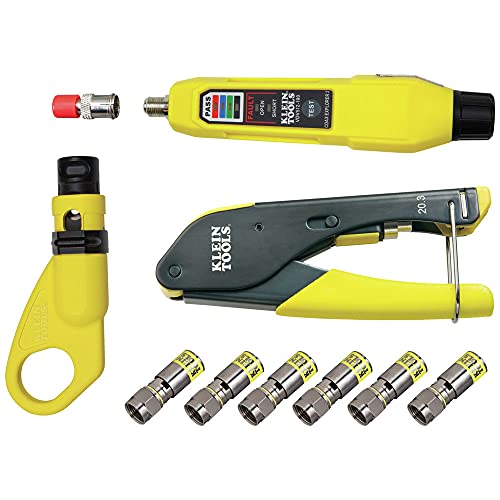
- Includes stripper, crimper, and tester
- Six F compression connectors included
- Checks good, open, or short connections
Best For: RG6/RG6-Q coax installation and repair
Best Overall Coaxial Cable Tester

- Tests and maps multiple coax types
- LEDs show pass, open, or short
- Includes red remote; expandable with extras
Best For: Straightforward home cable identification and mapping
Best Multi-Run Coaxial Cable Tester
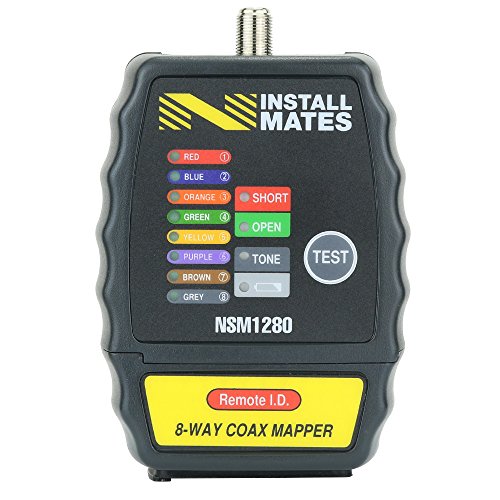
- Tests up to eight coax leads at once
- Detects open and short conditions
- Includes adapters, case, and 9V battery
Best For: Organizing and testing multiple coax runs efficiently
Best Multi-Location Pick – Klein Tools Coax Explorer 2
For homeowners and technicians comparing coaxial cable testers, the Klein Tools Coax Explorer 2 is a straightforward choice for checking continuity and mapping multiple cable runs. Its push-button operation and LED results make basic troubleshooting easy to read.
Best For: Testing and identifying up to four coaxial cable locations.
Pros:
- Maps up to four locations with color-coded push-on remotes.
- LEDs indicate pass, open, or short conditions.
- Includes batteries, F adapter, remotes, and a snap-on holder.
- Compact 4.8-ounce design with simple push-button operation.
Cons:
- Designed for coaxial cable rather than broader network-cable testing.
- Uses replaceable AAA batteries.
This is a practical coaxial cable tester for organized home wiring checks or basic service work, especially when identifying several cable destinations matters more than advanced diagnostics.
Best Advanced Verifier – Fluke Networks MicroScanner2
Among coaxial cable testers, the Fluke Networks MicroScanner2 stands out for users who need more detailed cable-verification information. It displays cable length, wiremap, cable ID, and distance to a fault on one screen, while also supporting RJ11, RJ45, and coax connections.
Best For: Professional troubleshooting across coaxial, telephone, Ethernet, and VoIP cabling.
Pros:
- Shows cable length, wiremap, cable ID, and fault distance together.
- Supports RJ11, RJ45, and coax troubleshooting.
- Tests 10/100/1000Base-T and VoIP cabling.
- Includes a wiremap adapter, batteries, and carrying case.
Cons:
- May offer more functions than needed for basic coax continuity checks.
- Battery powered and supplied with only the listed wiremap adapter.
The MicroScanner2 is the more capable option when coax testing is only part of the job. Its broader compatibility and fault-distance information make it better suited to structured-cabling troubleshooting than simple pass/fail checks.
Best Complete Installation Kit – Klein Tools Coax Install Kit
If you need coaxial cable testers plus installation tools, the Klein Tools VDV002-818 combines connection preparation, crimping, and verification in one kit. It includes a stripper, compression crimper, Coax Explorer tester, and six universal F compression connectors.
Best For: Installing, terminating, and testing RG6 or RG6-Q coaxial cable.
Pros:
- Combines a coax stripper, crimper, and tester.
- Includes six universal F compression connectors.
- Tester identifies good, open, or short connections.
- Designed for portable use by technicians and DIY users.
Cons:
- Focused on coax installation rather than general network-cable testing.
- Included connectors are specified for RG6/RG6-Q cable.
This kit makes sense when testing is only one step in the project. Instead of buying a coaxial cable tester separately from termination tools, users get a compact set for preparing, connecting, and checking compatible coax runs.
Best Budget Dual-Use Tester – Dual-Function Coax and RJ45 Tester
This dual-function model is a useful option for shoppers seeking coaxial cable testers that also handle RJ45 network cables. It checks coax F-connector and RJ45 connections, with LED results for open, short, miswire, and split-pair faults.
Best For: Basic continuity and fault checks on coaxial and Ethernet cables.
Pros:
- Tests both coaxial F-connector and RJ45 cables.
- Detects open, short, miswire, and split-pair faults.
- Detachable remote supports patch and installed-cable testing.
- Includes two BNC-male-to-F-female adapters.
Cons:
- 9V battery is required but not included.
- Provides continuity-style checking rather than the advanced measurements listed for professional verifiers.
For basic home or small-network checks, this tester offers useful format flexibility at the cost of a separately purchased battery. Its detachable remote and dual coax/RJ45 support make it more versatile than a coax-only checker.
Best Overall Coaxial Cable Tester – Klein Tools Coax Explorer 2
The Klein Tools Coax Explorer 2 is a practical choice among coaxial cable testers for checking and mapping common coax types, including RG59, RG6/6Q, RG7, and RG11. Its push-button controls and LED indicators make basic pass, open, and short checks easy to read.
Best For: Home installers and technicians who need a straightforward tester for identifying and mapping coaxial cable runs.
Pros:
- Tests and maps several common coaxial cable types.
- LED panel indicates PASS, OPEN, or SHORT conditions.
- Includes a red remote and supports additional color-coded remotes.
- Compact design includes a carrying clip and uses replaceable AAA batteries.
Cons:
- Does not work through cable splitters.
- Additional remotes and the upgrade kit are sold separately.
This tester is a strong all-around option when clear status indicators and cable mapping matter. Its main limitation is that splitter-connected runs must be tested another way.
Best Pocket Coaxial Cable Tester – Pocket Toner and Continuity Tester
This pocket toner is a compact option among coaxial cable testers for tracing and checking coaxial runs such as RG6 and RG59. Its audible beep and LED alert can help locate connected cables through ceilings, floors, and interior walls.
Best For: Users who need a portable cable tracer for rooms, attics, narrow spaces, or RV installations.
Pros:
- Uses sound and light alerts to help identify connected cables.
- Can trace cables through walls, ceilings, and under floors.
- Compact right-angle connector suits tight working areas.
- Bundle includes a tone detector and female push-on connector.
Cons:
- AAA battery is not included.
- It is designed around toner-style tracing rather than detailed cable mapping.
Choose this model when portability and cable identification are more important than a larger status display. Remember to supply one AAA battery before use.
Best Multi-Run Coaxial Cable Tester – 8-Way Coax Cable Tester
The 8-Way Coax Cable Tester is built for checking multiple labeled cable leads efficiently. Among coaxial cable testers, it stands out for including eight color-coded terminators, pass indicators, and audible alerts for open or short conditions.
Best For: Installers and homeowners who need to test up to eight coax leads at once and keep the terminators organized.
Pros:
- Tests up to eight cable leads with color-coded terminators.
- Detects, displays, and beeps for open or short conditions.
- Supports F-connectors and BNC connectors with the included adapter.
- Includes a built-in storage compartment, mesh case, and 9-volt battery.
Cons:
- Its listed dimensions make it less compact than pocket-style testers.
- Operation requires a 9-volt battery.
This is a useful choice for organized multi-cable testing, especially where several leads need to be identified in one session. The included case and terminator storage add convenience for transport and setup.
Compact Coax Tracer Kit – Coax Cable Tester with Toner
This compact coaxial cable tester is designed for quickly identifying and checking RG6, RG59, and CATV lines. Its continuity testing, audible toner, and LED indicators make it a practical choice when several coax cables run from different rooms.
Best For: Home cable identification, basic continuity checks, and tight spaces where a lightweight tester is useful.
Pros:
- Traces and identifies coaxial cables through a simple toner setup.
- Uses sound and LED indicators to signal a correctly connected cable.
- Compact 68g design with an included AAA battery for out-of-box use.
Cons:
- Designed for coaxial testing rather than broader Ethernet cable testing.
- Its basic indicator-based testing may not provide detailed fault measurements.
Choose this model if portability and straightforward coax identification matter most. The included battery and small form factor are convenient for quick household or installation tasks.
Multi-Connector Cable Checker – Portable Coax and RJ45 Tester
This portable coaxial cable tester supports both BNC and F-style coax connectors, along with RJ45 Ethernet connections. It is suited to field troubleshooting when you need one compact checker for network, audio, video, or security cabling.
Best For: Installers and technicians testing mixed coax and RJ45 cable connections on site.
Pros:
- Supports coax cables with BNC or F-style connectors.
- Also checks RJ45 Ethernet cables for broader compatibility.
- Compact, portable design intended for field installations.
Cons:
- No battery or other power source is included.
- The supplied notes do not specify audible tracing or LED features.
This is the stronger fit when connector flexibility matters more than cable tracing features. Its coax and RJ45 support can reduce the need to carry separate basic continuity testers.
Audible Coax Wire Tracer – Voltage-Protected Pocket Tester
This pocket coaxial cable tester combines continuity checking with an audible beep and LED alert. Its toner is designed to help trace cables through ceilings, walls, and under floors, while the right-angle connector suits narrow areas such as attics and RV interiors.
Best For: Tracing coaxial cables through obstacles and testing lines in confined spaces.
Pros:
- Audible signaling helps locate cables through walls, ceilings, and floors.
- Combines a beep with an LED light for connection confirmation.
- Pocket-sized design includes a right-angle connector for tight areas.
Cons:
- AAA battery is not included and must be purchased separately.
- Focused on coaxial cables rather than RJ45 or other cable types.
This model stands out for cable tracing where visual access is limited. Keep an AAA battery available, then use the tone and LED feedback to help identify and verify coax runs.
How We Picked These Coaxial Cable Testers
We focused on testers that provide practical ways to verify coaxial cable continuity, identify wiring faults, trace runs, or locate connected remote ends. We also considered connector compatibility, supported cable types, ease of reading results, portability, included accessories, and whether a tool offers useful extras such as RJ45 or RJ11 testing, tone generation, voltage protection, or multiple remotes.
The selection includes basic testers for occasional home repairs as well as more capable professional instruments. Because product configurations can vary, confirm the included remotes, connectors, batteries, and adapters before ordering.
Quick Comparison
- Best for general home troubleshooting: A straightforward coax continuity tester with clear visual or audible results.
- Best for multiple outlets: A kit with several numbered remotes, which can identify cable runs without repeated trips between rooms.
- Best for mixed cabling: A multifunction verifier that supports coax, RJ45 Ethernet, and RJ11 telephone cable.
- Best for installation work: A kit that combines testing with crimping and connector-installation tools.
- Best for portability: A pocket toner or continuity tester that fits easily in a tool pouch.
Key Buying Factors for Coaxial Cable Testers
Supported Connectors and Cable Types
Check whether the tester accepts the connectors used in your installation, such as F-style coax connectors, BNC connectors, or adapters for RG6 and similar cable. If you also work on Ethernet or telephone wiring, a multi-cable tester may reduce the number of tools you carry.
Continuity, Shorts, and Miswires
Basic models can confirm whether a circuit is continuous, while more advanced Coaxial Cable Testers may identify open circuits, shorts, reversed conductors, or other wiring faults. Match the tester’s diagnostic detail to the problems you regularly encounter.
Tracing and Tone Functions
A built-in toner helps locate an unknown cable among several runs. Audible alerts and LED indicators are useful in dim utility spaces, while a remote system can identify a cable at the far end of a wall or patch panel.
Voltage Protection and Durability
When testing installed coax, voltage protection is an important safety and equipment-preservation feature. Look for a sturdy housing, protected connectors, and controls that are easy to operate while wearing work gloves.
Who Should Buy Which Coaxial Cable Testers?
DIY homeowners should choose a simple, clearly labeled continuity tester for checking satellite, antenna, cable-TV, or modem wiring. Installers will benefit from kits with crimp tools, connectors, and multiple remotes. Network and low-voltage technicians should consider a multifunction verifier with tone generation and support for coax, RJ45, and RJ11 cables. Service professionals who troubleshoot frequently may prefer a durable advanced tester that provides more detailed fault information and faster cable identification.