A docking station with DisplayPort can turn a laptop into a more capable desktop setup, adding external monitors, wired networking, storage, and everyday peripherals through one connection.
This roundup compares 10 options across USB-C, Thunderbolt 4, DisplayLink, charging capacity, and multi-monitor support so you can choose a dock that matches your computer and workspace.
Best 10 Docking Station with Displayport Picks for 2026
Best for Managed Office Expansion
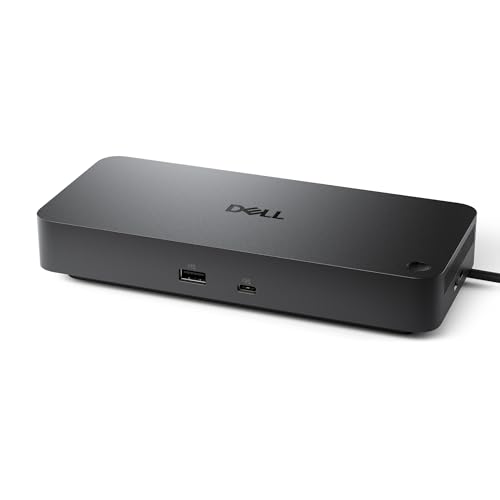
- Supports up to four high-resolution displays
- Provides up to 100W laptop power delivery
- Offers broad OS and port compatibility
Best For: Business workstations and IT-managed multi-monitor offices
Best for Triple-Monitor USB-C Desks

- Drives up to three monitors at 4K and 2K resolutions
- Includes 100W charging and a 130W adapter
- Adds six 10Gbps USB ports and Gigabit Ethernet
Best For: Multi-screen home offices and productivity workstations
Best Premium Thunderbolt 4 Dock

- Supports up to four 4K monitors
- Delivers up to 130W to Dell laptops
- Adds Thunderbolt 4, 2.5GbE, Wi-Fi management, and security
Best For: High-performance business and creative workstations
Best for Dual-Display Value

- Provides 14-in-1 connectivity for a streamlined desk
- Supports dual 2K displays at 60Hz with DP 1.4 laptops
- Offers up to 160W total output and 10Gbps data
Best For: Windows and ChromeOS dual-monitor desks
Best for Dual 4K Productivity
Plugable Dual DisplayPort & HDMI Dock

- Dual 4K output at 60Hz
- Six USB 3.0 ports plus Ethernet
- No laptop charging; office-focused
Best For: Windows, Mac, and ChromeOS productivity setups
Best for Triple-Display Workstations

- Two HDMI plus one DisplayPort 1.4
- Up to 100W laptop charging
- Triple 4K requires Windows DSC support
Best For: Windows users building a three-screen workstation
Best Compact Multi-Display Value
MOKiN Dual DisplayPort USB-C Dock

- Two DisplayPort outputs plus HDMI and VGA
- 100W PD charging support
- USB 2.0 peripheral speeds
Best For: Compatible laptops needing flexible monitor connections
Triple-Screen Workstation Pick
WAVLINK 12-in-1 DisplayPort Dock

- Dual DisplayPort plus HDMI for multi-monitor setups
- 85W charging, Ethernet, card readers, and audio
- Supports up to three 1080p displays on compatible Windows systems
Best For: Windows multi-monitor workstations needing many ports
High-Speed Dual-Monitor Pick

- 4K DisplayPort and HDMI outputs
- 10Gbps USB-C and USB-A data connectivity
- Up to 85W pass-through charging
Best For: Dual-monitor setups with fast file-transfer needs
Business Docking Station Pick

- Dual DisplayPort plus HDMI connectivity
- 180W adapter with stated 130W power delivery
- Six USB ports for office peripherals
Best For: Permanent Dell-oriented office workstations
Best for Managed Office Expansion – Dell Pro WD25
If you need a docking station with DisplayPort for a modern office setup, the Dell Pro WD25 combines broad operating-system support, up to 100W power delivery, Ethernet, HDMI, USB connectivity, and support for up to four high-resolution displays. Its ambidextrous USB-C cable and business-focused manageability also suit organized workspaces.
Best For: Office users and IT teams that need multi-display support, wired networking, and compatibility with Dell and non-Dell PCs.
Pros:
- Supports up to four high-resolution displays.
- Delivers up to 100W of power to compatible laptops.
- Works with Windows, Ubuntu, Red Hat Enterprise Linux, and ChromeOS.
- Includes Ethernet, USB-A, USB-C, HDMI, and DisplayPort connectivity.
Cons:
- Its feature set may be more than needed for a simple single-monitor setup.
- Full display and charging capabilities depend on the connected computer.
The WD25 is a practical choice when manageability, broad compatibility, and quad-display capability matter more than keeping the dock minimal. Its three-year limited hardware warranty with advanced exchange adds reassurance for business deployments.
Best for Triple-Monitor USB-C Desks – WAVLINK DisplayLink Dock
This docking station with DisplayPort is designed for users who want up to three external monitors from a single USB-C connection. The WAVLINK dock combines 4K and 2K display outputs with 100W charging, 10Gbps USB ports, and Gigabit Ethernet for home offices, study spaces, and mixed-device workstations.
Best For: Mac and Windows users building triple-screen productivity setups for coding, trading, online learning, or remote work.
Pros:
- Supports up to 4K + 2K + 2K displays at 60Hz.
- Provides 100W power delivery with a 130W power adapter included.
- All six USB ports support up to 10Gbps individually.
- Includes Gigabit Ethernet for stable wired networking.
Cons:
- MacBook M1 through M5 systems require a DisplayLink driver.
- The host USB-C connection must support video output.
- It is not recommended for gaming or HDCP-protected 4K streaming.
The WAVLINK is a strong productivity-focused option for a three-monitor desk, especially when fast USB transfers and wired networking are useful. Check your laptop’s video-output support and DisplayLink requirements before buying.
Best Premium Thunderbolt 4 Dock – Dell Pro SD25TB4
For demanding workstations, this docking station with DisplayPort pairs DP 1.4 with HDMI 2.1, USB-C, and Thunderbolt 4 to support up to four 4K monitors. It also offers up to 130W charging for Dell systems, 2.5GbE, Wi-Fi management, and business-oriented security features.
Best For: Creative, data, and AI professionals who need multiple 4K displays, fast connectivity, and enterprise management features.
Pros:
- Supports up to four 4K monitors through HDMI, DisplayPort, USB-C, and Thunderbolt 4.
- Provides up to 130W charging for Dell devices and up to 96W for others.
- Includes dual Thunderbolt 4 ports, 2.5GbE, and device chaining for up to six devices.
- Offers remote Wi-Fi management and business security features.
Cons:
- Its advanced Thunderbolt and management features may be excessive for basic users.
- Charging performance varies between Dell and non-Dell systems.
The SD25TB4 is the most capable choice here for a high-end, multi-display workstation. It makes the most sense when Thunderbolt 4 bandwidth, four 4K displays, wired networking, and remote administration justify a premium dock.
Best for Dual-Display Value – Anker Prime 14-in-1
The Anker Prime is a versatile docking station with DisplayPort-compatible laptop support that focuses on dual-display connectivity, high-speed data, and charging. Its 14-in-1 design includes dual HDMI outputs, 10Gbps ports, Ethernet, audio, and up to 160W total output for a streamlined desk setup.
Best For: Windows and ChromeOS users who want a feature-rich dual-monitor dock with substantial charging and data-transfer capacity.
Pros:
- Offers 14-in-1 connectivity with dual HDMI display outputs.
- Supports dual displays up to 2K at 60Hz with a DP 1.4 laptop.
- Provides up to 160W total output and up to 100W through compatible USB-C ports.
- Delivers data speeds up to 10Gbps and includes Ethernet and audio connectivity.
Cons:
- macOS mirrors the same image across both external displays.
- It is not compatible with Linux.
- It does not support a 5120×1440 monitor.
The Anker Prime is a convenient dual-monitor option when charging and port variety are priorities. It is best suited to Windows or ChromeOS users, while Mac and Linux buyers should review the stated display and operating-system limitations carefully.
Best for Dual 4K Productivity – Plugable Dual DisplayPort & HDMI Dock
If you need a docking station with DisplayPort for a Windows, Mac, or ChromeOS workstation, this Plugable model offers flexible dual-display connectivity through DisplayPort and HDMI. Its DisplayLink technology supports two 4K monitors at 60Hz, while six USB 3.0 ports, Gigabit Ethernet, and an audio jack help create a practical desktop setup.
Best For: Professionals who want dual 4K monitors and expanded USB connectivity for office work, browsing, and multitasking.
Pros:
- Supports two 4K displays at 60Hz through HDMI or DisplayPort.
- Includes six USB 3.0 ports, Gigabit Ethernet, and audio connectivity.
- Works with Windows and ChromeOS without requiring the same driver setup as macOS.
Cons:
- Does not charge the connected laptop.
- Not designed for gaming or HDCP-protected streaming content.
- macOS requires manual driver installation, and Linux is not supported.
This is a strong office-focused choice when dual 4K output and a generous selection of USB ports matter more than laptop charging or gaming support. Confirm your operating system and DisplayLink requirements before buying.
Best for Triple-Display Workstations – Acer 13-in-1 Display Dock
This Acer docking station with DisplayPort is built for expansive Windows workstations, combining two HDMI outputs with one DisplayPort 1.4 output. It also adds 100W laptop charging, fast USB connectivity, Ethernet, audio, and dual SD/microSD card readers in a single aluminum dock.
Best For: Windows users who need up to three independent displays, substantial laptop charging, and broad workstation connectivity.
Pros:
- Supports three independent displays through two HDMI ports and one DisplayPort 1.4 port on compatible Windows systems.
- Includes a 110W power adapter for up to 100W USB-C PD laptop charging.
- Offers USB ports, Gigabit Ethernet, audio, and simultaneous SD/microSD read/write support.
Cons:
- macOS supports mirroring rather than extended desktop mode across multiple displays.
- Triple 4K at 30Hz requires a compatible Windows laptop and GPU with DSC.
- The included security cable lock is not included.
With its three video outputs and 100W charging capability, this Acer dock is the most workstation-oriented option in the group. Its display features depend heavily on the host laptop, especially for triple 4K output, so verify DSC and operating-system compatibility first.
Best Compact Multi-Display Value – MOKiN Dual DisplayPort USB-C Dock
For a compact docking station with DisplayPort, this MOKiN adapter provides two DisplayPort outputs alongside HDMI and VGA. It also includes a 100W PD charging port and basic USB connectivity, making it a straightforward way to connect multiple monitors and peripherals to a compatible USB-C laptop.
Best For: Dell, HP, and Lenovo laptop users who need several display options and USB-C charging in a compact adapter.
Pros:
- Offers two DisplayPort outputs, HDMI, and VGA for flexible monitor connections.
- Supports up to 100W USB-C PD charging.
- Includes two USB-A 2.0 ports and one USB-C 2.0 port for basic peripherals.
Cons:
- USB ports are limited to USB 2.0 speeds of up to 480Mbps.
- MacBook connections support mirror mode only, not extended display mode.
- Requires a full-featured USB-C port that supports display, charging, and data protocols.
This MOKiN adapter prioritizes display flexibility and charging over high-speed peripheral expansion. It is a practical fit for a compatible laptop and basic desk accessories, but users transferring large files should look for a dock with faster USB ports.
Triple-Screen Workstation Pick – WAVLINK 12-in-1 DisplayPort Dock
If you need a docking station with DisplayPort for a busy Windows workstation, the WAVLINK 12-in-1 model combines dual DisplayPort outputs with HDMI, fast charging, networking, storage-card slots, and multiple USB ports. It can drive a single 4K display at 60Hz or three 1080p displays at 60Hz when used with a compatible DP 1.4 system.
Best For: Windows users building a multi-monitor workstation with extensive peripheral and connectivity needs.
Pros:
- Supports dual DisplayPort plus HDMI and up to three 1080p displays on compatible Windows systems.
- Provides 85W laptop charging, Gigabit Ethernet, SD/TF card readers, audio/mic, and five USB ports.
- Works across Windows, macOS, ChromeOS, Linux, iPadOS, HarmonyOS, and compatible Android devices.
- Includes a two-year product guarantee and technical support.
Cons:
- The charger and charging cable are not included.
- Host USB-C must support both video output and charging.
- macOS can extend only three identical displays, according to the supplied notes.
This is a strong choice when monitor expansion and port variety matter most. Check your laptop’s USB-C video and charging support before buying, especially if you plan to use three screens.
High-Speed Dual-Monitor Pick – Anker 11-in-1 DisplayPort Hub
The Anker 565 is a compact docking station with DisplayPort for users who want dual-monitor connectivity and fast file transfers from one USB-C connection. It pairs a 4K DisplayPort with 4K HDMI, 10Gbps USB-C and USB-A data ports, card readers, Ethernet, audio, and up to 85W pass-through charging.
Best For: Mac and Windows laptop users who prioritize fast data ports and a straightforward two-display setup.
Pros:
- Offers both 4K DisplayPort and 4K HDMI outputs.
- Supports dual displays at up to 2K at 60Hz with a DP 1.4 laptop.
- Includes 10Gbps USB-C and USB-A data ports, Ethernet, AUX, and SD/microSD slots.
- Provides up to 85W pass-through charging and an 18-month warranty.
Cons:
- Pass-through charging requires a separate charger, which is not included.
- macOS mirrors the same image across both external monitors.
- Not compatible with Linux, and USB-C ports do not provide display output.
Choose this Anker hub if fast USB transfers and a compact dual-display setup are more important than triple-monitor expansion. Confirm that your computer supports DP Alt Mode and Power Delivery before purchase.
Business Docking Station Pick – Dell WD19S DisplayPort Dock
Dell WD19S 180W Docking Station (130W Power Delivery) USB-C, HDMI, Dual DisplayPort, Black
Check Price On AmazonThe Dell WD19S is a business-focused docking station with DisplayPort, USB-C connectivity, HDMI, and dual DisplayPort outputs for expanding a compatible laptop setup. Its 180W power adapter and stated 130W power delivery make it suited to desks that need a dedicated dock for power and display connections.
Best For: Dell-centered office setups and USB-C laptops needing a substantial desktop docking station.
Pros:
- Provides dual DisplayPort outputs alongside HDMI connectivity.
- Includes a 180W power adapter and stated 130W power delivery.
- Offers six USB ports for connecting common desk peripherals.
- Designed as a dedicated workstation dock rather than a small travel hub.
Cons:
- The supplied notes provide limited detail about supported display resolutions and refresh rates.
- Compatibility is described primarily for USB-C-enabled devices, particularly Dell laptops.
- It is larger and heavier than a compact USB-C hub.
The WD19S is worth considering for a permanent office desk where power capacity and multiple display connections matter. Because the supplied specifications do not list detailed monitor limits, verify compatibility with your laptop and displays before ordering.
How We Picked the Best Docking Station with Displayport
We focused on the details that most affect real-world setup quality: DisplayPort version, supported monitor count and resolution, host compatibility, power delivery, data speeds, and the variety of available ports. The selection includes compact USB-C hubs, full desktop-style docks, Thunderbolt 4 models, and DisplayLink solutions for users who need extra screens.
Compatibility matters as much as the port list. A dock may support several displays on Windows but require DisplayLink software on macOS, while some Apple laptops have hardware limits that prevent multiple independent external displays. We also considered whether the listed power output is sufficient for the intended laptop.
Quick Comparison
- Best for business laptops: Dell Pro WD25 and Dell WD19S provide broad connectivity and dependable USB-C docking features.
- Best for high-end Thunderbolt setups: Dell Pro SD25TB4 offers Thunderbolt 4, high-wattage charging, fast networking, and support for multiple 4K displays.
- Best for three-monitor workspaces: WAVLINK DisplayLink and WAVLINK triple-monitor docks are designed for expanded screen setups.
- Best for flexible connectivity: Anker Prime, Acer 13-in-1, and the dual-DisplayPort USB-C models combine display outputs with numerous accessory ports.
- Best for straightforward dual-monitor use: Plugable and Anker’s 11-in-1 hub offer practical DisplayPort and HDMI combinations.
Key Buying Factors for a Docking Station with Displayport
Display Support and Standards
Check the number of DisplayPort and HDMI outputs, maximum resolution, refresh rate, and whether outputs can run simultaneously. DisplayPort 1.4 generally provides more bandwidth than older standards, but the laptop, dock chipset, cable, and monitor must all support the desired configuration.
USB-C, Thunderbolt, and DisplayLink Compatibility
USB-C is only the connector shape; the port may or may not support video output. Look for USB-C DisplayPort Alt Mode or Thunderbolt support on the laptop. DisplayLink docks can add display capacity through software, which is useful for some multi-monitor setups but may involve driver installation and modest latency.
Power Delivery
Match the dock’s charging output to the laptop’s requirements. An 85W or 100W dock suits many productivity notebooks, while larger mobile workstations may benefit from 130W or more. Some proprietary laptop features may require the manufacturer’s dock and power adapter.
Ports and Network Performance
Count the ports you will actually use: USB-A for older accessories, USB-C for newer devices, Ethernet for stable networking, audio, SD or microSD, and fast USB or Thunderbolt ports for storage. A 2.5GbE connection is useful for compatible wired networks but is not necessary for basic office work.
Who Should Buy Which Docking Station with Displayport?
Choose a conventional USB-C dock for office productivity, one or two monitors, and common peripherals. Pick a Thunderbolt 4 model if you need maximum bandwidth, high-resolution displays, fast storage, or a premium workstation connection. Choose DisplayLink when your laptop’s native display support is limited or you specifically need three or more screens, provided you are comfortable installing software.
For a permanent desk, prioritize power delivery, Ethernet, and the correct monitor outputs. For travel, a smaller hub with HDMI and DisplayPort may be more convenient. Before buying, verify your laptop’s operating system, USB-C capabilities, display limits, charger requirements, and the exact resolutions you plan to run.