Docking stations with PCIe expansion can turn a laptop or mini PC into a more capable workstation by adding high-speed peripherals, capture cards, storage, or even external graphics. The right model depends on your computer’s ports, bandwidth needs, display setup, and expansion hardware.
This roundup compares 10 options, from compact Thunderbolt and USB4 PCIe enclosures to full-featured desktop docks with multiple displays, charging, storage, and professional expansion support.
Best 10 Docking Stations with Pcie Expansion Picks for 2026
Best Silent PCIe Expansion Chassis
Dual-Slot Thunderbolt PCIe Enclosure

- Adds two PCIe 3.0 x16 slots
- 40Gbps bandwidth for pro cards
- Fanless design with 60W card power
Best For: Quiet professional capture, networking, and storage expansion
Best Triple-Display USB-C Dock

- Supports up to three HDMI displays
- 100W USB-C Power Delivery
- Includes USB, Ethernet, and audio ports
Best For: Multi-monitor hybrid workstations and managed office setups
Best Compact Single-Slot PCIe Dock
Thunderbolt PCIe Expansion Dock

- Adds one PCIe 3.0 x16 slot
- 40Gbps Thunderbolt connectivity
- Silent passive aluminum enclosure
Best For: Single-card capture, NVMe, or 10G networking upgrades
Best Managed Business Dock
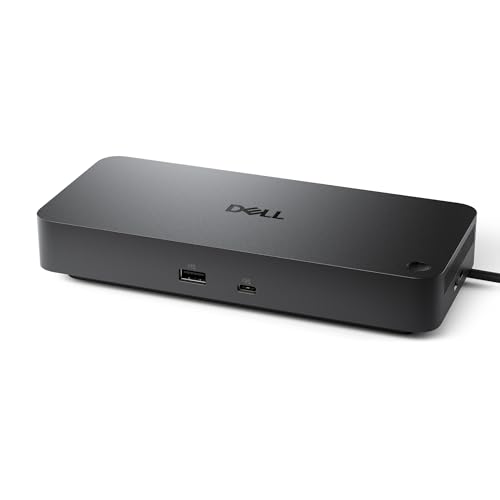
- Up to 100W power delivery
- Supports up to four displays
- Enterprise management and standard ports
Best For: Managed office workstations using Dell or compatible PCs
Best PCIe Card Bridge
Thunderbolt PCIe Expansion Dock

- Adds one PCIe 3.0 x16 slot over Thunderbolt 3/4 or USB4
- Supports capture, networking, NVMe, and FireWire cards
- Silent passive cooling; GPU cards are not supported
Best For: Connecting one compatible PCIe card to a Thunderbolt or USB4 computer
Best All-in-One Thunderbolt 5 Dock
UGREEN Maxidok Thunderbolt 5 Dock

- Built-in PCIe Gen4x4 M.2 slot supports NVMe drives up to 8TB
- Offers 17 ports, 2.5GbE, card readers, and display outputs
- Windows supports triple displays; SSD and Mac display limits apply
Best For: High-speed workstation setups needing storage, displays, and many ports
Best High-Capacity Storage Dock

- Eight bays support SATA/SAS and U.2/M.2 NVMe storage
- PCIe x16 connector uses four lanes for cards and I/O
- Adds Thunderbolt, USB, SD 4.0, and CFexpress connectivity
Best For: Professional media and storage workflows requiring drive bays and PCIe expansion
Best Overall
Brydge Stone Pro TB5 NVMe Dock

- Thunderbolt 5 with up to 80Gbps bandwidth
- M.2 PCIe Gen4x4 NVMe expansion
- Up to three 4K 144Hz displays
Best For: High-performance Thunderbolt 5 workstations
Best for External Graphics

- PCIe x8 connection for external desktop GPUs
- Built-in 600W power supply
- Designed for Beelink GTi12 and GTi14 systems
Best For: Beelink mini PC owners adding a discrete GPU
Best for Dell Workspaces

- HDMI and mini-DisplayPort outputs
- Two USB-C and three USB-A ports
- RJ-45 Ethernet and 180W adapter
Best For: Compatible Dell home and office workstations
Best Silent PCIe Expansion Chassis – Dual-Slot Thunderbolt PCIe Enclosure
If you need docking stations with pcie expansion for a laptop or mini PC, this chassis adds two external PCIe 3.0 x16 slots through Thunderbolt 3, Thunderbolt 4, or USB4. Its 40Gbps bandwidth suits professional capture, networking, and storage cards, while the fanless aluminum design keeps operation quiet.
Best For: Video editors, recording studios, and professionals who need two external PCIe slots without upgrading a computer internally.
Pros:
- Provides two PCIe 3.0 x16 slots through one compatible host connection.
- Supports cards such as Decklink capture cards, 10GbE adapters, and NVMe SSDs.
- Includes a 60W internal power supply and silent passive cooling.
- Works with Windows, macOS, and Linux without chassis-specific drivers.
Cons:
- Does not charge or provide Power Delivery to the host laptop.
- Card dimensions must stay within 205 x 145 x 25mm.
- Requires a Thunderbolt 3/4 or USB4 port.
This is a focused PCIe expansion solution rather than an all-purpose peripheral dock. Verify host compatibility, card dimensions, and the power needs of your cards before buying.
Best Triple-Display USB-C Dock – Plugable 12-in-1 Display Dock
For buyers comparing docking stations with pcie expansion alongside conventional connectivity, this Plugable model focuses on displays, USB peripherals, networking, and charging rather than internal PCIe slots. It supports up to three HDMI displays and delivers up to 100W USB-C Power Delivery for compatible laptops.
Best For: Hybrid offices and users who need a multi-monitor USB-C workstation with Ethernet, multiple USB ports, audio, and laptop charging.
Pros:
- Supports up to three HDMI displays, including one 4K display at 30Hz.
- Provides six USB 3.0 peripherals, Gigabit Ethernet, audio, and charging.
- Works with compatible Windows, macOS, and ChromeOS systems.
- Offers up to 100W USB-C Power Delivery and DisplayLink support.
Cons:
- Not compatible with Linux.
- Requires driver installation for macOS DisplayLink functionality.
- Does not provide PCIe slot expansion.
This dock is a practical choice when “expansion” means displays and everyday workstation ports. It is less suitable for users specifically seeking external PCIe cards or Linux support.
Best Compact Single-Slot PCIe Dock – Thunderbolt PCIe Expansion Dock
This compact option is among the more direct docking stations with pcie expansion, adding one PCIe 3.0 x16 slot to a laptop or desktop through Thunderbolt 3, Thunderbolt 4, or USB4. It offers 40Gbps connectivity for capture, storage, and networking cards in a quiet aluminum enclosure.
Best For: Users who need one external PCIe card for video capture, NVMe storage, or 10G networking without a noisy fan.
Pros:
- Adds a PCIe 3.0 x16 slot over Thunderbolt or USB4.
- Supports up to 40Gbps transfer speeds for demanding cards.
- Uses passive cooling in a durable all-metal enclosure.
- Supports Windows, Linux, and macOS with driverless chassis operation.
Cons:
- Includes only one PCIe slot.
- Not compatible with external graphics cards due to power requirements.
- Card size is limited to 205 x 28 x 142mm.
The MK-Q1L is well matched to specialized single-card expansions, but its 36W power capacity and eGPU restriction make card selection important. Check both dimensions and power requirements before purchase.
Best Managed Business Dock – Dell Pro WD25 Universal Dock
Although it is not a PCIe card enclosure, the Dell Pro WD25 is a useful comparison point for docking stations with pcie expansion because it emphasizes broad workplace connectivity instead of PCIe slots. It provides up to 100W power delivery, Ethernet, USB ports, DisplayPort, HDMI, and native support for up to four high-resolution displays.
Best For: Business users and IT teams that need a manageable universal dock for Dell and compatible non-Dell PCs.
Pros:
- Delivers up to 100W of power to compatible PCs.
- Supports up to four high-resolution displays.
- Includes USB, USB-C, Ethernet, DisplayPort, and HDMI connectivity.
- Offers enterprise manageability and a three-year limited hardware warranty.
Cons:
- Does not add external PCIe slots.
- Its listed operating-system compatibility is centered on Windows, Ubuntu, Red Hat Enterprise Linux, and ChromeOS versions.
- Display and charging results depend on the host computer and its supported features.
The WD25 is better suited to a conventional office workstation than to PCIe-based expansion. Choose it when display support, charging, management, and standard ports matter more than installing expansion cards.
Best PCIe Card Bridge – Thunderbolt PCIe Expansion Dock
This compact option among docking stations with pcie expansion adds a PCIe 3.0 x16 slot to Thunderbolt 3/4 or USB4 laptops and desktops. Its 40Gbps connection is suited to capture cards, networking hardware, NVMe drives, and other compatible PCIe accessories.
Best For: Users who need to connect one compact PCIe card to a Thunderbolt or USB4 computer.
Pros:
- Supports a PCIe 3.0 x16 slot over Thunderbolt 3/4 or USB4.
- Works with video capture, fiber/Ethernet, NVMe, and FireWire cards.
- Driverless design supports Windows, Linux, and macOS.
- Aluminum chassis uses passive cooling for silent operation.
Cons:
- GPU cards are not supported.
- Card size is limited to 163mm x 28mm x 115mm.
- The included power adapter provides 36W through the PCIe slot.
This is a focused PCIe expansion enclosure rather than a broad desktop dock. It makes the most sense when you already have a specific compatible card and want a quiet, portable connection.
Best All-in-One Thunderbolt 5 Dock – UGREEN Maxidok Thunderbolt 5 Dock
For shoppers comparing docking stations with pcie expansion, the UGREEN Maxidok combines a built-in PCIe Gen4x4 M.2 NVMe slot with a broad 17-port workstation setup. Thunderbolt 5 connectivity, 2.5GbE, card readers, display outputs, and USB ports make it a versatile choice for high-bandwidth storage and peripherals.
Best For: Users building a high-speed workstation around NVMe storage, multiple displays, and extensive connectivity.
Pros:
- Built-in M.2 PCIe Gen4x4 slot supports 2230–2280 NVMe SSDs up to 8TB.
- Provides 17 ports, including Thunderbolt 5, USB, DisplayPort, audio, Ethernet, and card readers.
- Supports triple independent displays on Windows, including up to dual or single 8K at 60Hz.
- Includes 2.5GbE networking and up to 240W total system power.
Cons:
- Mac supports dual displays rather than the stated Windows triple-display configuration.
- The M.2 slot has heatsink size limits and excludes several wider or active-fan SSD models.
- Its cooling fan can produce audible noise while operating.
The Maxidok is more than a simple port replicator: its internal NVMe expansion and Thunderbolt 5 bandwidth target demanding workstation use. Check SSD dimensions, operating-system requirements, and display-adapter compatibility before buying.
Best High-Capacity Storage Dock – OWC ThunderBay Flex 8
The OWC ThunderBay Flex 8 is a large-format choice among docking stations with pcie expansion, combining eight drive bays with a PCIe x16 connector using four lanes. It is designed for storage-heavy audio, video, networking, RAID, and professional media workflows over Thunderbolt 3.
Best For: Creative professionals and storage-focused users who need multiple drive bays plus PCIe card expansion.
Pros:
- Eight universal 3.5/2.5-inch bays support SATA/SAS and U.2/M.2 NVMe drives.
- Supports up to 144TB of capacity and stated real-world speeds up to 2750MB/s.
- PCIe x16 connector with x4 lanes accommodates capture, networking, SSD, RAID, or I/O cards.
- Includes front USB ports and SD 4.0/CFexpress readers for peripherals and media.
Cons:
- Its 12.2 kg enclosure is substantially less portable than a typical laptop dock.
- Advanced RAID modes listed are currently available for Mac only.
- It is supplied without a warranty according to the provided details.
This enclosure is best viewed as a professional storage and expansion platform, not a compact everyday dock. Its bay count and PCIe slot are compelling when capacity, fast media ingest, and specialized cards matter more than desk space.
Best Overall – Brydge Stone Pro TB5 NVMe Dock
The Brydge Stone Pro is a strong choice among docking stations with pcie expansion if you want fast Thunderbolt 5 connectivity plus internal storage expansion. Its M.2 NVMe slot, high-wattage charging, and multi-monitor support make it suited to demanding desktop setups, provided your laptop supports the required standards.
Best For: Thunderbolt 5 laptop users building a high-performance workstation with NVMe storage and multiple displays.
Pros:
- Thunderbolt 5 provides 80Gbps bandwidth, with up to 120Gbps Bandwidth Boost on compatible systems.
- Supports up to three 4K displays at 144Hz or two 8K displays at 60Hz.
- Includes PCIe Gen4x4 M.2 NVMe expansion with active cooling.
- Provides up to 140W laptop charging and broad connectivity, including 2.5Gb Ethernet and SD 4.0.
Cons:
- The NVMe SSD is sold separately.
- Many headline display and bandwidth features depend on compatible Thunderbolt 5 hardware.
Choose this dock when speed, storage expansion, and high-end display support matter more than keeping the setup simple. It is overqualified for basic peripheral connectivity but compelling for compatible performance-focused systems.
Best for External Graphics – Beelink EX PCIe GPU Dock
The Beelink EX is a specialized option for users comparing docking stations with pcie expansion for an external desktop graphics card. It is designed for Beelink GTi12 and GTi14 systems, adds a PCIe slot with a built-in 600W power supply, and also provides limited hub functionality.
Best For: Beelink GTi12 or GTi14 owners who want to connect a supported discrete GPU or other PCIe hardware.
Pros:
- Provides a PCIe x8 interface for connecting external desktop graphics cards.
- Built-in 600W power supply supports cards requiring up to 600W, including listed RTX 4090 and RX 7900 XTX examples.
- Supports NVIDIA and AMD graphics cards, plus SSD, Wi-Fi module, and external antenna use cases.
- Includes a dual-switch design so the mini PC and dock can operate separately or together.
Cons:
- Compatibility is specifically centered on Beelink GTi12 and GTi14 systems.
- It has only one USB 2.0 port, so it is not a full-featured everyday peripheral dock.
- The recommended startup sequence requires powering on the EX dock before the mini PC.
This is best viewed as an external GPU enclosure with extra expansion options rather than a general laptop dock. Verify your Beelink model, graphics card requirements, and operating system before buying.
Best for Dell Workspaces – Dell WD19S Dual-Monitor Dock
The Dell WD19S is a practical USB-C option for users who need everyday connectivity rather than internal PCIe hardware expansion. While it is not a dedicated PCIe expansion dock, it can fit a broader search for docking stations with pcie expansion when the priority is connecting displays, USB devices, Ethernet, and compatible Dell laptops from one dock.
Best For: Dell laptop users who need dual-display and peripheral connectivity for a home or office workstation.
Pros:
- Offers HDMI and mini-DisplayPort video outputs for a dual-monitor setup.
- Includes two USB-C ports, three USB-A 3.0 ports, and RJ-45 Ethernet.
- Works with laptops supporting DisplayPort over USB-C or Thunderbolt 3.
- Includes a 180W power adapter in the listed bundle.
Cons:
- It does not provide a PCIe slot or internal PCIe storage expansion.
- Compatibility is strongest with supported Dell Inspiron, Latitude, Precision, XPS, and Venue models.
- The listed bundle has a 30-day return policy, so buyers should confirm fit before keeping it.
The WD19S makes sense when your expansion needs are conventional workstation connectivity and display support. If you specifically need a PCIe card or NVMe slot, choose a purpose-built PCIe dock instead.
How We Picked the Best Docking Stations with Pcie Expansion
We focused on products that combine everyday docking features with a meaningful PCIe expansion path. That includes Thunderbolt 3, Thunderbolt 4, Thunderbolt 5, or USB4 models with an internal PCIe slot, as well as broader docks and enclosures designed for GPUs, capture cards, NVMe storage, or professional add-in hardware.
We also considered connection standards, power delivery, display support, enclosure design, compatibility, and the intended use case. Because PCIe docks vary substantially, the best choice is not necessarily the one with the most ports; it is the one that matches your computer and expansion card without creating a bandwidth or power bottleneck.
Quick Comparison
- For capture cards and add-in cards: Choose a dedicated PCIe-to-Thunderbolt or USB4 enclosure with a full-length slot and confirmed card compatibility.
- For a complete office dock: Plugable, Dell, and Brydge models prioritize displays, USB connectivity, networking, and laptop charging.
- For graphics expansion: The Beelink EX is aimed at external GPU use, but verify GPU dimensions, power requirements, and host compatibility first.
- For storage-heavy workflows: The UGREEN Maxidok and OWC ThunderBay Flex 8 offer stronger storage and expansion potential than basic laptop docks.
Key Buying Factors for Docking Stations with Pcie Expansion
Host Connection and Bandwidth
Check whether your computer supports Thunderbolt 3, Thunderbolt 4, Thunderbolt 5, or USB4. A USB-C connector alone does not guarantee PCIe tunneling or the same performance. The host port, cable, operating system, and expansion card must all support the intended function.
PCIe Slot Type and Compatibility
Review whether the enclosure provides a PCIe 3.0 x16 mechanical slot, an electrically limited slot, or another format. A full-length slot may accept capture cards, networking cards, or GPUs, but physical clearance and driver support still matter. DeckLink and other professional cards should be checked against the manufacturer’s compatibility list.
Power Delivery and Cooling
Power delivery affects laptop charging, while the enclosure’s internal supply determines which PCIe devices it can run. High-performance cards may require dedicated power connectors. Look for adequate ventilation, a sturdy aluminum chassis, and a cooling design suited to sustained workloads.
Displays and Everyday Ports
Count the displays you actually need and check supported resolutions and refresh rates. Also compare USB-A and USB-C speeds, Ethernet, audio, SD card access, and the number of downstream Thunderbolt or USB4 ports. A PCIe slot is useful only if the rest of the dock fits your daily workflow.
Who Should Buy Which Docking Stations with Pcie Expansion?
Choose a dedicated PCIe enclosure if you already own a capture card, professional I/O card, or other PCIe accessory and want to connect it to a laptop or mini PC.
Choose a full-featured Thunderbolt dock if your priority is one-cable desk connectivity, multiple monitors, charging, and fast peripherals, with expansion as a secondary benefit.
Choose an external GPU-focused model if graphics performance is the main goal. Confirm graphics-card support, power, cooling, and operating-system compatibility before buying.
Choose a storage-oriented enclosure if you need several drives, NVMe capacity, or a flexible workstation hub. These models tend to be larger, but they offer more room for demanding storage and expansion setups.