Monitoring a long or isolated farm entrance does not require a full security system. The right driveway alarm can alert you when a vehicle, person, or other motion reaches the property, giving you time to respond.
This roundup compares 10 driveway alarms for farms, including solar-powered sensor kits, long-range wireless systems, and vehicle-specific detectors for different property layouts and budgets.
Best 10 Driveway Alarms for Farms Picks for 2026
Best for Hose-Based Vehicle Detection
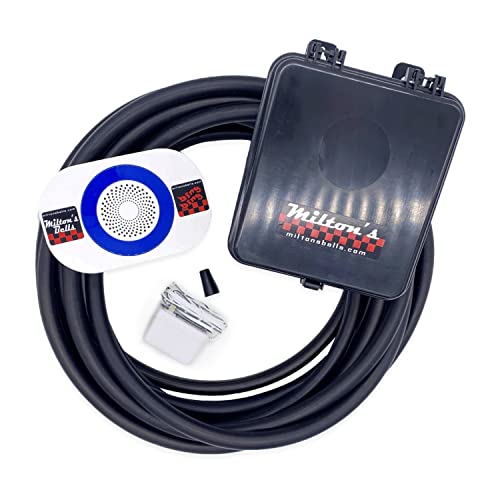
- 25-foot hose detects passing vehicles
- 2,500-foot wireless chime range
- Expandable to 150 feet of hose
Best For: Farm entrances, long driveways, and vehicle-focused monitoring
Best Multi-Zone Solar Option
3000-Foot Wireless Alarm System

- Four solar-powered IP65 motion sensors
- Up to 3,000 feet of open-range transmission
- Portable receiver with 37 chimes
Best For: Large farms, ranches, gates, barns, and multiple monitoring zones
Best for Maximum Range
Dakota Alert Vehicle Probe Kit

- One-mile wireless sensor-to-receiver range
- Buried probe focuses on vehicle detection
- Supports up to 16 sensors per receiver
Best For: Expansive farms with long approaches and vehicle-only alerts
Best Audible Deterrent

- Two solar-powered alarm units
- 129 dB siren with six flashing LEDs
- Four selectable operating modes
Best For: Farm gates, yards, gardens, and local perimeter deterrence
Best Long-Range Solar Pick
1/2-Mile Solar Alarm with 2 Sensors

- Claimed 2,600-foot open-area wireless range
- Solar-powered outdoor sensors with rechargeable batteries
- Adjustable sensitivity for people, vehicles, and large animals
Best For: Long farm driveways needing low-maintenance local alerts
Best Expandable Solar System

- Includes four solar-powered rechargeable sensors
- Claimed 1,760-foot wireless range
- Expandable by up to eight additional sensors
Best For: Multi-entry farm properties needing flexible coverage
Best Expandable Battery System
1/2-Mile Alarm with 50-Foot Detection

- Claimed 1/2-mile wireless transmission range
- 35- or 50-foot adjustable motion detection
- Supports up to 32 sensors and unlimited receivers
Best For: Large farms planning extensive multi-zone monitoring
Trusted Electromagnetic Pick

- Vehicle-specific electromagnetic detection
- Up to 400-foot wireless range
- Expandable indoor receiver system
Best For: Farm driveways needing simple vehicle alerts
Half-Mile Solar Coverage

- Up to one-half-mile open-area range
- Includes two IP65 solar sensors
- Supports up to 16 sensors
Best For: Large farms with multiple monitored entrances
Customizable Solar Alert
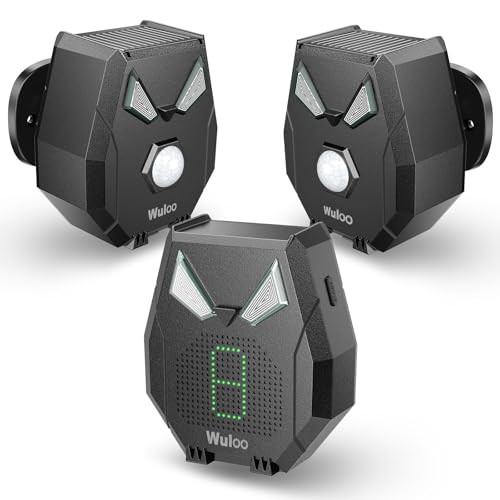
- 1,760-foot stated wireless range
- Up to 24 months of battery life
- Expandable to eight motion sensors
Best For: Farms wanting adjustable multi-zone motion alerts
Best for Hose-Based Vehicle Detection – Long-Range Wireless Chime Kit
For farms needing a straightforward vehicle alert, this hose-based system detects vehicles driving over a 25-foot rubber hose and sends a wireless chime signal from up to 2,500 feet away. It is a practical option for long driveways, entry points, bays, and drive-thru-style applications.
Best For: Farm entrances, long driveways, service areas, and locations where reliable vehicle detection is more important than motion detection.
Pros:
- Detects vehicles using a driveway-spanning pressure hose.
- Provides up to 2,500 feet of wireless coverage.
- Supports expansion with additional bells and up to 150 feet of hose.
- Includes the transmitter, chime, hose, and rubber end cap.
Cons:
- The chime and bells need protection from direct rain and snow.
- Installation requires mounting the transmitter and positioning the hose across the driveway.
This is a focused choice among driveway alarms for farms when you want a physical vehicle trigger and expandable coverage. Its weather-resistant hose is suited to outdoor use, but the indoor or sheltered chime placement should be planned before installation.
Best Multi-Zone Solar Option – 3000-Foot Wireless Alarm System
This solar-powered system is designed for broad farm coverage, combining four outdoor motion sensors with a portable rechargeable receiver. It offers up to 3,000 feet of open-range transmission, multiple alert sounds, and adjustable sensitivity for driveways, gates, barns, garages, and other monitored areas.
Best For: Farms and ranches that need several monitored zones, portable alerts, and lower-maintenance outdoor sensors.
Pros:
- Includes four IP65 weatherproof solar sensors and a portable receiver.
- Offers up to 3,000 feet of wireless range in open conditions.
- Provides 37 chimes, 10 volume levels, LED alerts, and one-touch mute.
- Supports up to 84 compatible sensors for future expansion.
Cons:
- Transmission range can vary with obstructions and property layout.
- Motion detection may require sensitivity adjustment for the monitored area.
With solar charging, independent sensor switches, and a receiver that can operate for up to 30 days, this is one of the more flexible driveway alarms for farms. It is especially useful when different farm areas need distinct chimes or when the receiver cannot remain near a wall outlet.
Best for Maximum Range – Dakota Alert Vehicle Probe Kit
The Dakota Alert DCPA-4K Plus uses a buried vehicle probe rather than a general motion sensor, helping it focus on passing vehicles and reduce alerts from deer and other large animals. Its one-mile wireless range makes it suited to expansive farms and long approaches where receiver placement is challenging.
Best For: Large rural properties that need long-distance vehicle detection with fewer non-vehicle alerts.
Pros:
- Provides a wireless range of up to one mile.
- Buried vehicle probe is designed to limit false signals from deer and other large animals.
- Allows up to 16 sensors to pair with one receiver.
- Offers 16 alert tunes plus relay and 12 VDC outputs for compatible accessories.
Cons:
- The buried probe requires more involved installation than a surface-mounted motion sensor.
- It is designed for compatibility with Dakota Alert 4000 series receivers.
For farms where range and vehicle-specific detection are priorities, this is a strong specialized option. Its battery operation avoids dependence on solar charging, while the expandable receiver setup can accommodate larger properties and multiple entry points.
Best Audible Deterrent – Solar Sound and Light Alarm
This two-pack combines motion detection with a loud 129 dB siren and six flashing LEDs. For farms, the solar-powered units can provide a visible and audible warning around gates, yards, gardens, and other areas where you want to deter animals or unwanted visitors.
Best For: Farm perimeters, gates, gardens, and outbuildings where an immediate local deterrent is more useful than a remote indoor chime.
Pros:
- Includes two solar-powered outdoor alarm units.
- Uses a 129 dB siren and six LED warning lights.
- Offers four operating modes, including nighttime-only alerts.
- IP65 housing is designed to resist outdoor water and dust exposure.
Cons:
- Detection range is limited to approximately 3 to 8 meters.
- The loud siren may be unsuitable near homes, livestock, or noise-sensitive areas.
- Units need sufficient sunlight for charging.
Unlike notification-focused driveway alarms for farms, this system acts as an on-site deterrent by sounding and flashing when motion is detected. It works best as perimeter protection for defined areas rather than as a long-range driveway alert sent to a distant receiver.
Best Long-Range Solar Pick – 1/2-Mile Solar Alarm with 2 Sensors
For farms with a long driveway or multiple property entrances, this system combines a claimed 2,600-foot open-area wireless range with two solar-powered outdoor sensors. Adjustable sensitivity helps you monitor people, vehicles, or large animals while reducing some unwanted alerts from small animals and falling leaves. It is a local alert system, so no Wi-Fi or smartphone app is required.
Best For: Farms needing long-range coverage and low-maintenance, solar-powered sensors.
Pros:
- Up to 1/2-mile wireless transmission range in open areas.
- Two weather-resistant sensors use built-in solar panels and rechargeable batteries.
- High and low sensitivity settings support detection distances of up to 30 or 20 feet.
- DIY installation requires no trenching, wiring, Wi-Fi, or app.
Cons:
- The system does not offer smartphone or app notifications.
- Range can vary with terrain and installation conditions.
This is a practical choice for remote farm entrances where running power or network service is inconvenient. Its solar operation and included dual sensors are especially useful for broad, basic perimeter awareness.
Best Expandable Solar System – 1/3-Mile Alarm with 4 Sensors
This Wuloo system is a strong option for driveway alarms for farms that need several detection points from the start. It includes four solar-powered sensors, a claimed 1,760-foot wireless range, and a receiver with adjustable chimes, volume, clock, alarm, and mute functions. The system can also expand by up to eight additional sensors.
Best For: Farms that want multiple solar sensors and room to expand coverage.
Pros:
- Includes four weatherproof, rechargeable solar sensors.
- Wireless range is tested at up to 1,760 feet in real-world conditions.
- Receiver offers customizable chimes, sounds, volume, clock, alarm, and mute mode.
- Sensors can be expanded by up to eight additional units.
Cons:
- The included receiver may require indoor placement near a power outlet.
- Actual wireless range can be affected by trees, buildings, walls, and vehicles.
With four sensors included, this package can cover more approaches without immediately buying extra hardware. Its adjustable receiver and expandable design make it flexible for farms with changing monitoring needs.
Best Expandable Battery System – 1/2-Mile Alarm with 50-Foot Detection
For farms that prioritize broad motion coverage and extensive expansion, this HTZSAFE kit includes two sensors, a plug-in receiver, and a claimed 1/2-mile wireless transmission range. Its sensors offer adjustable detection distances of approximately 35 or 50 feet, while the receiver provides four volume levels and 35 melodies for distinguishing different monitoring locations.
Best For: Farm owners who want wide sensor detection and the ability to add many monitoring points.
Pros:
- Claimed 1/2-mile wireless transmission range, subject to terrain.
- Adjustable motion detection reaches approximately 35 or 50 feet.
- Expandable to up to 32 sensors and unlimited receivers.
- Offers four volume levels and 35 selectable melodies.
Cons:
- The two sensors require three AA alkaline batteries each, which are not included.
- It is not solar-powered, so batteries require eventual replacement.
- Actual wireless range varies with local terrain and conditions.
This kit stands out when a farm needs more than a simple driveway alert and may eventually monitor gates, sheds, paths, or other areas. Its large expansion capacity and location-specific melodies provide useful flexibility, though battery maintenance is part of ownership.
Trusted Electromagnetic Pick – Mighty Mule FM231
For farms needing straightforward driveway alarms, the Mighty Mule FM231 uses electromagnetic vehicle detection to notify you when a vehicle enters or leaves. Its battery-powered sensor and indoor chime receiver suit DIY installations where dependable vehicle alerts matter more than broad motion detection.
Best For: Farm driveways focused on vehicle detection and simple indoor notification.
Pros:
- Electromagnetic sensing is designed specifically to detect vehicles.
- Wireless transmitter-to-receiver range reaches up to 400 feet.
- Battery-powered DIY setup includes a low-battery indicator.
- The system can be expanded with additional indoor receivers.
Cons:
- Two AA batteries are required but not included.
- Additional receivers are sold separately.
- Its vehicle-focused sensor may be less suitable for detecting people or animals.
The FM231 is a practical choice when you want a familiar, vehicle-specific alert without wiring. Measure the distance between the driveway sensor and indoor receiver before installation, especially on larger farm properties.
Half-Mile Solar Coverage – Betterlink 1R2S
The Betterlink 1R2S is one of the more flexible driveway alarms for farms, pairing two solar-assisted PIR motion sensors with a receiver. It offers long-range communication, weather-resistant outdoor sensors, and multiple alert modes for monitoring gates, driveways, and other property entrances.
Best For: Large or spread-out properties that need solar-powered motion coverage across multiple points.
Pros:
- Wireless range is rated up to one-half mile in open areas.
- Two IP65 outdoor sensors provide broader initial coverage.
- Solar charging reduces the need for routine battery replacement.
- The receiver can support up to 16 motion sensors and offers four alert options.
Cons:
- Actual wireless range can vary with terrain and obstructions.
- PIR motion sensing may respond to people, vehicles, or animals rather than vehicles only.
- Solar charging performance depends on available light.
With two sensors, solar charging, and extensive expansion capacity, this system is well suited to farms with multiple access points. Its adjustable sound and light alerts also make it useful when you need more than a basic indoor chime.
Customizable Solar Alert – Wuloo Long-Range System
For farms wanting adjustable alerts and rechargeable outdoor sensors, this Wuloo system includes one receiver and two solar-powered motion sensors. Sensitivity controls, selectable modes, multiple chimes, and expansion for up to eight sensors make it adaptable to driveways, gates, and areas where larger animals may pass.
Best For: Property owners who want customizable motion alerts with long battery life and solar support.
Pros:
- Wireless range is tested up to 1,760 feet, with longer range possible in open areas.
- Rechargeable sensor batteries are rated for up to 24 months on a full charge.
- Adjustable sensitivity can help reduce alerts from leaves or small animals.
- The receiver offers 16 chimes, four volume levels, and expansion up to eight sensors.
Cons:
- The listed long-range figure can be affected by trees, buildings, walls, and vehicles.
- Sensor volume is not adjustable.
- Motion detection is not limited to vehicles and may alert for people or animals.
This Wuloo setup stands out when a farm needs configurable notifications rather than a single fixed alarm sound. Its solar-assisted rechargeable design can reduce maintenance, while sensitivity adjustment provides useful control in active outdoor environments.
How We Picked These Driveway Alarms for Farms
We focused on the features that matter most on rural properties: transmission range, sensor type, power source, weather resistance, receiver usability, expandability, and installation flexibility. Farm driveways may stretch hundreds or thousands of feet, cross uneven terrain, or lack convenient electrical outlets, so a practical system must match the property rather than simply advertise a high range.
We also included a mix of motion sensors, electromagnetic vehicle probes, solar-powered kits, and systems with multiple sensors. This makes it easier to compare solutions for a single entrance, several access points, or a long approach road.
Quick Comparison
| Best For | Look For | Most Useful Feature |
|---|---|---|
| Long rural driveways | Half-mile to one-mile rated range | More placement flexibility |
| Vehicle-only alerts | Magnetic or electromagnetic detection | Fewer alerts from wildlife and wind |
| Remote sensor locations | Solar charging and rechargeable batteries | Less routine battery maintenance |
| Multiple entrances | Several sensors or expandable receivers | Coverage for more than one approach |
| Basic entry monitoring | Simple wireless motion detection | Lower cost and easier setup |
Key Buying Factors for Driveway Alarms for Farms
Range and Terrain
Advertised wireless range is usually measured in open conditions. Trees, hills, metal buildings, dense walls, and electrical interference can reduce it substantially. Choose extra range when the sensor and receiver will be separated by a barn, wooded area, or elevation change.
Detection Method
Motion sensors can detect people, vehicles, animals, and moving vegetation depending on sensitivity and placement. Vehicle probes use magnetic changes and are generally better when you want alerts specifically for cars and trucks. Consider whether livestock, pets, deer, or farm equipment could trigger a motion-based system.
Power and Maintenance
Solar models are useful where running wiring is impractical, but panel exposure and seasonal sunlight affect performance. Battery-powered systems may be easier to position in shaded areas. Check charging requirements, battery access, and expected maintenance before installation.
Weather Resistance and Placement
Outdoor sensors should be designed for rain, dust, temperature swings, and occasional impacts. Mount sensors high enough to reduce tampering and aim them across the driveway rather than directly toward approaching headlights or the rising and setting sun.
Alerts and Expandability
Adjustable volume, multiple chimes, visual indicators, and a portable receiver can make alerts easier to hear throughout a farmhouse or workshop. Expandable systems are worthwhile if you may later monitor a gate, barn lane, or secondary entrance.
Who Should Buy Which Driveway Alarms for Farms?
Choose a long-range wireless or one-mile system for an extended driveway, large acreage, or a sensor located well beyond the house. Solar kits are a strong fit for remote gates and locations where changing batteries is inconvenient. A vehicle probe is preferable for driveways where minimizing animal and wildlife alerts matters most.
For smaller properties or a clearly visible entrance, a compact motion-alarm kit may provide sufficient warning without the cost or complexity of a high-range system. If you need coverage at multiple approaches, prioritize kits with two or more sensors or a receiver that supports expansion. Before buying, measure the actual path between sensor and receiver, identify obstacles, and decide whether you need to detect vehicles, people, or both.