The best dynamic microphones can deliver focused, clear sound while reducing room noise, computer fans, and other distractions. That makes them a practical choice for singers, podcasters, streamers, and home creators.
We’ve selected 10 dynamic microphones covering USB, XLR, and hybrid setups—from affordable starter kits to proven broadcast and vocal models. Use the guide below to narrow your choice by connection type, pickup pattern, accessories, and intended use.
Best 10 Dynamic Microphones Picks for 2026
Industry-Standard Vocal Pick
Shure SM58 Pro XLR Dynamic Vocal Microphone

- Cardioid pattern reduces background noise and feedback
- Rugged metal build for stage and studio use
- Built-in pop protection and included storage bag
Best For: Live vocals, podcasting, and reliable XLR recording
Simple Stage Value
Sennheiser XS 1 Handheld Dynamic Microphone

- Cardioid handheld design for vocals and speech
- Silent mute switch for convenient performance control
- Includes clip and carrying pouch
Best For: Karaoke, live vocals, and basic speech setups
Flexible Creator Setup
Shure MV7+ USB-C & XLR Podcast Mic

- USB-C and XLR connectivity for flexible setups
- Built-in denoiser, auto level, and digital pop filter
- Includes adjustable desktop stand and LED mute controls
Best For: Podcasting, streaming, gaming, and content creation
Broadcast-Style Favorite
Shure SM7B Dynamic Vocal Microphone
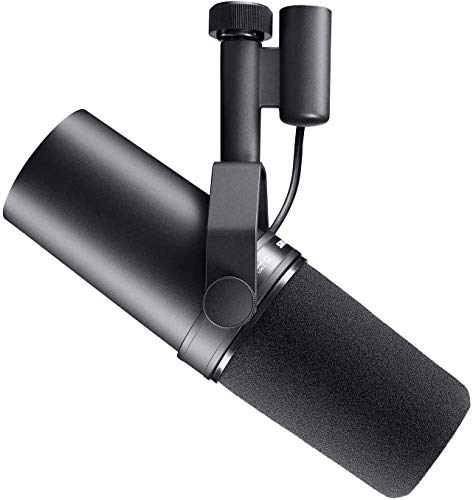
- Warm, balanced sound for speech and vocals
- Cardioid design with shock isolation and pop filtering
- Rugged, shielded XLR studio construction
Best For: Professional podcasting, broadcast, voiceover, and studio recording
Best Broadcast Pick

- Speech-focused broadcast dynamic capsule
- Internal pop filter and shock mounting
- Rugged all-metal XLR design
Best For: Podcasting and streaming with an XLR interface
Best Stage Vocal Mic

- Supercardioid pattern for feedback control
- Tailored response for natural vocals
- Rugged grille and shock-mounted construction
Best For: Live singers and stage-focused vocal recording
Best USB/XLR Value

- USB and XLR connectivity
- USB mute, monitoring, and gain controls
- Cardioid pickup with controllable RGB
Best For: Gaming, streaming, and beginner podcasting
Budget Stage Kit

- Cardioid pickup helps limit feedback and ambient noise
- Rugged metal construction for stage use
- Includes case, clips, and long XLR-to-1/4-inch cable
Best For: Live vocals, amplified instruments, and multi-mic setups
Broadcasting Choice

- USB-C and XLR outputs in one microphone
- APHEX DSP processing over USB
- Zero-latency headphone monitoring for speech work
Best For: Podcasting, streaming, gaming, and voiceovers
All-in-One Creator Kit

- USB/XLR connectivity for flexible recording setups
- Boom arm, shock mount, and windscreen included
- USB mute, gain, and headphone controls
Best For: Podcasters, streamers, and desktop voice recording
Industry-Standard Vocal Pick – Shure SM58 Pro XLR Dynamic Vocal Microphone
For shoppers comparing dynamic microphones, the Shure SM58 is a dependable handheld option for vocals, podcasting, recording, and live performance. Its cardioid pattern, built-in pop protection, and rugged metal construction make it especially practical for demanding use.
Best For: Live vocals, rehearsal spaces, podcasting, and performers who want a proven XLR microphone.
Pros:
- Cardioid pickup helps minimize background noise and feedback.
- Warm, articulate vocal response with a subtle midrange lift.
- Built-in filter reduces plosives, breath, and wind noise.
- Rugged metal build includes a stand adapter and storage bag.
Cons:
- Uses XLR connectivity, so it needs a compatible interface, mixer, or preamp.
- Its handheld design is less specialized for desktop podcast setups.
The SM58 remains a sensible all-purpose choice when durability and consistent vocal clarity matter more than advanced digital controls.
Simple Stage Value – Sennheiser XS 1 Handheld Dynamic Microphone
The Sennheiser XS 1 is one of the straightforward dynamic microphones for singers and speakers who want a handheld XLR setup without unnecessary complexity. Its cardioid pattern, mute switch, clip, and carrying pouch support practical live-use needs.
Best For: Singing, speech, karaoke, and basic live setups using an amplifier, mixer, or speaker.
Pros:
- Cardioid pickup focuses on the main sound source.
- Silent mute switch is convenient during performances or presentations.
- Metal enclosure provides a sturdy handheld design.
- Includes a microphone clip and carrying pouch.
Cons:
- Requires an XLR-compatible device or audio system.
- Offers fewer stated recording and processing features than USB/XLR podcast models.
The XS 1 is a practical choice for buyers who want a simple, portable vocal microphone with useful stage-oriented controls.
Flexible Creator Setup – Shure MV7+ USB-C & XLR Podcast Mic
The Shure MV7+ is a versatile choice among dynamic microphones for podcasting, streaming, gaming, and content creation. It combines USB-C and XLR connectivity with onboard DSP, auto level mode, noise reduction, and a supplied adjustable desktop stand.
Best For: Creators who want plug-and-play USB recording now while retaining an XLR upgrade path for a more advanced setup.
Pros:
- USB-C and XLR connections support beginner and professional workflows.
- Real-time denoiser and Voice Isolation Technology help reduce ambient noise.
- Auto Level Mode adjusts gain based on speaking distance and volume.
- Includes LED touch controls, a pop filter, USB-C cable, and desktop stand.
Cons:
- Its feature set and app controls may be more than needed for simple vocal use.
- The included desktop-oriented setup is less suited to traditional handheld performance.
Choose the MV7+ when flexible connectivity and built-in processing are priorities, particularly for creators recording in imperfect rooms.
Broadcast-Style Favorite – Shure SM7B Dynamic Vocal Microphone
The Shure SM7B is a studio-focused option among dynamic microphones, designed for warm, balanced vocals in podcasting, voiceover, broadcast, music production, and streaming. Its cardioid pattern, pop filtering, shock isolation, and electromagnetic shielding help keep close-mic recordings focused and clean.
Best For: Professional podcasting, broadcast-style voice work, vocal recording, and creators with an XLR interface or mixer.
Pros:
- Warm, natural vocal reproduction with a wide-range frequency response.
- Cardioid pickup and air suspension help reduce room sound and handling vibration.
- Built-in pop filtering and included windscreens help control plosives.
- Rugged metal construction includes electromagnetic shielding.
Cons:
- Requires XLR equipment and at least 60 dB of gain is recommended for its characteristic output.
- Does not provide a direct USB connection.
- Its professional feature set may be excessive for casual users.
The SM7B makes the most sense for buyers building a dedicated XLR recording chain and seeking controlled, broadcast-ready vocal capture.
Best Broadcast Pick – RØDE PodMic
The RØDE PodMic is one of the most purpose-built dynamic microphones for speech-focused recording. Its broadcast-tuned capsule, cardioid pickup, internal pop filter, and shock mounting help produce clear voice recordings while reducing room noise, plosives, and desk thumps. Keep in mind that it uses XLR, so you will need an audio interface, mixer, or compatible RØDECaster.
Best For: Podcasting, streaming, and voice recording in untreated rooms when you already have an XLR setup.
Pros:
- Broadcast-quality dynamic capsule tuned for speech.
- Cardioid pickup helps reject room noise.
- Internal pop protection and shock mounting reduce plosives and desk vibrations.
- Durable all-metal construction with an integrated swing mount.
Cons:
- Requires an XLR interface or mixer rather than connecting directly by USB.
- Its 937-gram metal construction may be substantial for some desktop setups.
The PodMic is a strong choice for creators who prioritize speech clarity and physical durability. It is especially practical for a permanent podcast or streaming station, but its XLR-only connection makes it less convenient for beginners without additional audio hardware.
Best Stage Vocal Mic – Shure BETA 58A
The Shure BETA 58A is a stage-oriented choice among dynamic microphones, built around a supercardioid pattern that helps maximize gain before feedback. Its tailored vocal response, rugged steel grille, and pneumatic shock mount support clear, consistent performance for singers and presenters in demanding live environments.
Best For: Live vocals, rehearsals, and studio vocal tracking where feedback resistance and road-ready construction matter.
Pros:
- Supercardioid pattern helps improve gain before feedback.
- Tailored response provides natural vocals with controlled bass rolloff.
- Hardened steel grille and rugged construction suit frequent transport.
- Includes a stand adapter, thread adapter, and storage bag.
Cons:
- Uses a wired XLR connection and does not offer USB connectivity.
- The supercardioid pattern requires careful positioning for consistent pickup.
The BETA 58A is a dependable vocal microphone for performers who need clarity and feedback control on stage. Its accessories and reinforced construction add practical value, making it a sensible long-term option for working musicians and audio professionals.
Best USB/XLR Value – FIFINE AmpliGame AM8
The FIFINE AmpliGame AM8 is a flexible option among dynamic microphones because it supports both direct USB use and XLR connection. USB mode adds tap-to-mute, headphone monitoring, a gain control, and controllable RGB lighting, while the cardioid pickup is designed to focus on the speaker and reduce off-axis noise. XLR operation requires a separate cable and interface or mixer.
Best For: Beginner streamers, gamers, and podcasters who want simple USB setup now with the option to upgrade to XLR later.
Pros:
- USB and XLR connectivity support both beginner and upgraded setups.
- USB mode includes tap-to-mute, headphone monitoring, and microphone gain control.
- Cardioid dynamic design helps reject unwanted off-axis noise.
- Controllable RGB lighting and built-in stand threads suit gaming desks.
Cons:
- A separate XLR cable is required for XLR operation.
- RGB lighting, function controls, and monitoring features are available only in USB mode.
- Its stated frequency response of 50Hz–16kHz is narrower than some broadcast-focused microphones.
The AM8 is the most adaptable pick here for users who want plug-and-play USB recording without giving up a future XLR path. It is particularly well suited to gaming and streaming desks, provided you understand that the extra controls and RGB features do not carry over to XLR mode.
Budget Stage Kit – Pyle PDMICKT34
If you need dynamic microphones for live vocals or amplified instruments, the Pyle PDMICKT34 is a practical three-microphone kit with cardioid pickup, rugged metal construction, and useful carry accessories. It is designed to reduce off-axis noise and feedback while including the cable and storage gear needed for basic stage or studio use.
Best For: Live vocalists, small performance setups, and buyers who want multiple handheld microphones with accessories included.
Pros:
- Cardioid pattern helps minimize background noise and feedback.
- Durable zinc die-cast body and steel mesh windscreen suit frequent use.
- Includes a hard case, storage bag, clips, and a 26-plus-foot XLR-to-1/4-inch cable.
- Integrated pop filter and windscreen help reduce breath and plosive noise.
Cons:
- Uses a corded XLR connection rather than USB.
- The supplied cable terminates in a 1/4-inch connection, which may require compatible equipment or an adapter.
- Its listed frequency response is 15 kHz, narrower than some modern studio-oriented options.
The Pyle kit emphasizes value, durability, and portability rather than advanced recording controls. It is a sensible choice when a straightforward, ready-to-carry set of dynamic microphones matters more than USB connectivity or onboard monitoring.
Broadcasting Choice – RØDE PodMic USB
Among dynamic microphones for podcasting and streaming, the RØDE PodMic USB stands out for combining USB-C and XLR outputs in one metal-bodied unit. Its speech-focused capsule, built-in APHEX processing over USB, and zero-latency headphone monitoring make it flexible for both computer-based recording and interface-driven setups.
Best For: Podcasters, streamers, gamers, and voice creators who want both plug-and-play USB recording and an upgrade path to XLR equipment.
Pros:
- USB-C and XLR connectivity support computers, mobile devices, mixers, and interfaces.
- Onboard APHEX DSP adds compression and presence when used over USB.
- Unidirectional broadcast capsule helps reject keyboard noise and room echo.
- Headphone output provides zero-latency voice monitoring.
Cons:
- At 1.9 pounds, it is relatively substantial for a compact microphone.
- Its speech-focused design is more specialized for broadcast applications than general-purpose live vocals.
- The advanced processing features apply over USB rather than through the XLR connection.
The PodMic USB is a versatile long-term option for content creators. USB makes setup simple today, while XLR keeps it compatible with a more traditional audio chain as your recording system develops.
All-in-One Creator Kit – FIFINE AmpliTank K688CT
For creators comparing dynamic microphones with a complete desk setup, the FIFINE AmpliTank K688CT combines USB/XLR connectivity with a boom arm, shock mount, windscreen, and direct controls. Its cardioid pattern is intended to focus on the speaker, while USB features include mute, gain, and headphone-volume controls.
Best For: Podcasters, streamers, and gamers who want a bundled microphone arm and convenient USB controls.
Pros:
- USB and XLR connections accommodate plug-and-play recording or an audio interface.
- Included metal boom arm, shock mount, and windscreen help manage positioning and vibration.
- USB tap-to-mute, gain, headphone monitoring, and volume controls simplify sessions.
- Cardioid pickup and a stated 130 dB SPL support focused, consistent vocal recording.
Cons:
- Microphone controls work only over USB; XLR use requires controls on a mixer or interface.
- The included C-clamp fits desks under 2 inches thick.
- The listed frequency range ends at 16 kHz, which may be less suitable for applications needing extended high-frequency capture.
The K688CT offers strong convenience for a desktop creator because the stand and vibration-management accessories are included. Choose it when an integrated USB workflow is important, while remembering that XLR operation shifts control to external equipment.
How We Picked These Dynamic Microphones
We focused on microphones with established use cases, practical connectivity, and strong suitability for vocals, spoken-word recording, podcasting, streaming, or live performance. The lineup includes traditional XLR models, USB microphones for simpler computer setups, and hybrid options that support both connections as your recording needs grow.
We also considered pickup patterns, included accessories, monitoring features, portability, and the overall value of each model. Because microphones interact differently with voices, rooms, interfaces, and software, the right choice depends on your complete setup rather than specifications alone.
Quick Comparison
| Best For | Recommended Type | What to Look For |
|---|---|---|
| Live vocals | Handheld XLR microphone | Cardioid or supercardioid pickup and rugged construction |
| Podcasting and broadcasting | Large dynamic broadcast microphone | Clear midrange, good off-axis rejection, and a suitable boom arm |
| Streaming and gaming | USB or USB/XLR microphone | Easy computer connection, headphone monitoring, and convenient controls |
| Home recording | USB/XLR hybrid | Upgrade flexibility, gain control, and compatibility with an audio interface |
| Budget starter setup | Microphone kit | Included cable, stand or holder, and useful carrying accessories |
Key Buying Factors for Dynamic Microphones
USB, XLR, or Both
USB models connect directly to a computer and are usually the easiest option for beginners. XLR microphones require an audio interface, mixer, or compatible recorder, but they integrate better with studio equipment and allow more control over gain and signal processing. Hybrid USB/XLR microphones offer a convenient starting point while preserving an upgrade path.
Pickup Pattern and Room Noise
Cardioid microphones primarily capture sound from the front and help reduce noise behind the microphone. Supercardioid designs can provide tighter rejection, which may help on a loud stage, though placement becomes more important. Even the best Dynamic Microphones benefit from speaking or singing close to the front of the capsule.
Gain, Monitoring, and Accessories
Dynamic Microphones often need more gain than condenser microphones. Check that your interface or mixer can provide enough clean amplification; some low-output models may benefit from an inline preamp. For USB use, headphone monitoring, mute controls, and onboard gain adjustment can make everyday recording easier. A stand, boom arm, pop filter, shock mount, and suitable cable may significantly affect the total cost.
Size, Handling, and Placement
Broadcast microphones are commonly mounted on a boom arm and positioned close to the speaker, while handheld vocal microphones are designed for movement and live use. Consider desk space, mounting threads, cable routing, and whether you need a travel case before choosing a model.
Who Should Buy Which Dynamic Microphones?
Choose a handheld cardioid or supercardioid model if your priority is live singing, rehearsals, presentations, or portability. Choose a broadcast-style XLR microphone for a dedicated podcast or streaming desk with an audio interface and boom arm. Choose USB if you want the fastest route to recording on a computer with minimal equipment. Choose USB/XLR if you want simple setup today but may add an interface, mixer, or more advanced workflow later.
Before buying, confirm the included accessories and connection requirements. A microphone that matches your room, voice, equipment, and working distance will usually outperform a technically more expensive model used in the wrong setup.