Choosing the right storage can make or break your edit speed, project organization, and backup workflow.
These picks cover the best balance of performance, capacity, portability, and reliability for creators working with modern video files.
Best 10 External Hard Drives for Video Editing Picks for 2026
Studio-Grade Capacity
LaCie d2 Professional 10TB Desktop HDD

- 10TB capacity for large projects
- Up to 240MB/s transfer speed
- USB-C and Thunderbolt 3 support
Best For: desktop editors needing large-capacity project and archive storage
Fast Portable SSD
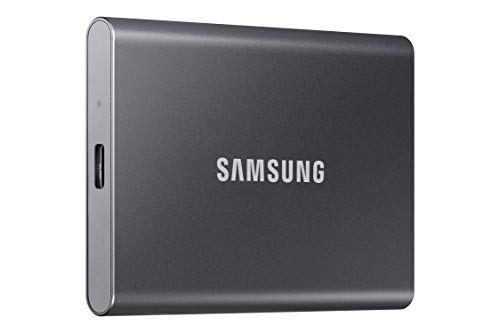
- Up to 1,050 MB/s read speed
- Compact portable SSD design
- Shock resistant with fall protection
Best For: fast on-the-go editing and quick project transfers
Big-Volume Backup
WD 20TB Elements Desktop Drive

- 20TB capacity for huge libraries
- Plug-and-play for Windows PCs
- Works with Mac after reformat
Best For: maximum-capacity desktop storage for footage and backups
Rugged Travel Pick
Seagate Rugged 5TB Portable Drive

- Shock, dust, and rain resistant
- 5TB portable storage capacity
- USB-C compatible with Mac and PC
Best For: traveling editors who need durable portable storage
Enterprise-Size Storage
Avolusion PRO-H1 14TB 7200RPM External Drive

- 14TB capacity for large footage libraries and archives
- 7200RPM enterprise internal drive for storage-heavy use
- exFAT formatting supports Windows and macOS
Best For: Editors needing a high-capacity desktop drive for media libraries and backups
Fast Rugged SSD
SanDisk Extreme Portable SSD 2TB
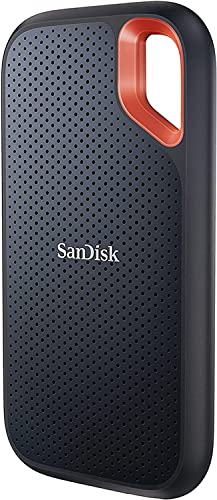
- Up to 1050MB/s read and 1000MB/s write speeds
- IP65 resistance and 3-meter drop protection
- 256-bit AES encryption for private files
Best For: Traveling editors who need speed and rugged protection
Balanced Backup Pick
WD My Passport 6TB Portable Drive

- Up to 6TB in a slim portable design
- Backup software includes ransomware defense
- Password protection and hardware encryption
Best For: Editors wanting portable storage with backup and security features
Rugged Choice
LaCie Rugged USB-C 4TB Portable

- Drop, shock, dust, and rain resistant
- 4TB capacity for large video projects
- USB-C support for Mac and PC
Best For: Portable editing storage and backup in tough conditions
High-Capacity Pick
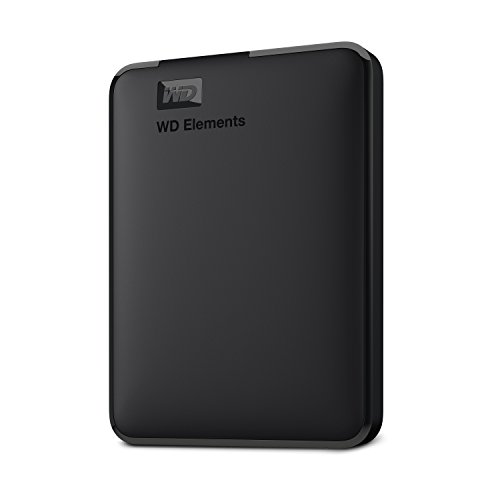
- 6TB of storage for video libraries
- Plug-and-play setup with USB 3.2 Gen 1
- Portable 2.5-inch design
Best For: Large-capacity storage and archiving
Budget Capacity
- 5TB capacity for video files and backups
- Simple plug-and-play setup
- Portable 2.5-inch design
Best For: Straightforward portable storage with lots of space
Studio-Grade Capacity – LaCie d2 Professional 10TB Desktop HDD
If you need external hard drives for video editing on a desktop setup, the LaCie d2 Professional is built for big project libraries and long-term archive storage. Its 10TB capacity, 7200 RPM enterprise-class drive, and speeds up to 240MB/s make it a practical fit for creatives working from SSD-based laptops or all-in-one computers with limited internal space.
Best For: Editors who want high-capacity desktop storage for project files and archives.
Pros:
- Massive 10TB capacity for editing projects and archive storage
- Up to 240MB/s read speed for moving large media files
- USB-C and Thunderbolt 3 compatible for modern workflows
- 7200 RPM enterprise-class BarraCuda Pro drive for reliability
Cons:
- Desktop design is less portable than a pocket-sized drive
- Best suited to stationary setups rather than on-the-go editing
Overall, this is the most storage-heavy option here and a strong fit when capacity matters more than portability. It’s especially useful as a primary project vault or archive drive for a video editing workstation.
Fast Portable SSD – Samsung T7 1TB Titan Gray
For external hard drives for video editing when speed is the priority, the Samsung T7 stands out as a portable SSD with up to 1,050/1,000 MB/s read and write performance. It’s compact, shock resistant, and built for quick file transfers, making it a strong choice for editing on laptops, moving footage between systems, or recording directly from supported cameras.
Best For: Editors who need fast portable storage for active projects and quick transfers.
Pros:
- Very fast up to 1,050 MB/s read and 1,000 MB/s write speeds
- Portable SSD design is compact and easy to carry
- Shock resistance and fall protection up to 6 feet
- Supports 4K 60fps recording on compatible devices
Cons:
- 1TB capacity may feel limited for very large media libraries
- Storage options go up to 4TB, but this version is the 1TB model
This is the best performance-oriented pick in the group for editors who move fast and value responsiveness. It’s a strong everyday drive for working media, though not the highest-capacity option.
Big-Volume Backup – WD 20TB Elements Desktop Drive
If your workflow needs external hard drives for video editing with serious storage headroom, the WD Elements Desktop is designed for high-capacity add-on storage. With 20TB of space and plug-and-play simplicity for Windows PCs, it’s a straightforward option for housing footage libraries, project backups, and finished exports.
Best For: Editors who want maximum desktop storage for large footage collections and backups.
Pros:
- Huge 20TB capacity for large media collections
- Plug-and-play ready for Windows PCs
- Fast data transfers for a mechanical desktop drive
- Works with Mac after reformatting
Cons:
- Desktop format is not meant for portable editing
- Mac users must reformat before use
This drive is a strong archive and backup companion for editors who need volume first. It’s less about portability and more about keeping lots of footage in one place.
Rugged Travel Pick – Seagate Rugged 5TB Portable Drive
When you need external hard drives for video editing that can travel well, the Seagate Rugged is built for tougher environments. Its shock, dust, and rain-resistant design, plus 5TB of portable storage and USB-C connectivity, make it a practical fit for creators who work in the field or move between locations.
Best For: Video editors who need a durable portable drive for shoots and travel.
Pros:
- Shock, dust, and rain resistance for tougher conditions
- 5TB portable capacity for large video files and backups
- USB-C connectivity for modern Mac and PC systems
- Compact, lightweight design for easy transport
Cons:
- 5400 RPM mechanical drive is slower than SSD options
- Not as fast as performance-focused drives for active editing
This is the most travel-friendly hard drive in the group and a solid choice for durability-focused workflows. It works best as a field drive or backup solution rather than a speed-first editing scratch disk.
Enterprise-Size Storage – Avolusion PRO-H1 14TB 7200RPM External Drive
If you need external hard drives for video editing, this Avolusion PRO-H1 gives you a huge 14TB capacity for keeping raw footage, project files, and archives in one place. It’s pre-formatted with exFAT for Windows and macOS compatibility, and its 7200RPM internal drive is aimed at heavier storage workloads rather than ultra-portable use.
Best For: Editors who want high-capacity desktop storage for footage libraries, backups, and long-term archiving.
Pros:
- Massive 14TB capacity suits large video libraries and backup sets.
- 7200RPM enterprise-class internal drive is built for performance-focused storage use.
- Pre-formatted with exFAT for Windows and macOS compatibility.
- Includes USB-C cable and a 2-year reseller warranty.
Cons:
- 3.5-inch external design is less portable than slim 2.5-inch drives.
- Listed media speed of 100-150 MB/s is modest for active editing workflows.
- May need reformatting for some console use or performance tuning.
This is a storage-first option: strong on capacity and suited to keeping a lot of footage accessible, but not the best pick if you need the fastest scratch-disk performance.
Fast Rugged SSD – SanDisk Extreme Portable SSD 2TB
For external hard drives for video editing where speed matters, this SanDisk Extreme Portable SSD is built to move files quickly, with up to 1050MB/s read speeds over USB 3.2 Gen 2. Its compact design, water and dust resistance, and drop protection make it a strong choice for editing on the go.
Best For: Video editors who want a fast, rugged portable SSD for transferring and working with footage away from the desk.
Pros:
- Up to 1050MB/s read and 1000MB/s write speeds.
- IP65 water and dust resistance plus up to 3-meter drop protection.
- Very lightweight and portable, with a carabiner loop for easy carry.
- Includes 256-bit AES hardware encryption for private files.
Cons:
- 2TB capacity is smaller than high-capacity HDD alternatives.
- SSD pricing typically favors speed over maximum storage volume.
If your priority is fast offload times and a drive that can handle travel, this is the most responsive option in the group.
Balanced Backup Pick – WD My Passport 6TB Portable Drive
The WD My Passport is a practical pick among external hard drives for video editing if you want a portable, high-capacity mechanical drive for storing footage, backups, and project files. It offers up to 6TB in a slim 2.5-inch design, with included backup software, ransomware defense, and password protection.
Best For: Editors who want a portable storage drive with good capacity and built-in backup and security tools.
Pros:
- Up to 6TB of storage in a slim portable design.
- Includes backup software with ransomware defense.
- Password protection and hardware encryption add file security.
- USB 3.0 and USB 3.1 compatibility keeps it broadly usable.
Cons:
- Mechanical drive speeds are lower than SSD alternatives.
- Listed read speed of 110MB/s is better for storage than active editing.
- Not as spacious as the 14TB desktop option.
This is a sensible middle-ground option for editors who care more about dependable portable storage and backup features than maximum transfer speed.
Rugged Choice – LaCie Rugged USB-C 4TB Portable
If you need external hard drives for video editing that can travel to shoots and still protect your footage, the LaCie Rugged USB-C is built for rough handling. Its 4TB capacity gives you room for large project files, backups, and media libraries, while the USB-C connection keeps transfers simple on modern laptops and desktops.
Best For: Editors who want a portable, rugged drive for on-the-go storage and backups.
Pros:
- Drop, shock, dust, and rain resistant for tougher work environments
- 4TB of storage for large video files, backups, photos, and more
- USB-C interface for fast, reliable connections
- Works with both Mac and PC
Cons:
- Mechanical drive with 5400 rpm speed, so it is not the fastest option
- Read speed listed at 130 MB/s, which may feel modest for heavy editing workflows
Overall, this is a strong pick if durability matters as much as capacity. It is less about top-end speed and more about dependable portable storage that can handle travel and field work.
High-Capacity Pick – WD Elements 6TB Portable
For external hard drives for video editing, the WD Elements Portable 6TB stands out when your priority is space. The 6TB capacity is useful for storing large video libraries, project archives, photos, and other media, and the USB 3.2 Gen 1 connection keeps it straightforward to plug in and use.
Best For: Editors who want a simple, high-capacity portable drive for storage and archiving.
Pros:
- Massive 6TB capacity for large media collections and backups
- Plug-and-play design for quick setup
- SuperSpeed USB 3.2 Gen 1 (5Gbps) interface
- Portable 2.5-inch form factor
Cons:
- Mechanical hard drive design, so it is not built for SSD-level responsiveness
- Bullets do not highlight rugged protection features
This model makes sense if you need maximum room without overcomplicating your setup. It is a practical storage-first option for keeping video files organized and accessible.
Budget Capacity – WD Elements 5TB Portable
If you want external hard drives for video editing with strong capacity at a simpler price point, the WD Elements Portable 5TB is a practical choice. It offers plenty of room for project files, media assets, and backups, along with a straightforward USB 3.2 Gen 1 connection for easy everyday use.
Best For: Editors looking for a straightforward portable drive with plenty of storage.
Pros:
- 5TB capacity for video files, personal media, and backups
- Plug-and-play expandability keeps setup simple
- SuperSpeed USB 3.2 Gen 1 (5Gbps) support
- Portable 2.5-inch form factor works well for travel
Cons:
- Mechanical drive design with no rugged protection claims
- Read speed is listed at 50 MB/s in the supplied notes
It is a no-frills storage option that focuses on capacity and convenience. For editors who mainly need a reliable place to store and move files, it covers the basics well.
How We Picked the Best External Hard Drives for Video Editing
We focused on drives that make sense for real editing workflows: fast enough for active projects, roomy enough for media libraries, and dependable enough for long-term storage. For External Hard Drives for Video Editing, the biggest differentiators are sustained transfer speed, connection type, capacity, durability, and warranty support.
We also considered whether each drive is better suited to working files or archive storage. Portable SSDs are usually the best choice for editing directly from the drive, while high-capacity desktop HDDs are often better for backups, proxies, and completed projects.
Quick Comparison
Use a portable SSD if you need the fastest load times and smoother scrubbing on the go. Choose a rugged portable drive if your work happens in transit or on location. Pick a large desktop HDD when your priority is bulk storage, multiple project archives, or a central media library at your desk.
Key Buying Factors for External Hard Drives for Video Editing
Speed
For active editing, prioritize SSDs or fast 7200 RPM desktop drives with USB 3.2 Gen 2 or USB-C. Faster speeds help reduce waiting during imports, cache refreshes, and project transfers.
Capacity
4TB is a practical starting point for many solo creators, but 6TB to 20TB becomes more useful once you work with 4K, 6K, or multiple client projects. If you keep all footage on one drive, capacity matters as much as speed.
Portability and Durability
If you shoot in the field or move between edit stations, compact SSDs and ruggedized drives offer better protection against bumps, dust, and weather exposure. Desktop drives are less mobile but usually deliver more space per dollar.
Compatibility
Check whether the drive is ready for Mac, Windows, or both. Some models are plug-and-play, while others may need reformatting for your preferred workflow or backup software.
Reliability and Support
Look for strong warranty coverage, backup utilities, and clear manufacturer support. For video work, a drive should be part of a broader backup plan rather than the only copy of your footage.
Who Should Buy Which External Hard Drives for Video Editing?
If you edit directly from external storage and want the best responsiveness, choose a portable SSD. If you need the most affordable way to store large libraries and finished projects, a high-capacity desktop HDD is the smarter pick. If you travel frequently, film on location, or work in unpredictable environments, a rugged portable drive offers the best mix of convenience and protection.
In short, the best External Hard Drives for Video Editing depend on whether your priority is speed, capacity, or mobility. Match the drive type to your workflow, and you will get better performance with less risk of bottlenecks.