High-speed memory card readers can reduce transfer time between cameras, cards, laptops, and mobile devices—provided the reader supports your card format and connection standard. This roundup compares 10 options covering SD, microSD, CompactFlash, CFexpress Type A, and CFexpress Type B workflows.
Use the guide below to match reader speed, slot design, connectivity, and portability to the way you shoot and store files.
Best 10 High Speed Memory Card Readers Picks for 2026
Professional Speed Pick
ProGrade Dual-Slot SD UHS-II Reader
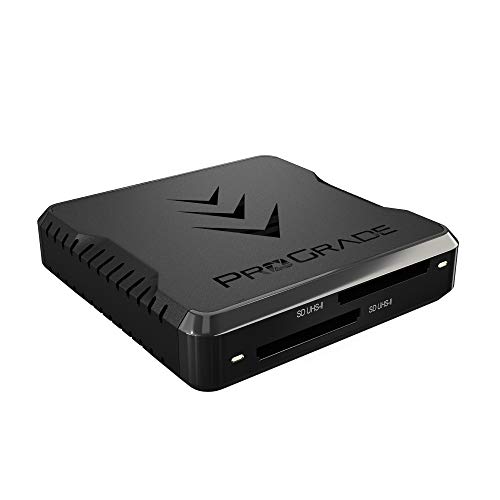
- Up to 10Gb/s USB 3.2 Gen 2 transfers
- Reads two SD UHS-II cards simultaneously
- Magnetic mounting system and two-year warranty
Best For: Professional SD-based photo and video workflows
Versatile Value Pick
SmartQ C368 4-in-1 Card Reader

- Supports SD, microSD, MS, and CF cards
- USB 3.0 speeds up to 5Gb/s
- Plug-and-play support for Windows, Mac, and Linux
Best For: Travelers using multiple card formats
CFexpress Workflow Pick
ProGrade CFexpress Type B & SD Reader
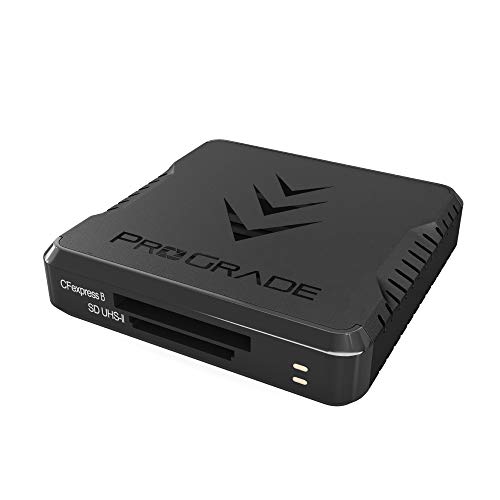
- Supports CFexpress Type B and SD UHS-II
- Up to 10Gb/s USB 3.2 Gen 2 transfers
- Dual-slot simultaneous transfer capability
Best For: Professional mixed CFexpress and SD camera kits
Compact USB-C Pick
Lexar Dual-Slot SD/microSD Reader
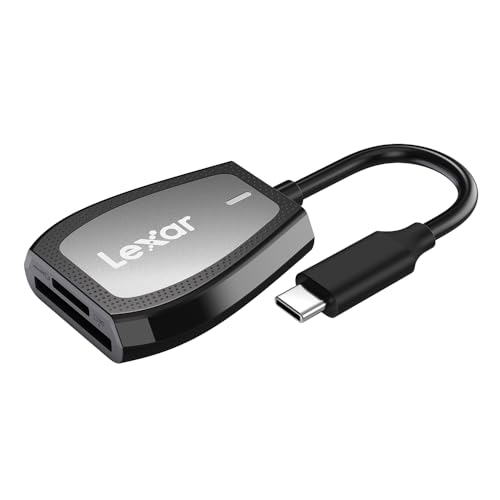
- Read speeds up to 312MB/s
- USB-C with USB 3.2 Gen 1 support
- Dedicated SD and microSD slots with LED indicator
Best For: USB-C users transferring SD and microSD files
Best for Easy Setup
ProGrade CFexpress Type A & SD Reader

- Up to 10Gbps USB 3.2 Gen 2 transfers
- Dual slots for CFexpress Type A and SD media
- Magnetic, durable design with a 2-year warranty
Best For: Professional photographers and video creators handling large files
USB-C Travel Value

- SD, microSD, and USB 3.0 ports
- Up to 5Gbps transfer speeds
- Compact aluminum design with plug-and-play setup
Best For: USB-C users transferring standard SD and microSD media on the go
Format Flexibility Pick
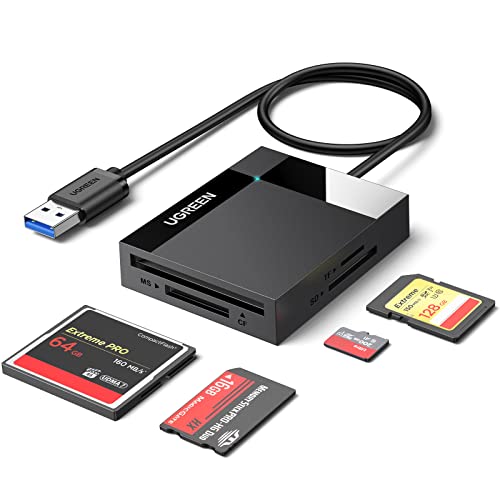
- Supports CF, SD, microSD, and Memory Stick media
- Reads and writes four cards simultaneously
- USB 3.0 transfers up to 5Gbps
Best For: Photographers managing multiple card formats at the same time
Professional Multi-Format Pick
ULANZI DC04 4-in-1 Card Reader

- Supports CFexpress Type A/B, SD, and microSD/TF
- 10Gbps interface with up to 1000MB/s CFexpress reads
- Three-card simultaneous offload with extra USB-C power
Best For: Professional multi-camera workflows and mixed card formats
UHS-II SD Specialist

- Up to 312MB/s with UHS-II SD 4.0 support
- Dual SD and microSD card slots
- Compact USB-C design with 18-month warranty
Best For: USB-C users who rely on fast SD and microSD transfers
Everyday Dual-Interface Value
Acer USB-C Dual-Slot Card Reader

- 5Gbps USB 3.0 transfer performance
- Simultaneous SD and microSD card access
- USB-A and USB-C connectors in a compact design
Best For: Routine SD and microSD transfers across mixed device ports
Professional Speed Pick – ProGrade Dual-Slot SD UHS-II Reader
For photographers and creators working with SD UHS-II cards, this high speed memory card reader offers USB 3.2 Gen 2 connectivity and transfers of up to 1.25GB/s, including simultaneous transfers from both slots.
Best For: Professional photography, video, audio, and post-production workflows using two SD cards.
Pros:
- Supports up to 10Gb/s transfer speeds and up to 1.25GB/s from both cards simultaneously.
- Dual SD UHS-II slots support an efficient multi-card workflow.
- Magnetic mounting system and included adhesive metal plate suit mobile workstations.
- Includes a two-year warranty and Refresh Pro support for ProGrade Digital cards.
Cons:
- Designed for SD media rather than CFexpress cards.
- Its performance depends on compatible UHS-II cards and a suitable USB connection.
This is a strong choice when transfer speed and dependable, portable workflow design matter more than broad card-format support.
Versatile Value Pick – SmartQ C368 4-in-1 Card Reader
If you need one reader for several card formats, the SmartQ C368 is a practical high speed memory card reader with four slots, USB 3.0 connectivity, and plug-and-play support across Windows, Mac OS, and Linux.
Best For: Travelers and general users who work with SD, microSD, Memory Stick, and CompactFlash cards.
Pros:
- Four-in-one design supports Micro SD, SD, MS, and CF cards.
- USB 3.0 supports transfer speeds up to 5Gb/s.
- Cards can be read independently for flexible file transfers.
- Plug-and-play compatibility requires no driver installation on supported systems.
Cons:
- Uses USB Type-A rather than USB-C.
- Memory cards are not included.
- Its stated speed is below the 10Gb/s models in this roundup.
The C368 is a sensible all-purpose option when format flexibility and simple setup are more important than maximum modern interface speed.
CFexpress Workflow Pick – ProGrade CFexpress Type B & SD Reader
For cameras using CFexpress Type B and SD media, this high speed memory card reader combines both formats in a USB 3.2 Gen 2 dual-slot design with transfers of up to 1.25GB/s from both cards simultaneously.
Best For: Professional creators who need to offload CFexpress Type B and SD cards from a single reader.
Pros:
- Supports CFexpress Type B and SD UHS-II cards.
- Offers up to 10Gb/s transfer speeds and simultaneous dual-card transfers.
- Magnetic mounting system with included adhesive metal plate supports mobile editing setups.
- Includes a two-year warranty and Refresh Pro support for ProGrade Digital cards.
Cons:
- Limited to the two listed card formats.
- Maximum performance requires compatible cards and USB 3.2 Gen 2 hardware.
This reader is especially useful for mixed professional camera kits, pairing high-speed CFexpress offloads with convenient SD support in one compact device.
Compact USB-C Pick – Lexar Dual-Slot SD/microSD Reader
Users who prefer a USB-C connection can choose this Lexar high speed memory card reader, which provides separate SD and microSD slots, read speeds up to 312MB/s, and a USB 3.2 Gen 1 interface.
Best For: Laptop and desktop users transferring files from SD and microSD UHS-I cards over USB-C.
Pros:
- Dedicated SD and microSD slots support convenient two-format access.
- Read speeds reach up to 312MB/s with compatible media.
- USB-C connection works with USB 3.2 Gen 1 and is compatible with USB 2.0 ports.
- LED activity light shows when the reader is working.
Cons:
- Supports SD and microSD rather than CFexpress or CompactFlash.
- Its top speed is lower than the 10Gb/s USB 3.2 Gen 2 readers.
- Backwards compatibility with UHS-I cards does not provide UHS-II performance.
The Lexar is a straightforward USB-C choice for everyday SD and microSD transfers, especially when a compact dual-slot design and broad port compatibility are useful.
Best for Easy Setup – ProGrade CFexpress Type A & SD Reader
For photographers and video creators working with CFexpress Type A and SD media, the ProGrade Digital PG09 is one of the fastest high speed memory card readers in this lineup. Its USB 3.2 Gen 2 connection supports transfer speeds up to 10Gbps, helping streamline large-file downloads and post-production workflows.
Best For: Creators who need fast CFexpress Type A and SD transfers, dual-slot access, and a durable travel-ready design.
Pros:
- Supports transfer speeds up to 10Gbps.
- Reads CFexpress Type A and SD cards through two slots.
- Magnetic attachment and included metal plate suit mobile workstations.
- Includes a 2-year warranty.
Cons:
- USB Type-A connectivity may require an adapter for some newer devices.
- Its CFexpress-focused design may be more than basic SD users need.
The PG09 stands out when transfer speed and professional workflow reliability matter most. It is a strong choice for users moving large photo, video, or audio files regularly.
USB-C Travel Value – Acer 3-in-1 SD Card Reader
The Acer 3-in-1 reader is a compact option for USB-C laptops, tablets, and compatible phones. Among high speed memory card readers, it combines SD and microSD slots with a USB 3.0 port for transfers up to 5Gbps without requiring drivers.
Best For: Travelers and mobile users who need SD, microSD, and USB connectivity in one lightweight reader.
Pros:
- Offers SD, microSD, and USB 3.0 connectivity.
- Supports data transfer speeds up to 5Gbps.
- Aluminum housing helps with heat dissipation.
- Works with Windows, macOS, Chrome OS, Linux, and compatible USB-C devices.
Cons:
- Does not support CF, XQD, UHS-II, SDUC, or several other card formats.
- Not compatible with USB-A or Lightning host devices according to the supplied notes.
- Thick device cases may prevent full USB-C insertion.
This Acer reader is a practical everyday choice for standard SD and microSD cards. Its USB-C interface and small footprint make it especially convenient for mobile file transfers, provided your cards and host device meet its compatibility limits.
Format Flexibility Pick – UGREEN 4-Slot Card Hub
The UGREEN USB 3.0 card hub is designed for users who work with several card formats. It supports CF, SD, microSD, and Memory Stick media, while its 5Gbps connection and simultaneous four-card read/write capability make it a versatile choice among high speed memory card readers.
Best For: Photographers and computer users who manage multiple card types and want to work with up to four cards at once.
Pros:
- Supports CF, SD, microSD, Memory Stick, and UHS-I cards.
- Can read and write four different memory cards simultaneously.
- Offers USB 3.0 transfer rates up to 5Gbps.
- Compatible with Windows, macOS, Linux, and Chrome OS.
Cons:
- Uses USB connectivity rather than a specified USB-C host connection.
- It is larger than a basic single-format card reader.
- Does not list support for newer high-speed formats such as CFexpress or UHS-II.
UGREEN is the most flexible option here for mixed media collections. Its four-slot design reduces cable swapping and card changes, making it useful for photographers who routinely handle several formats.
Professional Multi-Format Pick – ULANZI DC04 4-in-1 Card Reader
For professionals who need high speed memory card readers across multiple camera systems, the ULANZI DC04 combines CFexpress Type A/B, SD, and microSD/TF support in one compact hub. Its USB 3.2 Gen 2 connection supports up to 10Gbps, with a separate USB-C power input for more stable use with multiple cards.
Best For: Photographers and videographers managing CFexpress and UHS-II cards during demanding studio or location workflows.
Pros:
- Reads CFexpress Type A, CFexpress Type B, SD, and microSD/TF cards.
- Supports up to 1000MB/s for CFexpress and up to 312MB/s for SD/TF.
- Can read three cards simultaneously and includes an extra USB-C power port.
- Includes a silicone protective case, USB-C cable, and USB-A adapter.
Cons:
- Its advanced format support may be unnecessary for users with only standard SD cards.
- The warranty is listed as three months.
The DC04 is the most capable option here for mixed professional media, especially when simultaneous offloading and CFexpress compatibility matter. The added power input and heat-dissipating design also suit longer transfers.
UHS-II SD Specialist – uni USB-C SD 4.0 Card Reader
The uni USB-C SD 4.0 reader is a focused choice among high speed memory card readers for photographers and creators using UHS-II media. Its two SD 4.0 slots support transfer speeds up to 312MB/s and connect directly to USB-C laptops, tablets, and compatible phones.
Best For: Creators who primarily use SD and microSD cards and want fast UHS-II transfers through USB-C.
Pros:
- Supports UHS-II transfer speeds up to 312MB/s.
- Provides two SD 4.0-compatible slots for SD and microSD cards.
- Compact midnight blue aluminum design with a 15cm cable.
- Offers plug-and-play compatibility across Windows, macOS, ChromeOS, Linux, iOS, and Android.
Cons:
- It does not support Lightning-port iPhones or iPads.
- It is designed for SD-family cards rather than CFexpress media.
Choose the uni reader when UHS-II SD performance is the priority. It is smaller and simpler than a multi-format professional reader, while its USB-C compatibility suits modern laptops and mobile devices.
Everyday Dual-Interface Value – Acer USB-C Dual-Slot Card Reader
The Acer ODK4E0 is a practical option for shoppers seeking high speed memory card readers with broad device connectivity. It offers USB 3.0 transfer rates up to 5Gbps, simultaneous SD and microSD access, and both USB-A and USB-C connectors for computers, phones, tablets, and other compatible devices.
Best For: Everyday photo and video transfers from SD or microSD cards across USB-A and USB-C devices.
Pros:
- Supports simultaneous reading and writing for SD and microSD cards.
- Includes both USB-A and USB-C connectors.
- Compact aluminum construction with protective covers and an attached cord.
- Works without drivers on Windows, macOS, ChromeOS, Linux, and most Android devices.
Cons:
- It does not support CFexpress, XQD, SIM, or Memory Stick cards.
- Its 5Gbps interface is slower than the other listed readers.
- Thick device cases may prevent full connector insertion.
The Acer is a sensible general-purpose reader for users with standard SD and microSD cards. Its dual-connector design is especially convenient when switching between older USB-A computers and newer USB-C devices.
How We Picked the Best High Speed Memory Card Readers
We selected readers across common photography and video workflows, emphasizing supported card formats, connection standards, transfer-speed potential, slot configuration, and practical compatibility. The lineup includes compact single-format adapters, multi-card hubs, and dedicated professional readers for UHS-II SD and CFexpress media.
Advertised speeds are theoretical maximums. Actual performance depends on the card, host computer or phone, cable, file sizes, and whether multiple slots are being used simultaneously. A reader cannot make a slower card transfer faster than the card itself allows.
Quick Comparison
| Best For | Look For | Examples In This Roundup |
|---|---|---|
| UHS-II SD cards | UHS-II support and USB 3.x | ProGrade PG08, uni SD 4.0 |
| CFexpress Type B | Dedicated Type B slot and fast USB connection | ProGrade PG05.5, ULANZI DC04 |
| CFexpress Type A | Type A support, often paired with SD | ProGrade PG09, ULANZI DC04 |
| Mixed card collections | Multiple slot types and broad compatibility | SmartQ C368, UGREEN hub |
| Travel and mobile use | Compact USB-C design and simple plug-and-play operation | Lexar, Acer, uni |
Key Buying Factors for High-Speed Memory Card Readers
Card Format and Generation
Start with the cards you actually use. Standard SD and microSD readers are suitable for many cameras, drones, phones, and action cameras, while UHS-II readers are important for cards with a second row of contacts. CFexpress Type A and Type B are different physical formats and are not interchangeable, so check the exact specification before buying.
Interface and Real-World Speed
USB 3.0, USB 3.2, and USB 3.2 Gen 2 can offer very different throughput ceilings. Your computer must also support the relevant USB speed, and a USB-C connector alone does not guarantee the fastest standard. For large RAW photo libraries and high-bitrate video, prioritize a reader and cable that support the card’s intended bandwidth.
Slots, Simultaneous Transfers, and Build
Dual-slot readers are useful when copying from two cards or moving files between media, but simultaneous performance may be shared. A compact adapter is easier to pack, while a larger hub can support more formats. Look for a secure fit, durable cable or connector, clear activity indicators, and adequate heat management for sustained transfers.
Device Compatibility
Confirm compatibility with Windows, macOS, ChromeOS, iPad, Android, or other devices you plan to use. USB-C models are convenient for newer laptops and tablets, but older computers may need an adapter. Plug-and-play support is preferable when moving between workstations.
Who Should Buy Which High Speed Memory Card Readers?
Photographers using UHS-II SD cards: Choose a dedicated UHS-II reader such as the ProGrade PG08 or uni SD 4.0 for a focused, high-throughput workflow.
CFexpress shooters: Match the reader to Type A or Type B media. The ProGrade PG05.5 targets Type B, while the PG09 targets Type A; the ULANZI DC04 is useful when both formats are part of your kit.
Users with many card types: A multi-format option such as the SmartQ C368 or UGREEN reader can reduce the number of adapters you carry.
Travelers and everyday users: Compact USB-C readers from Lexar, Acer, or uni are practical for quick backups, phone transfers, and routine SD or microSD access. Prioritize the slot and connector you use most rather than paying for formats you do not need.