The best podcast recorders for musicians need to do more than capture speech. They should handle vocals, instruments, remote guests, live performances, and quick overdubs without adding unnecessary setup.
We selected 10 versatile Zoom recorders and mixer-recorders for different workflows, including portable field recording, multitrack production, video content, and multi-person podcasting.
Best 10 Podcast Recorders for Musicians Picks for 2026
Best All-in-One Podcast Hub

- Four XLR inputs with phantom power
- Four headphone outputs with individual controls
- Mix-minus for phone and remote interviews
Best For: Multi-mic podcasts and portable interviews
Best Portable Hybrid Recorder
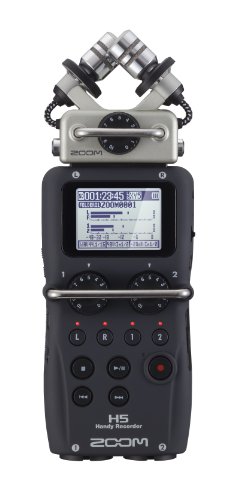
- Interchangeable input capsule system
- Four-track simultaneous recording
- Two XLR/TRS inputs and USB interface mode
Best For: Musicians recording podcasts, instruments, and location audio
Best for Full Mix Control

- Ten-track recording plus stereo mix
- 32-bit float clip-free audio
- EQ, effects, MIDI, and USB connectivity
Best For: Bands, livestreamers, and advanced podcasts
Best for Layered Music Ideas

- Four-track recording with bounce and undo
- Two XLR/TRS inputs for mics or instruments
- Built-in rhythms and 32-bit float USB mode
Best For: Solo musicians layering demos and podcast content
Best All-Around Pick

- Four-track, 32-bit float recording
- Two XLR/TRS inputs for external gear
- USB-C recording or streaming with SD backup
Best For: Musicians and podcasters needing flexible inputs and expandable recording
Best for Video Podcasts

- 4K video with a 150-degree wide-angle lens
- X/Y mics rated to 120dB SPL
- USB streaming and built-in tripod mount
Best For: Musicians pairing podcast audio with rehearsals, concerts, or livestream video
Best Compact Starter

- Lightweight 92-gram portable design
- X/Y stereo mics with 32-bit float audio
- USB microphone mode for streaming and calls
Best For: Solo musicians and podcasters seeking simple, portable stereo recording
Best Compact XLR Pick

- 32-bit float/96kHz recording
- Two locking XLR/TRS inputs
- Waveform display and SDXC support
Best For: Portable two-source music and podcast recording
Best Multitrack Choice

- Six-track 32-bit float recording
- Four XLR/TRS inputs plus X/Y mics
- USB interface with SD backup recording
Best For: Bands, multi-person podcasts, and complex sessions
Best Built-In Mic Flexibility

- Three mics with nine recording patterns
- 32-bit float/96kHz recording
- USB mic mode with SD backup
Best For: Solo recording, field work, and flexible built-in-mic capture
Best All-in-One Podcast Hub – Zoom PodTrak P4
For musicians comparing podcast recorders for musicians, the Zoom PodTrak P4 is a flexible choice for multi-mic sessions, interviews, and remote conversations. It combines four XLR inputs, individual headphone monitoring, sound pads, and battery-powered operation in a compact recorder.
Best For: Podcasts with up to four microphones, phone interviews, and portable group recording.
Pros:
- Four XLR microphone inputs with phantom power
- Four headphone outputs with individual volume control
- Automatic mix-minus for phone and remote interviews
- Records separate inputs and sound pads as multitrack audio
Cons:
- Battery life is rated at up to 3.5 hours on two AA batteries
- Its podcast-focused layout may be less suited to detailed music mixing
The P4 stands out when several people need microphones and headphones at once. Its sound pads and remote-interview features add convenience, while USB operation gives it a second role as an audio interface.
Best Portable Hybrid Recorder – Zoom H5
The Zoom H5 is a practical option among podcast recorders for musicians who also record rehearsals, instruments, or location audio. Its interchangeable capsule system, four-track recording, and XLR/TRS inputs make it adaptable across spoken-word and music setups.
Best For: Musicians and creators who want a compact handheld recorder for podcasts, instruments, and field recording.
Pros:
- Interchangeable input capsules expand recording options
- Two XLR/TRS combo inputs include phantom power and -20 dB pads
- Supports four-track simultaneous recording
- Can function as a multichannel or stereo USB audio interface
Cons:
- Two onboard XLR inputs provide less mic capacity than four-input podcast recorders
- Recording storage is limited to SD/SDHC cards up to 32GB
Choose the H5 when portability and expandability matter more than a dedicated podcast control surface. Its interchangeable capsules and audio-safety feature make it particularly useful for musicians recording in changing environments.
Best for Full Mix Control – Zoom LiveTrak L6
The Zoom LiveTrak L6 is built for creators who need more than basic capture. As one of the more capable podcast recorders for musicians, it records ten discrete tracks plus a stereo mix, while offering channel processing, effects, MIDI, and simultaneous computer recording.
Best For: Bands, livestreamers, and podcasters who need multitrack recording and hands-on mixing.
Pros:
- Records ten discrete tracks and a stereo mix to SD cards up to 1TB
- 32-bit float operation helps provide clip-free recording without manual gain setting
- Each channel includes EQ, AUX sends, pan, and onboard effects
- Works as a USB audio interface while recording to an SD card
Cons:
- Its broader mixer feature set may be more than a simple podcast requires
- Only two inputs are listed as XLR/TRS combo inputs, with four additional stereo inputs
The L6 is the strongest fit here for complex productions that benefit from dedicated mix control. It is especially appealing when you want multitrack files, live effects, MIDI connectivity, and computer integration in one battery-powered unit.
Best for Layered Music Ideas – Zoom R4 Multi-Track Recorder
The Zoom R4 suits musicians looking for podcast recorders for musicians that can also support songwriting and layered demos. It combines two XLR/TRS combo inputs, four-track recording, track bouncing, built-in microphones, rhythms, and a 32-bit float USB interface.
Best For: Solo musicians and creators layering vocals, instruments, podcast segments, and musical ideas on the go.
Pros:
- Records, layers, and bounces up to four tracks with undo functionality
- Two XLR/TRS combo inputs accommodate microphones and instruments
- Includes more than 80 built-in rhythm patterns
- Runs on four AA batteries or USB-C and works as a USB audio interface
Cons:
- Two combo inputs limit simultaneous external microphone connections
- Its four-track design is less suited to large multi-person productions
The R4 is a creative, self-contained recorder rather than a traditional podcast mixer. Its bouncing workflow, rhythm patterns, and built-in microphones make it a strong choice for solo creators who want to develop musical and spoken ideas without a full studio setup.
Best All-Around Pick – Zoom H4 Essential
For musicians who also record podcasts, interviews, or live performances, the Zoom H4 Essential is a versatile choice among podcast recorders for musicians. Its built-in stereo microphones, four-track recording, 32-bit float capture, and two XLR/TRS inputs support everything from solo sessions to more involved setups.
Best For: Musicians and podcasters who need flexible recording, external input support, and backup recording to an SD card.
Pros:
- Four-track recording with clip-free 32-bit float audio
- Built-in stereo microphones plus two XLR/TRS inputs
- Can record or stream over USB-C while saving to an SD card
- Spoken menu guidance supports more accessible operation
Cons:
- Requires two AA batteries
- Larger and heavier than the H1 Essential
The H4 Essential is the strongest fit when your recording plans may grow beyond a simple stereo setup. It offers useful connectivity and track capacity without giving up portable operation.
Best for Video Podcasts – Zoom Q2n-4K
The Zoom Q2n-4K combines a camera and stereo recorder for musicians who want video alongside their audio. With 4K capture, a 150-degree wide-angle lens, five field-of-view settings, and microphones rated to 120dB SPL, it suits rehearsals, concerts, and performance-focused podcast content.
Best For: Musicians creating video podcasts, rehearsal footage, live-performance recordings, or livestreams.
Pros:
- Records 4K video with a wide-angle lens
- X/Y microphones handle sound levels up to 120dB SPL
- USB connection supports streaming to major platforms
- Compact body includes a built-in tripod mount
Cons:
- Image stabilization is not included
- Requires two AA batteries
- More video-focused than a dedicated multitrack audio recorder
Choose the Q2n-4K when visual presentation matters as much as sound. It is especially practical for creators who want one compact device for performance video and streaming.
Best Compact Starter – Zoom H1 Essential
The Zoom H1 Essential is a lightweight stereo recorder for musicians who want a straightforward way to capture ideas, conversations, and content. Its X/Y microphones, 32-bit float recording, USB-C microphone mode, and 3.5mm headphone output make it a convenient option among podcast recorders for musicians.
Best For: Songwriters, solo podcasters, and content creators who prioritize portability and simple stereo recording.
Pros:
- Compact 92-gram design for easy portability
- X/Y stereo microphones with clip-free 32-bit float audio
- Works as a USB microphone for streaming, calls, and podcasts
- Up to 10 hours of stated battery life
Cons:
- Uses two AAA batteries
- Does not offer the H4 Essential’s XLR/TRS inputs or four-track recording
The H1 Essential is a sensible pick for quick songwriting sessions, interviews, lessons, and voice recording. Its small size keeps it ready for spontaneous recordings without the added complexity of a larger multitrack unit.
Best Compact XLR Pick – Zoom H1 XLR
For musicians seeking podcast recorders for musicians with a simple, flexible setup, the Zoom H1 XLR offers two locking XLR/TRS inputs, 32-bit/96kHz recording, and a compact design. Its waveform display helps you monitor levels, while the 3.5mm input and headphone output add useful connection options.
Best For: Musicians and podcasters who need a portable recorder for microphones, instruments, interviews, or everyday recording.
Pros:
- Records in 32-bit float/96kHz for clip-free, detailed audio.
- Two XLR/TRS combo inputs accommodate microphones and instruments.
- Waveform display provides a quick visual level check.
- Supports SDXC cards up to 1TB.
Cons:
- Offers two XLR/TRS inputs, making it less suited to larger multi-source sessions.
- Uses two AA batteries rather than a larger battery system.
The H1 XLR is a practical choice when portability and straightforward two-source recording matter more than extensive track capacity. It combines useful monitoring features with flexible input and storage options.
Best Multitrack Choice – Zoom H6 Essential
The Zoom H6 Essential is built for musicians who need more inputs and tracks from their podcast recorders for musicians. It combines six-track 32-bit float recording with four XLR/TRS inputs, built-in X/Y microphones, interchangeable capsules, and USB interface functionality.
Best For: Bands, multi-person podcasts, interviews, and creators who need several connected sources or a flexible recording workflow.
Pros:
- Records up to six tracks with clip-free 32-bit float audio.
- Four XLR/TRS inputs support multiple microphones and instruments.
- Built-in X/Y microphones capture sound up to 135 dB SPL.
- Works as a USB audio interface while recording to an SD card.
Cons:
- Requires four AAA batteries.
- Its larger, 450 g body is less lightweight than compact handheld options.
- Optional microphone capsules are needed to expand its capsule choices.
Choose the H6 Essential when input count and backup flexibility are priorities. Its combination of six-track recording, interchangeable capsules, and interface mode makes it the most adaptable option in this group for larger setups.
Best Built-In Mic Flexibility – Zoom H2 Essential
For creators who want simple podcast recorders for musicians without carrying external microphones, the Zoom H2 Essential provides three built-in microphones and nine selectable recording patterns. It also supports 32-bit float/96kHz recording, USB microphone mode, and simultaneous SD backup recording.
Best For: Solo musicians, podcasters, field recorders, and users who want flexible stereo, mono, or surround capture from a compact built-in-mic recorder.
Pros:
- Three microphones and nine patterns support varied recording layouts.
- 32-bit float recording reduces the need for manual gain adjustment.
- Can operate as a USB microphone while recording to an SD card.
- Offers up to 20 hours of battery life according to the supplied specifications.
Cons:
- Built-in microphones do not provide the XLR/TRS inputs found on the other listed models.
- Uses two AA batteries.
- Bluetooth timecode synchronization requires compatible multiple H2 Essential units.
The H2 Essential is especially appealing for quick, self-contained recording. Its selectable patterns and simultaneous USB-and-SD operation give musicians and podcasters flexibility without requiring a separate microphone setup.
How We Picked the Best Podcast Recorders for Musicians
We evaluated these recorders by looking at the features that matter most in real music and podcasting workflows: input count, microphone compatibility, recording quality, portability, monitoring, editing flexibility, and ease of use. We also considered whether each model is best suited to solo creators, bands, interviewers, streamers, or more structured home-studio production.
Because no single device fits every musician, this list includes handheld recorders, compact multitrack units, video recorders, and podcast-focused mixers. Features such as 32-bit float recording, built-in microphones, XLR inputs, onboard effects, phone connectivity, and USB operation can make a major difference depending on how you work.
Quick Comparison
- Best for four-person podcasts: Zoom PodTrak P4, with four XLR inputs, four headphone outputs, phone connectivity, and sound pads.
- Best for multitrack music: Zoom LiveTrak L6 or Zoom R4, depending on whether you prefer a mixer-style setup or a compact recorder.
- Best portable all-rounder: Zoom H5, H4 Essential, or H6 Essential.
- Best for simple stereo recording: Zoom H1 Essential or H2 Essential.
- Best for music video capture: Zoom Q2n-4K, which combines video recording with stereo audio capture.
- Best for XLR-only simplicity: Zoom H1 XLR, a focused two-channel option for microphones and line-level sources.
Key Buying Factors for Podcast Recorders for Musicians
Inputs and Track Count
Count how many microphones or instruments you need to connect at once. A solo singer-songwriter may need only one or two inputs, while a band rehearsal, panel discussion, or multi-person podcast benefits from four or more. Multitrack recording is useful when you want to adjust each source independently later.
Microphone and Instrument Compatibility
Look for XLR or combo inputs if you use dynamic microphones, condenser microphones, mixers, or instruments. Phantom power is important for many condenser microphones. Built-in stereo microphones are convenient for rehearsals, room sound, and fast interviews, but external inputs generally provide more control.
Recording Quality and Handling Noise
High-resolution recording and 32-bit float support can provide extra flexibility when levels are unpredictable. For handheld use, also consider body size, included microphone configuration, wind protection, and whether the recorder is comfortable to position near a performer.
Monitoring and Connectivity
Multiple headphone outputs are valuable for podcast guests and live monitoring. USB connectivity can turn some recorders into audio interfaces, while phone input or wireless-friendly connections simplify remote interviews and streaming.
Who Should Buy Which Podcast Recorders for Musicians?
Choose the PodTrak P4 if podcasting with several people is your priority. Choose the LiveTrak L6 or R4 for musicians who want hands-on multitrack control, overdubbing, or a compact production rig. Choose the H6 Essential or H5 if you need a flexible portable recorder for rehearsals, interviews, and location work.
Choose the Q2n-4K when synchronized video and music-friendly audio matter. Choose the H1 Essential or H2 Essential for lightweight stereo recording with minimal setup. Choose the H1 XLR when you mainly need a straightforward two-input recorder for external microphones or instruments. The right option is the one that matches your input needs first, then your preferred recording style and portability requirements.