When your edit drive needs to keep up with large camera files, cache folders, and fast turnaround times, the right enclosure matters just as much as the SSD inside it.
This roundup of the best SSD enclosures for video editing in 2026 focuses on speed, thermal control, compatibility, and real-world workflow value.
Best 10 SSD Enclosures for Video Editing Picks for 2026
Silent Studio-Friendly Pick
ACASIS 40Gbps NVMe SSD Enclosure

- Fanless aluminum fin cooling
- USB4 and Thunderbolt support
- Real-world speeds up to 2805/2734 MB/s
Best For: Quiet studios and backup-focused editors
Budget SATA Backup Pick
BENFEI 2.5 Inch SATA to USB Enclosure

- Tool-free 2.5-inch SATA setup
- Up to 5 Gbps with UASP
- USB-C and USB-A compatibility
Best For: Affordable SATA backups and basic transfers
Modern 40Gbps Editing Pick
Yottamaster M.2 NVMe SSD Enclosure

- Sustained speeds around 2800-3200 MB/s
- Tool-free install for 2230-2280 drives
- Active cooling with ASM2464PD controller
Best For: Fast 4K editing on Thunderbolt 4 or USB4
Magnetic Mobile Editing Pick
ACASIS 10Gbps Magnetic M.2 NVMe SSD Enclosure

- Magnetic mount for compatible iPhone workflows
- Built-in fan and thermal pad for heat control
- Supports direct 4K@60 ProRes recording
Best For: iPhone ProRes capture and portable editing
Fast Desktop Editing Pick
OSCOO 40Gbps USB4 NVMe M.2 Enclosure
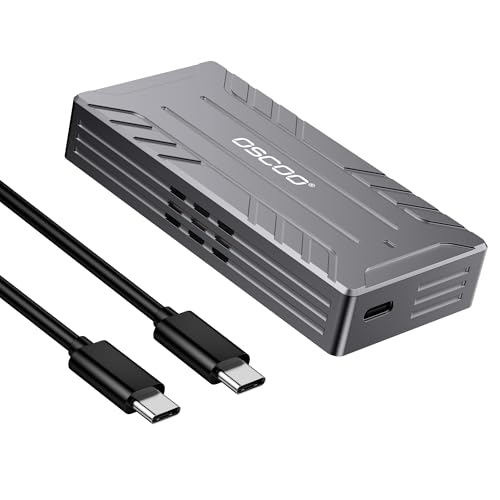
- 40Gbps USB4 / Thunderbolt-compatible performance
- Active cooling fan with aluminum housing
- Tool-free support for 2242/2260/2280 NVMe drives
Best For: Large transfers and desktop editing
Premium Monitoring Pick
MOKiN 80Gbps M.2 NVMe SSD Enclosure

- Up to 80Gbps with Thunderbolt 5 support
- LCD display shows temperature and fan status
- Active cooling with 3 fan speed levels
Best For: Power users managing large video projects
Quiet Cooling Pick
Plugable 10Gbps Tool-Free NVMe Enclosure

- 10Gbps NVMe enclosure with UASP and TRIM
- Fan plus aluminum shell helps reduce throttling
- Tool-free setup includes USB-C and USB-A cables
Best For: Editors who want a simple, cool-running portable enclosure
Fastest Premium Pick
Satechi DotDisk 80Gbps NVMe Enclosure

- Up to 80Gbps USB4 v2 performance
- Active cooling for sustained transfers
- Supports 2280 NVMe SSDs up to 8TB
Best For: Professional editors using Thunderbolt 5 or USB4 rigs
High-Capacity Multi-Drive Pick
TERRAMASTER D4 4-Bay NVMe Enclosure

- Four NVMe bays with up to 32TB capacity
- 40Gbps speeds suited to video editing
- Active cooling and hot-swap convenience
Best For: Editors who want one enclosure for multiple project drives
Ultra-Fast Portable Editing Pick – SABRENT USB4 NVMe SSD Enclosure
If you want ssd enclosures for video editing that can keep up with large project files, this SABRENT USB4 enclosure is built for speed. It supports PCIe NVMe drives only and is designed for USB4, Thunderbolt 3/4, and USB-C systems, making it a strong fit for editors who move footage between modern laptops and desktops.
Best For: Editors who need maximum transfer speed and tool-free NVMe swaps for mobile workflows.
Pros:
- Up to 3,900 MB/s over USB4, with up to 2,700 MB/s on Thunderbolt 3/4.
- Tool-free install for 2230/2242/2260/2280 PCIe NVMe SSDs.
- Active cooling fan helps keep speeds stable during large transfers.
- Works with Windows and macOS over Thunderbolt 3/4, USB4, and USB-C.
Cons:
- Does not support SATA M.2 SSDs.
- Top performance depends on having a compatible high-speed host port.
This is a good choice if your editing workflow is mostly about moving or editing large video files quickly and you already use NVMe storage. The fan-cooled design and broad host compatibility make it a practical portable option for creators who prioritize speed.
Silent Studio-Friendly Pick – ACASIS 40Gbps NVMe SSD Enclosure
For ssd enclosures for video editing where silence matters, the ACASIS 40Gbps enclosure stands out with fanless aluminum cooling fins. It supports USB4 and Thunderbolt hosts, and its focus on steady real-world performance makes it useful for moving large clips, backing up projects, or running an external working drive.
Best For: Editors who want quiet, fanless external NVMe storage for studio or backup use.
Pros:
- Fanless dual-sided aluminum fins for silent passive cooling.
- Supports Thunderbolt 5/4/3 and USB4, plus USB 3.2/3.1/3.0.
- Tested real-world speeds up to 2805/2734 MB/s with a Samsung 980 Pro on MacBook.
- Compatible with Mac, PC, iPad Pro, and bootable external drive use on supported systems.
Cons:
- Best results depend on a USB4 or Thunderbolt host.
- Larger imaging tasks still depend on the SSD you install.
If you edit in a quiet room or want an enclosure that avoids fan noise entirely, this model is compelling. It balances portability, compatibility, and high sustained speeds for creators who need dependable external storage without extra sound.
Budget SATA Backup Pick – BENFEI 2.5 Inch SATA to USB Enclosure
If your workflow only needs a simple drive case rather than a high-speed NVMe solution, this BENFEI model is a straightforward option among ssd enclosures for video editing backups. It is designed for 2.5-inch SATA SSDs, supports tool-free setup, and is useful for moving project archives or keeping a spare SSD handy.
Best For: Editors who need an inexpensive 2.5-inch SATA enclosure for backups and file transfers.
Pros:
- Tool-free installation with plug-and-play operation.
- Supports 2.5-inch SATA SSDs and HDDs up to 6TB.
- USB-C/USB-A connection adds flexible compatibility.
- UASP support and up to 5 Gbps transfer rate.
Cons:
- Much slower than NVMe USB4 or Thunderbolt enclosures.
- Only works with 2.5-inch SATA drives, not M.2 NVMe SSDs.
This is better for backup, archiving, and basic transport than for active editing directly from the enclosure. If your SSD is SATA and your priority is simplicity, it still offers a practical and affordable path.
Modern 40Gbps Editing Pick – Yottamaster M.2 NVMe SSD Enclosure
For ssd enclosures for video editing on Thunderbolt 4 or USB4 systems, this Yottamaster enclosure is built around fast, stable NVMe storage. It supports 2230 through 2280 drives, includes tool-free installation, and uses an active cooling fan to help maintain performance under sustained loads.
Best For: Editors and power users who want a fast, tool-free USB4 enclosure with active cooling.
Pros:
- 40Gbps USB4-class performance with sustained real-world speeds of about 2800 to 3200 MB/s.
- Tool-free 3-step installation for 2230/2242/2260/2280 NVMe SSDs.
- ASM2464PD controller adds stability plus overcurrent and overheating protection.
- Active cooling fan and transparent case make status easy to monitor.
Cons:
- Best performance requires a suitable Thunderbolt 4 or USB4 host and cable.
- Designed for NVMe drives only, not SATA M.2 SSDs.
This enclosure makes sense if you want a modern, high-performance portable drive for 4K video editing and related professional tasks. The combination of cooling, tool-free access, and fast sustained speeds gives it strong everyday appeal.
Magnetic Mobile Editing Pick – ACASIS 10Gbps Magnetic M.2 NVMe SSD Enclosure
If you want SSD enclosures for video editing that are built around mobile capture, this ACASIS model stands out for iPhone ProRes workflows and on-the-go transfers. It combines a magnetic mount, 10Gbps NVMe support, and a built-in cooling fan so it can handle long recording sessions without getting in the way.
Best For: iPhone ProRes recording, travel editors, and creators who need a magnetic SSD enclosure for mobile workflows.
Pros:
- Built-in silent cooling fan plus aluminum alloy and thermal pad for triple heat dissipation.
- Magnetic attachment is designed to stay secured on compatible phones and MagSafe cases.
- Supports direct 4K@60 ProRes recording to SSD on compatible iPhone 15/16/17/18 Pro and Pro Max models.
- Compact 2230 enclosure is easy to carry for event recording and mobile work.
Cons:
- SSD is not included, so you need to supply your own drive.
- New SSDs must be formatted before use with a phone.
- May benefit from external power when using SSDs larger than 1TB or multiple devices.
This is a strong fit if your editing workflow depends on direct-to-drive recording from a compatible iPhone and you value portability plus active cooling.
Fast Desktop Editing Pick – OSCOO 40Gbps USB4 NVMe M.2 Enclosure
For SSD enclosures for video editing where speed and stability matter, this OSCOO USB4 model is aimed at larger transfers and sustained workloads. Its 40Gbps interface, active cooling fan, and aluminum housing make it a practical pick for moving big project files between compatible systems.
Best For: Editors who want a high-speed external NVMe enclosure for large file transfers and desktop or laptop use.
Pros:
- 40Gbps USB4 / Thunderbolt-compatible bandwidth for fast transfers.
- Active cooling fan and aluminum alloy body are designed to reduce heat buildup.
- Supports 2242, 2260, and 2280 NVMe drives for flexible upgrades.
- Plug-and-play compatibility across Windows, macOS, laptops, desktops, tablets, and more.
Cons:
- Real-world speed depends on the host port, cable, and SSD.
- Does not support SATA or mSATA drives.
- Full 40Gbps performance requires a matching USB4 or Thunderbolt 4/5 port.
This enclosure is best when you need a no-drama external SSD setup for moving footage, working from scratch disks, or backing up active projects.
Premium Monitoring Pick – MOKiN 80Gbps M.2 NVMe SSD Enclosure
If you need SSD enclosures for video editing with top-end speed and better visibility into drive conditions, this MOKiN enclosure is built for demanding media work. The 80Gbps rating, LCD status screen, and active cooling fan make it especially useful for editors handling large project libraries and frequent backups.
Best For: Power users who want a high-speed enclosure with temperature monitoring for large video projects.
Pros:
- Up to 80Gbps transfer rate with a Thunderbolt 5 cable included.
- LCD display shows real-time temperature and fan speed status.
- Active cooling fan has three speed levels and starts at 40C to help prevent throttling.
- Supports NVMe M.2 drives up to 8TB across common lengths, including 2280 and 2230.
Cons:
- 80Gbps performance requires a Thunderbolt 5 port and cable.
- Does not support SATA M.2 SSDs.
- Actual speed varies depending on the connected device and SSD.
This is the most feature-rich option here if you want fast transfers plus live thermal feedback while working through heavy media loads.
Quiet Cooling Pick – Plugable 10Gbps Tool-Free NVMe Enclosure
For video editors who move large projects between machines, this SSD enclosure for video editing focuses on steady 10Gbps transfers and thermal control rather than flashy extras. The aluminum body plus intelligent fan are designed to keep long writes and reads from slowing down, which matters when you are offloading camera cards or working with big cache files.
Best For: Editors who want a simple, tool-free NVMe enclosure with dependable cooling for routine 4K workflows.
Pros:
- 10Gbps USB 3.2 Gen 2 performance with UASP and TRIM support
- Dual cooling setup with fan and aluminum heat dissipation
- Tool-free, driver-free installation for quick SSD swaps
- Includes both USB-C and USB-A cables
Cons:
- Only supports NVMe M.2 drives, not SATA NGFF SSDs
- Peak speed is lower than USB4 and Thunderbolt-class enclosures
The Plugable enclosure is a practical pick if you value consistent throughput and low-noise operation over maximum headline speed. It is a solid match for editors who need a dependable portable workspace without a complicated setup.
Fastest Premium Pick – Satechi DotDisk 80Gbps NVMe Enclosure
If your workflow depends on moving massive media files as fast as possible, this SSD enclosure for video editing is built for desktop-class speed. The DotDisk targets up to 80Gbps over USB4 v2, and its active cooling is meant to help sustain performance during long transfers, backups, and other demanding creative tasks.
Best For: Professional editors working with 8K media, large project libraries, and high-speed Thunderbolt/USB4 setups.
Pros:
- Up to 80Gbps USB4 v2 performance for very fast transfers
- Active cooling helps prevent throttling on long jobs
- Supports 2280 NVMe SSDs up to 8TB
- Includes Thunderbolt 5 cable, screwdriver, screws, and thermal pad
Cons:
- SSD not included
- Best speed depends on a compatible host device and SSD
- Premium feature set is more than casual users may need
The Satechi DotDisk stands out when speed and thermal stability are the priority. It is a strong fit for creators who want a compact enclosure that can keep up with modern high-bandwidth editing workflows.
High-Capacity Multi-Drive Pick – TERRAMASTER D4 4-Bay NVMe Enclosure
For heavier post-production setups, this SSD enclosure for video editing offers a different approach: four NVMe slots, active cooling, and enough room for very large media libraries. It is designed for demanding transfers and can reach up to 3,224MB/s with four SSDs installed, making it a practical choice when you need both speed and capacity.
Best For: Editors who need a multi-drive NVMe enclosure for shared projects, backups, and large local storage.
Pros:
- Four M.2 NVMe 2280 bays with up to 32TB total capacity
- Up to 40Gbps connectivity with strong video-editing throughput
- Intelligent active cooling with temperature sensors and quiet standby operation
- Tool-free, hot-swappable design for easier drive changes
Cons:
- No built-in RAID; soft RAID requires third-party tools
- Bulkier and more desktop-oriented than single-drive enclosures
- Requires external power, so it is less travel-friendly
The TERRAMASTER D4 is best viewed as a compact workspace storage hub rather than a simple pocket enclosure. If your editing setup needs multiple fast drives in one place, it offers a lot of flexibility.
How We Picked the Best SSD Enclosures for Video Editing
For SSD Enclosures for Video Editing, speed alone is not enough. We looked for enclosures that can sustain high transfer rates during long file copies, handle heat well under load, and work cleanly with common editing setups across USB-C, USB4, and Thunderbolt systems. We also favored tool-free designs, solid build quality, and features that make day-to-day use easier, such as active cooling, clear drive status, and wide OS compatibility.
Quick Comparison
The fastest options in this category are typically USB4 or 80Gbps models, which are best for demanding ProRes, RAW, and multicam workflows. 40Gbps enclosures hit a strong balance of speed and cost for most editors. 10Gbps SATA or NVMe options are better suited to lighter projects, backup drives, or budget-conscious setups where capacity matters more than top-end throughput. Multi-bay enclosures are useful when you want a larger scratch, archive, or proxy workflow in one place.
Key Buying Factors for SSD Enclosures for Video Editing
Interface Speed
Match the enclosure to your editing workload and computer ports. USB 3.2 Gen 2 is fine for many 4K jobs, but USB4 or Thunderbolt-class enclosures are the better choice for high-bitrate footage and faster ingest.
Thermal Design
Video editing drives can run hot during long transfers and exports. Aluminum shells, thermal pads, heat fins, and active fans help prevent throttling, which can otherwise cut sustained performance.
Drive Compatibility
Make sure the enclosure supports the SSD format you plan to use, whether that is M.2 NVMe or 2.5-inch SATA. Some enclosures are optimized for specific drive lengths or capacities, so check those details before buying.
Workflow Features
Tool-free assembly, status displays, magnetic mounts, and multi-bay support can all improve convenience. For editors on the move, a compact enclosure with dependable cable compatibility is often more valuable than the absolute fastest spec sheet.
Who Should Buy Which SSD Enclosures for Video Editing?
Choose a 10Gbps enclosure if you need a straightforward portable drive for lighter editing, backups, or proxy media. Go with a 40Gbps USB4 or Thunderbolt-compatible model if you regularly work with 4K, 6K, or 8K footage and want a better balance of speed and price. Step up to an 80Gbps or actively cooled enclosure if you edit high-resolution footage, move massive files daily, or want the most headroom for future workflows. A multi-bay option makes the most sense for teams, studios, or editors who want a larger shared storage or scratch-disk setup.