A reliable workstation connection needs more than a high advertised speed. The right router must deliver low latency, stable coverage, strong wired connectivity, and enough capacity for demanding uploads, downloads, cloud applications, and video calls.
These 10 picks cover affordable WiFi 6 models, faster WiFi 7 upgrades, tri-band performance, and mesh coverage for larger workspaces. Use the guide below to match router features with your workstation, internet plan, and home layout.
Best 10 Wifi Router for Workstation Picks for 2026
Best Value Wi-Fi 6 Pick

- Wi-Fi 6 speeds up to 1.8 Gbps
- Four antennas with beamforming
- Gigabit ports and VPN server support
Best For: Affordable workstation networking with reliable dual-band coverage
Balanced Performance Choice
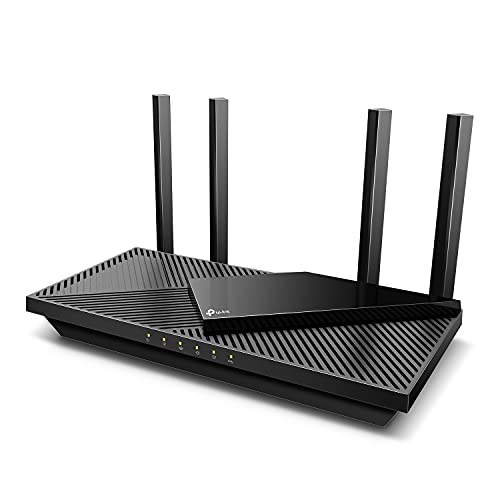
- Up to 2,976 Mbps combined Wi-Fi rate
- OFDMA for smoother multi-device use
- Gigabit ports, VPN, and HomeShield features
Best For: Workstations on busy networks with streaming and gaming traffic
Future-Ready Wi-Fi 7 Option

- Wi-Fi 7 speeds up to 3.6 Gbps
- Includes a 2.5G Ethernet port
- App setup with coverage up to 2,000 sq. ft.
Best For: Fast internet plans and Wi-Fi 7-ready workstations
Whole-Home Coverage Solution

- Three-node Wi-Fi 6 coverage up to 6,500 sq. ft.
- Supports up to 150 devices
- Gigabit ports and Ethernet backhaul
Best For: Large homes with workstation dead zones or weak single-router coverage
Best Wired Flexibility

- Two 2.5G ports plus three Gigabit ports
- WiFi 7 with Multi-Link Operation
- Coverage for up to 2,000 sq. ft. and 60 devices
Best For: Workstations with multiple wired high-speed devices
Fastest Whole-Home Option

- Up to 5 Gbps dual-band WiFi 7
- Coverage for up to 2,250 sq. ft. and 80 devices
- One 2.5G and three Gigabit ports
Best For: High-speed home offices and busy connected households
Best 6E Upgrade

- Tri-band WiFi 6E with a dedicated 6 GHz band
- 2.5Gbps WAN port and 160MHz support
- VPN, WPA3, HomeShield, and EasyMesh features
Best For: Workstations using WiFi 6E devices and demanding home networks
Best WiFi 7 Choice

- WiFi 7 with MLO, Multi-RUs, and 4K-QAM
- Two 2.5Gbps ports for multi-gig networking
- Coverage up to 2,400 sq. ft. and 90 devices
Best For: WiFi 7 workstations and multi-gig home networks
Best Value Wi-Fi 6 Pick – Archer AX21 V5
If you need a dependable wifi router for workstation use without moving to a premium tier, the TP-Link Archer AX21 V5 offers Wi-Fi 6 performance, gigabit wired connectivity, and features suited to everyday work, streaming, and gaming. It requires a separate modem for internet access.
Best For: Workstations that need stable dual-band Wi-Fi 6 and broad home coverage at a practical price.
Pros:
- Wi-Fi 6 with up to 1.8 Gbps total theoretical bandwidth
- Four high-gain antennas, beamforming, and OFDMA support
- Gigabit LAN ports plus OpenVPN and PPTP VPN server support
Cons:
- Dual-band design does not include the 6 GHz band
- Actual speeds depend on the internet plan, distance, obstacles, and device capability
The Archer AX21 is a sensible workstation router for users who want modern Wi-Fi 6 features and straightforward management without needing Wi-Fi 7 or mesh coverage. Its four gigabit LAN ports also make wired workstation connections easy.
Balanced Performance Choice – Archer AX55 AX3000
The TP-Link Archer AX55 is a strong wifi router for workstation setups that handle simultaneous downloads, video calls, streaming, and gaming. Its AX3000-class Wi-Fi 6 performance, gigabit ports, and cooling-focused design give it useful headroom for busy home networks. A modem is required for most providers.
Best For: Busy households and workstations that share bandwidth with multiple demanding devices.
Pros:
- Up to 2,402 Mbps on 5 GHz and 574 Mbps on 2.4 GHz
- OFDMA helps reduce latency and jitter across multiple clients
- Four antennas, beamforming, HomeShield features, and VPN support
Cons:
- It is a dual-band Wi-Fi 6 router rather than a 6 GHz model
- Maximum performance varies with the internet plan and wireless conditions
Compared with a basic Wi-Fi 6 router, the Archer AX55 is better suited to a workstation that shares the network with many active devices. Its gigabit Ethernet ports can also provide a consistent wired link when wireless interference is a concern.
Future-Ready Wi-Fi 7 Option – Nighthawk RS100 Wi-Fi 7
The NETGEAR Nighthawk RS100 is a wifi router for workstation users with a fast internet plan and newer Wi-Fi 7 devices. It delivers up to 3.6 Gbps across the 2.4 GHz and 5 GHz bands, includes a 2.5G port, and works with an existing modem or gateway through Ethernet.
Best For: Modern workstations and homes that want Wi-Fi 7 support and a 2.5G wired connection.
Pros:
- Wi-Fi 7 performance rated up to 3.6 Gbps
- One 2.5G Ethernet port plus three gigabit ports
- App-based setup, speed tests, guest networks, and device controls
Cons:
- Coverage is rated for up to 2,000 square feet in open layouts
- Larger or multi-story spaces may need a mesh system
- Real-world performance depends on compatible devices and the internet plan
The RS100 is the forward-looking choice in this group, especially if your workstation and internet service can take advantage of Wi-Fi 7 or 2.5G Ethernet. Its dual-band design remains backward compatible, but it does not provide a 6 GHz band.
Whole-Home Coverage Solution – Deco X55 3-Pack Mesh
If your workstation sits far from the main router or your home has persistent dead zones, the TP-Link Deco X55 3-Pack is a wifi router for workstation use that prioritizes whole-home mesh coverage. The three-unit Wi-Fi 6 system covers up to 6,500 square feet and supports wired Ethernet backhaul.
Best For: Large or multi-room homes where a single router cannot provide reliable workstation coverage.
Pros:
- Three-node mesh rated for up to 6,500 square feet
- Supports up to 150 connected devices
- Three gigabit Ethernet ports per unit and Ethernet backhaul support
Cons:
- It is a three-unit system rather than a single-router solution
- Wireless performance varies with placement, walls, and network conditions
- It does not include Wi-Fi 7 or a 6 GHz band
The Deco X55 makes the most sense when coverage is the main obstacle to a productive workstation connection. For the best performance, place the nodes carefully or use Ethernet backhaul where practical; a smaller home may not need all three units.
Balanced WiFi 7 Pick – NETGEAR Nighthawk RS90
The NETGEAR Nighthawk RS90 is a practical wifi router for workstation setups that need reliable connectivity for video calls, cloud work, streaming, and multiple smart devices. Its dual-band WiFi 7 design offers up to 3.6 Gbps, while the 2.5G port provides a useful wired option for compatible high-speed equipment.
Best For: Home workstations and busy households needing WiFi 7 coverage for up to 2,000 square feet and 50 devices.
Pros:
- WiFi 7 speeds up to 3.6 Gbps across the 2.4 GHz and 5 GHz bands.
- Includes one 2.5G port and four Gigabit ports for wired devices.
- Nighthawk app supports guided setup, speed tests, guest networks, and device pausing.
- MU-MIMO and OFDMA help multiple devices connect simultaneously.
Cons:
- It is dual-band and does not provide a 6 GHz band.
- Actual performance depends on the internet plan, device compatibility, walls, and interference.
- Larger or multi-story homes may need a separate mesh system.
For a workstation near the router, the RS90 combines a fast wired connection with modern WiFi 7 features without requiring a new internet service. It is a well-rounded option when coverage and straightforward app management matter as much as peak speed.
Best Wired Flexibility – TP-Link Archer BE230
The TP-Link Archer BE230 is a strong wifi router for workstation users who want several wired connection choices alongside WiFi 7. Its 2.5G WAN/LAN port, dedicated 2.5G LAN port, and three Gigabit LAN ports make it suitable for a desktop, storage device, or other wired equipment.
Best For: Workstations that benefit from multiple high-speed wired connections and flexible network management.
Pros:
- WiFi 7 supports Multi-Link Operation, Multi-RUs, and 4K-QAM.
- Provides one 2.5G WAN/LAN port, one 2.5G LAN port, and three Gigabit LAN ports.
- Covers up to 2,000 square feet and supports up to 60 devices.
- Supports EasyMesh, WPA3 security, parental controls, and Tether app management.
Cons:
- It is a dual-band router and does not support 6 GHz.
- A separate modem is required.
- Coverage and real-world speeds vary with distance, walls, interference, and the internet plan.
The Archer BE230 stands out when a workstation setup includes more than one demanding wired device. Its port selection is more flexible than a basic Gigabit router, while EasyMesh support leaves room to expand coverage later.
Fastest Whole-Home Option – NETGEAR Nighthawk RS150
The NETGEAR Nighthawk RS150 is a wifi router for workstation users with a fast internet plan and many connected devices. It offers up to 5 Gbps of dual-band WiFi 7 performance, coverage up to 2,250 square feet, and support for as many as 80 devices.
Best For: High-speed home offices and households with demanding internet plans and many simultaneous connections.
Pros:
- Up to 5 Gbps of WiFi 7 performance across the 2.4 GHz and 5 GHz bands.
- Supports up to 80 devices across up to 2,250 square feet.
- Includes one 2.5G port and three Gigabit ports.
- Nighthawk app offers guided setup, speed tests, guest networks, and device controls.
Cons:
- It is dual-band and does not include 6 GHz WiFi.
- Only three network ports are listed, which may limit larger wired workstation setups.
- Walls, floors, interference, connected devices, and plan limits affect actual speeds and coverage.
The RS150 is the most capable choice here for a workstation sharing a network with many high-bandwidth devices. Its higher rated throughput and broader capacity make it appealing for fast service plans, although users with several wired devices may still want an Ethernet switch.
Best 6E Upgrade – TP-Link Archer AXE75
The TP-Link Archer AXE75 is a strong wifi router for workstation setups that need additional bandwidth for large downloads, video calls, streaming, and responsive gaming. Its tri-band design adds a 6 GHz connection, while the 2.5Gbps WAN port supports compatible high-speed internet service.
Best For: Workstations with WiFi 6E devices, busy households, and users prioritizing low-latency 6 GHz connectivity.
Pros:
- Tri-band WiFi 6E delivers up to 5,400 Mbps across the 6 GHz, 5 GHz, and 2.4 GHz bands.
- 2.5Gbps WAN port, 160MHz support, and OFDMA are useful for demanding connections and multiple devices.
- Includes VPN server and client support, WPA3 security, EasyMesh compatibility, and basic HomeShield features.
Cons:
- A separate modem is required for most internet providers.
- The benefits of 6 GHz WiFi require compatible client devices and are affected by range and obstacles.
With 512MB of memory, a dual-core processor, and eight fixed antennas, the AXE75 is a capable all-around choice for a workstation-centered home network, especially when newer 6E devices are part of the setup.
Best Value Workstation Router – NETGEAR Nighthawk RAX36
The NETGEAR Nighthawk RAX36 is a practical wifi router for workstation users who want WiFi 6 performance without moving to a tri-band or WiFi 7 model. It supports up to 3Gbps wireless speed, covers up to 2,000 square feet, and provides four gigabit Ethernet ports for wired equipment.
Best For: Home workstations, gaming setups, and small households with up to 25 connected devices and internet service up to 1Gbps.
Pros:
- WiFi 6 AX3000 speeds support streaming, web conferencing, and HD gaming.
- Four 1Gbps Ethernet ports make it easy to connect a workstation, console, or other wired devices.
- Includes built-in VPN functionality, WPA3 security, USB 3.0, and app-based management.
Cons:
- It is a router only; a separate cable modem is required.
- Coverage and capacity are rated for up to 2,000 square feet and 25 devices.
- Its Ethernet ports are gigabit, so it is less suited to multi-gig wired workstation networks.
The RAX36 makes sense when reliable WiFi 6 and straightforward wired connectivity matter more than the latest wireless generation or multi-gig Ethernet.
Best WiFi 7 Choice – TP-Link Archer BE400
The TP-Link Archer BE400 is a forward-looking wifi router for workstation users with newer WiFi 7 laptops and devices. Its WiFi 7 features include Multi-Link Operation, Multi-RUs, and 4K-QAM, while two 2.5Gbps ports provide a useful upgrade for multi-gig internet and compatible wired equipment.
Best For: WiFi 7 workstations, remote workers, gamers, and households with many connected devices or multi-gig networking needs.
Pros:
- WiFi 7 technology supports MLO, Multi-RUs, and 4K-QAM for compatible devices.
- Offers up to 6,452 Mbps combined wireless throughput and coverage up to 2,400 square feet for as many as 90 devices.
- Includes one 2.5Gbps WAN/LAN port, one 2.5Gbps LAN port, EasyMesh compatibility, and VPN client support.
Cons:
- A separate modem is required.
- WiFi 7 features provide the most benefit with compatible newer devices.
- EasyMesh compatibility does not extend to Deco mesh systems.
The Archer BE400 is the most upgrade-oriented option here, pairing WiFi 7 capabilities with multi-gig ports and broad stated device capacity. It is a strong fit when the workstation and network infrastructure are ready to take advantage of those features.
How We Picked the Best Wifi Router for Workstation Use
We focused on routers that balance throughput, stability, coverage, and practical workstation connectivity. The selection includes WiFi 6, WiFi 6E, and WiFi 7 models, along with a three-unit mesh system for homes or offices with difficult dead zones. We also considered advertised coverage, multi-device capacity, Ethernet capability, band selection, and upgrade value.
Because wireless performance depends on distance, interference, client hardware, and your internet service, headline speeds are not guaranteed real-world results. A workstation with a compatible WiFi 6E or WiFi 7 adapter can benefit more from newer routers than an older laptop or desktop.
Quick Comparison
- Best budget starting point: TP-Link Archer AX21 V5 or NETGEAR RAX36.
- Best mainstream upgrade: TP-Link AX3000 dual-band router.
- Best for newer devices: TP-Link Archer BE230 or NETGEAR RS100.
- Best for maximum capacity: TP-Link BE400 or NETGEAR RS150.
- Best for multi-room coverage: TP-Link Deco X55 three-pack.
- Best for an open 6GHz band: TP-Link AXE5400 WiFi 6E router.
Key Buying Factors for a Wifi Router for Workstation
Speed and WiFi Generation
WiFi 6 is sufficient for many gigabit plans and everyday workstation workloads. WiFi 6E adds the less-crowded 6GHz band, while WiFi 7 can improve peak throughput and handling of compatible devices. Choose based on your client hardware rather than paying only for the newest standard.
Ethernet Ports and Wired Fallback
A wired connection remains the most dependable option for large file transfers, competitive gaming, NAS access, and latency-sensitive work. Check whether the router provides gigabit, 2.5Gbps, or faster ports and place it close enough to the workstation for a practical cable run.
Coverage, Placement, and Capacity
One powerful router may be ideal for an open apartment, but thick walls and multiple floors can require mesh nodes. Tri-band models can help distribute traffic, while a mesh system is often easier to position across larger spaces. Coverage claims are estimates, not guarantees.
Security and Long-Term Value
Look for current firmware support, automatic updates, guest networking, WPA3, and useful parental or access controls. A cheaper router can be the better value when it matches your plan and workload, while WiFi 7 makes more sense when you expect to add compatible devices soon.
Who Should Buy Which Wifi Router for Workstation?
Choose a budget WiFi 6 router for a single workstation, moderate internet plan, and limited connected devices. Select a WiFi 6E model if your workstation supports 6GHz and nearby networks create congestion. WiFi 7 is the stronger choice for newer desktops, multi-gigabit service, heavy local transfers, or a setup intended to last several years.
For larger homes, remote offices, or workstations far from the main router, the Deco X55 mesh system is the practical coverage-focused option. If your workstation supports Ethernet, prioritize a router with a fast wired port and use WiFi as a flexible connection for other devices.