When your footage needs to move fast and stay organized, the right duplicator can save hours across ingest, backup, and off-site delivery.
These picks focus on speed, drive compatibility, and reliable offline cloning for editors, DITs, and small production teams.
Best 10 Hard Drive Duplicators for Video Editing Picks for 2026
Dual-Bay USB 3.0 Docking Cloner
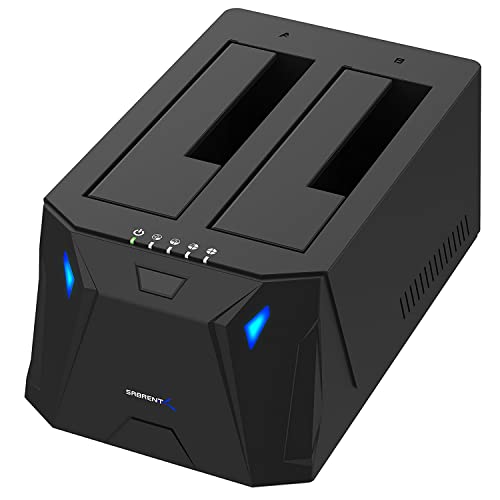
SABRENT USB 3.0 Dual Bay Hard Drive Docking Station & Cloner
- Offline cloning with no computer required
- Supports 2.5"/3.5" SATA HDDs and SSDs
- USB 3.0 transfer up to 5Gbps
Best For: Editors who want an easy dual-bay SATA dock for cloning and transfers
IT-Grade SATA Copier and Eraser
StarTech 1:1 2.5/3.5in SATA Duplicator Eraser

- Standalone duplicator, eraser, and sanitizer
- Three copy modes and four erase modes
- Copy & Compare verification support
Best For: Studios and editors that need cloning, secure erasing, and verification
High-Capacity Dual-Bay Dock
ORICO Dual Bay Hard Drive Docking Station Hard Drive Cloner

- Offline clone function for SATA drives
- Up to 44TB total capacity support
- USB 3.0 with UASP/Trim and broad OS support
Best For: Editors managing large SATA libraries across multiple platforms
NVMe SSD Cloner Dock
StarTech 1:1 M.2 NVMe SSD Duplicator/Cloner Dock

- Standalone cloning for M.2 NVMe SSDs
- Up to 90GBpm sector-by-sector duplication
- USB-C 20Gbps dock for fast external access
Best For: Editors and studios working with M.2 NVMe SSD upgrades and imaging
Standalone 1:1 Cloner
Systor 1:1 HDD/SSD Duplicator/Eraser

- Standalone cloning with no PC or software
- Supports 2.5-inch and 3.5-inch SATA drives
- Up to 90MB/s copy speed plus DoD 5220.22-M erase
Best For: Editors who want a simple offline 1:1 duplicator
Dual-Bay Dock Cloner
Dual Bay SATA Hard Drive Cloner Dock USB C

- Offline cloning with no computer required
- Dual bays support up to 40TB total
- USB 3.2 Gen 1 / SATA III with 5Gbps transfer
Best For: Editors who want cloning plus USB-C drive access
Multi-Target Cloner
Systor SYS307DP 1:7 HDD/SSD Duplicator

- Clones one source drive to up to seven targets
- Standalone operation with no computer needed
- Up to 300MB/s and DoD 5220.22-M erasing
Best For: Teams duplicating one master drive to many copies
Ultra-Fast M.2 Cloning Pick
Zunate USB-C Duplicator for Creators

- 20Gbps speed for rapid M.2 cloning
- Offline cloning with easy drive swaps
- USB-C powered and heat-managed
Best For: Creators who need a portable M.2 duplicator for fast offline cloning
Versatile Triple-Bay Dock
Rosewill NVMe, SATA, and HDD Cloner

- Handles NVMe, SATA SSDs, and 2.5/3.5-inch HDDs
- Offline cloning without a computer
- Tool-free design with 10Gbps USB 3.2
Best For: Editors who need one dock that can clone several SSD and HDD formats
Heavy-Duty Duplication Kit

- 1-to-3 standalone duplication for HDDs and SSDs
- Up to 600 MB/sec with multiple copy and erase modes
- Includes source write blocker and rugged case
Best For: Teams needing high-speed multi-drive duplication with logging and secure erase options
Dual-Bay USB 3.0 Docking Cloner – SABRENT USB 3.0 Dual Bay Hard Drive Docking Station & Cloner
If you want straightforward hard drive duplicators for video editing, this SABRENT dual-bay dock gives you a simple offline cloning workflow plus fast USB 3.0 transfer for moving media between drives. It supports 2.5″ and 3.5″ SATA HDDs and SSDs, so it works well for large project archives, scratch backups, and quick drive swaps.
Best For: Editors who want an easy-to-use dual-bay dock with offline cloning and broad SATA drive support.
Pros:
- Supports offline cloning without a computer.
- Works with 2.5″ and 3.5″ SATA HDDs and SSDs up to 10TB.
- USB 3.0 connectivity supports transfer speeds up to 5Gbps.
- Plug-and-play design with no drivers needed.
Cons:
- Offline cloning speed is listed at up to 60Mbps, which is modest for large jobs.
- Best suited to SATA drives rather than newer NVMe media.
For editors who need a practical dock for backups, duplication, and everyday drive handling, this SABRENT unit covers the core workflow without adding complexity. It is a versatile option if your library still relies on SATA storage.
IT-Grade SATA Copier and Eraser – StarTech 1:1 2.5/3.5in SATA Duplicator Eraser
Among hard drive duplicators for video editing, this StarTech standalone copier is built for workflows that need cloning, sanitizing, and verification in one box. It supports 2.5″ and 3.5″ SATA HDDs and SSDs, making it useful for backup drives, project recovery, and repeatable media deployment.
Best For: IT-minded editors and studios that need duplication plus secure erasing and verification.
Pros:
- Standalone 1:1 duplicator, eraser, and sanitizer.
- Offers three copy modes, including sector-by-sector and system/file copy.
- Includes four erase modes, including 3-pass overwrite and secure erase.
- Copy & Compare helps verify the cloned drive after completion.
Cons:
- Limited to SATA drives, with some adapter-based support sold separately.
- More complex than a basic dock if you only need simple copying.
This is the most feature-heavy option in the group if your editing workflow includes drive cleanup, deployment, or recovery tasks. It is especially appealing when data handling and verification matter as much as raw duplication.
High-Capacity Dual-Bay Dock – ORICO Dual Bay Hard Drive Docking Station Hard Drive Cloner
If you need hard drive duplicators for video editing that can handle large SATA libraries, this ORICO dual-bay dock is built around offline cloning and broad compatibility. It supports 2.5″ and 3.5″ SATA HDDs and SSDs, with USB 3.0 and UASP/Trim support for file transfer and backup tasks.
Best For: Editors managing large SATA collections who want a simple offline cloner with broad device compatibility.
Pros:
- Supports offline cloning without connecting to a computer.
- Compatible with 2.5″/3.5″ SATA HDDs and SSDs up to 44TB total capacity.
- USB 3.0 with UASP and Trim supports up to 5Gbps transfer speeds.
- Works with Windows, Mac, Linux, iPad OS, and Android.
Cons:
- Target disk must be larger than the source disk for cloning.
- The dock will not power on if no hard drive is inserted.
For editors who need a roomy SATA dock with straightforward duplication, this ORICO model is a flexible pick. Its broad platform support makes it useful in mixed-device environments, though the cloning rules are worth noting before you start.
NVMe SSD Cloner Dock – StarTech 1:1 M.2 NVMe SSD Duplicator/Cloner Dock
For video editors moving to faster storage, this StarTech standalone M.2 cloner is a strong fit when you need hard drive duplicators for video editing workflows built around NVMe rather than SATA. It clones PCIe M.2 NVMe SSDs without a computer and also works as a USB-C 20Gbps dock for quick drive access.
Best For: Editors and studios cloning M.2 NVMe SSDs for upgrades, backups, and system imaging.
Pros:
- Standalone cloning for M.2 NVMe SSDs with no computer required.
- High sector-by-sector duplication rates up to 90GBpm.
- USB 3.2 Gen2x2 host connection provides 20Gbps external access.
- Supports all PCIe M.2 M-Key drives, including those with heat sinks.
Cons:
- Only designed for M.2 NVMe SSDs, not SATA drives.
- Target disk must be equal to or larger than the source disk.
This is the best match if your editing workstation relies on NVMe storage and you want a compact cloning dock. It combines fast duplication with a handy drive-dock function, making it useful for both upgrades and day-to-day data movement.
Standalone 1:1 Cloner – Systor 1:1 HDD/SSD Duplicator/Eraser
If you need hard drive duplicators for video editing that can copy project drives without tying up a workstation, this Systor unit keeps the process simple. It runs completely standalone, supports both 2.5-inch and 3.5-inch SATA HDDs and SSDs, and can duplicate either data-only content or an entire drive.
Best For: Editors who want a no-computer duplicator for quick 1:1 drive copies and secure erasing.
Pros:
- Standalone operation means no computer or software is required.
- Supports both 2.5-inch and 3.5-inch SATA HDDs and SSDs without an adapter.
- Copies at up to 90MB per second, with the listed speed staying consistent even as load increases.
- Includes drive erasing that complies with DoD 5220.22-M sanitization.
Cons:
- Only duplicates one source to one target at a time.
- Best suited to SATA drives rather than mixed-interface workflows.
For editors who regularly clone working drives, this Systor model focuses on speed, simplicity, and drive sanitation in a dedicated offline unit. It is a practical fit when your priority is dependable drive-to-drive copying rather than multi-function dock features.
Dual-Bay Dock Cloner – Dual Bay SATA Hard Drive Cloner Dock USB C
This dual-bay option fits hard drive duplicators for video editing when you also want a USB-C dock for file access and backups. It supports offline cloning without a computer, handles 2.5-inch and 3.5-inch SATA drives, and adds a 5Gbps USB connection for faster day-to-day transfer work.
Best For: Editors who want a dual-bay dock for cloning, backups, and quick drive access from a single unit.
Pros:
- Offline clone function works without connecting to a PC or laptop.
- Dual bays support up to 40TB total capacity, with up to 20TB per bay.
- USB 3.2 Gen 1 and SATA III support 5Gbps transfer rates for file access.
- Includes UASP, TRIM, and S.M.A.R.T. support for compatibility and drive health monitoring.
Cons:
- Cloning is limited to two drives at a time.
- Open vertical design may not suit every desk setup.
For editors who move large media libraries between drives, this unit blends a duplicator dock with everyday storage access. It is more flexible than a dedicated cloner if you want to back up footage, swap drives quickly, and still keep offline cloning available.
Multi-Target Cloner – Systor SYS307DP 1:7 HDD/SSD Duplicator
When you need hard drive duplicators for video editing at scale, this Systor 1:7 model is built for copying one source drive to multiple destination drives at once. It operates completely standalone, supports both 2.5-inch and 3.5-inch SATA HDDs and SSDs, and is rated for much faster throughput than smaller clone docks.
Best For: Teams or editors who need to duplicate one master drive to several working or archive drives simultaneously.
Pros:
- 1:7 duplication lets you clone one source drive to multiple targets at the same time.
- Standalone design requires no computer or software.
- Listed copy speed reaches up to 300MB per second, or 18GB per minute.
- Supports data-only copying, full-drive copying, and DoD 5220.22-M sanitization.
Cons:
- Higher-capacity, multi-target design is more than many solo editors need.
- Best value when you routinely clone the same media across several drives.
If your workflow involves distributing the same project drive to multiple editors or archive copies, this model is the most scalable of the three. It favors speed and batch duplication, making it a strong fit for higher-volume post-production setups.
Ultra-Fast M.2 Cloning Pick – Zunate USB-C Duplicator for Creators
If you need hard drive duplicators for video editing, this Zunate M.2 unit is aimed at fast SSD cloning and quick drive swaps. Its offline cloning design and USB-C power make it practical for editors handling multiple M.2 drives without wanting to tie up a workstation.
Best For: Video editors and content creators who want a portable M.2 duplicator for fast offline cloning.
Pros:
- Transfers up to 100GB in about 30 seconds with 20Gbps speeds.
- Supports cloning across M.2 sizes and specifications.
- Offline cloning key makes it easy for beginners and experienced users.
- Vent design helps manage heat during longer sessions.
Cons:
- Focused on M.2 drives rather than broader HDD formats.
- Short warranty period of 90 days.
For workflows centered on M.2 SSDs, this is a streamlined option that prioritizes speed and portability. It suits quick turnaround tasks where cloning efficiency matters more than advanced multi-bay flexibility.
Versatile Triple-Bay Dock – Rosewill NVMe, SATA, and HDD Cloner
For hard drive duplicators for video editing, this Rosewill triple-bay dock stands out because it handles M.2 NVMe, SATA SSDs, and 2.5-inch or 3.5-inch HDDs in one tool. Offline cloning, 10Gbps transfer speeds, and tool-free drive access make it useful for editors who move data between multiple formats.
Best For: Editors who need one dock that can clone and read several SSD and HDD formats.
Pros:
- Supports M.2 NVMe, SATA SSDs, and 2.5-inch / 3.5-inch HDDs.
- Offline cloning works without a host computer.
- USB 3.2 Gen 2×1 delivers up to 10Gbps transfer speeds.
- Tool-free operation makes swapping drives quick and simple.
Cons:
- Only supports three drives total.
- Plastic enclosure may feel less rugged than metal alternatives.
This is the most flexible option here if your editing workflow mixes old HDD archives with newer SSD media. It combines docking and duplication in a compact unit, which is handy when you need one station for multiple drive types.
Heavy-Duty Duplication Kit – EZ Dupe HD Pal Pro 1-to-3
If your video editing workflow calls for dependable hard drive duplicators, this EZ Dupe HD Pal Pro is built for standalone 1-to-3 cloning and lab-style record keeping. It supports SATA and IDE/PATA drives, includes multiple copy and erase modes, and ships as a deluxe kit with a rugged case for travel or field work.
Best For: Teams that need high-speed multi-drive duplication with logging and secure erase options.
Pros:
- Copies 2.5-inch and 3.5-inch HDDs and SSDs at up to 600 MB/sec.
- Includes 4 copy modes and 8 erase modes, including secure and enhanced erase.
- Source write blocker helps prevent changes to the source drive.
- Rugged case and included adapters support portable use.
Cons:
- Standalone unit is not meant to connect to other devices.
- Bulkier and less portable than a simple dock.
This model is best when you need repeatable duplication and clear project records rather than a basic dock. Its 1-to-3 design and included accessories make it a practical choice for heavier-duty media handling.
How We Picked the Best Hard Drive Duplicators for Video Editing
For Hard Drive Duplicators for Video Editing, speed is only part of the story. We favored models that support the drive types editors still use most, including 2.5-inch and 3.5-inch SATA drives, plus NVMe or M.2 options where relevant. We also looked for offline cloning, simple controls, and workflow-friendly features such as erase modes, dock-style access, and multi-bay capacity.
We prioritized tools that make sense in real production environments: fast enough for daily ingest and backup, but straightforward enough to use without software setup.
Quick Comparison
Use a dual-bay dock or cloner if you mainly duplicate one source drive to one destination drive. Choose an M.2 or NVMe-focused model if your edit system and media drives are all-flash. Step up to 1:3 or higher duplication when you need multiple working copies for assistants, editors, or archive distribution.
Key Buying Factors for Hard Drive Duplicators for Video Editing
Drive Compatibility
Check whether the unit supports SATA HDDs, SATA SSDs, M.2 NVMe, IDE/PATA, or a mix. Video workflows can involve older archive drives as well as newer SSD media, so broader compatibility can be a major advantage.
Copy Speed
Higher throughput matters when transferring large camera originals, proxies, and project backups. Look at the rated duplication speed, but also remember that real-world performance depends on the source and destination drives.
Offline Cloning and Erasing
Standalone cloning is useful in edit bays without spare software time or network access. Erase functions are helpful when reusing media drives between jobs and maintaining clean handoff workflows.
Bay Count and Workflow Fit
Dual-bay models are ideal for routine one-to-one backups. Triple-bay and 1:7 units make more sense for teams that need multiple copies for editorial, color, archive, and client review.
Connection and Enclosure Design
USB-C and USB 3.2 docks are convenient for daily desktop use, while rugged kits can be better for field teams and shared production environments.
Who Should Buy Which Hard Drive Duplicators for Video Editing?
Solo editors usually do best with a simple dual-bay SATA or dock-style cloner. Teams handling large projects or mixed media libraries should consider a faster unit with wider drive support. If your workflow centers on modern SSDs, choose an NVMe-capable model. If you need to distribute dailies, archives, or multiple deliverables, a multi-target duplicator is the smarter investment.
In short, the best Hard Drive Duplicators for Video Editing are the ones that match your drive format, volume, and turnaround time—not just the highest spec sheet number.