Preserving family memories starts with choosing a scanner that fits your photo stack, workflow, and quality goals. The right model can turn shoeboxes of prints into organized digital archives without wasting time.
Below, we focus on the best options for everything from fast bulk scanning to high-resolution restoration work, so you can match the scanner to your family archive needs.
Best 10 Photo Scanners for Family Archives Picks for 2026
Fast One-By-One Scanning
Plustek ePhoto Z300 for family photo batches

- Scans 4x6 photos in about 2 seconds
- Supports photos up to 8x10 and paper sizes
- Includes auto crop, deskew, and enhancement
Best For: Families digitizing large print collections quickly
Simple Everyday Scanning
Canon CanoScan LiDE 300 for photos and paper

- 2400 x 2400 dpi optical resolution
- Auto Scan Mode detects what you scan
- Works with photos, receipts, and paper
Best For: Homes needing one scanner for photos and documents
High-Speed Feeder Scanning
Epson FastFoto FF-640 for big archives
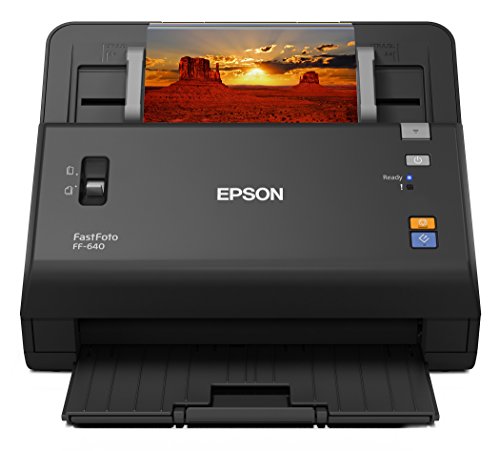
- Scans up to 1 photo per second
- Auto-feed tray holds 30 photos
- Up to 600 dpi with image organization tools
Best For: Very large family archives that need speed
Pro Detail Flatbed
Epson Perfection V850 Pro for premium scans
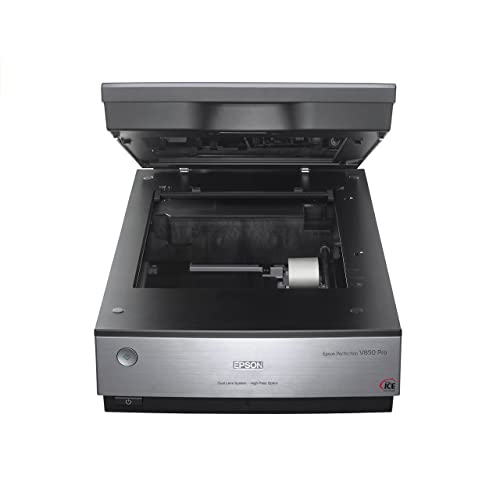
- 6400 dpi resolution for fine detail
- Dual lens system and 4.0 Dmax tonal range
- Digital ICE support for restoration
Best For: Quality-first archival scanning projects
High-Detail Flatbed Archive Scanner

- 6400 dpi resolution for detailed photo scans.
- 4.0 Dmax and 16-bit grayscale for tonal range.
- Flatbed design scans photos and slides one at a time.
Best For: Careful archival scanning of high-value prints and slides
Wireless Speed Organizer

- Scans up to 100 photos per minute.
- Automatically names, sorts, and optimizes files.
- Includes photo carrier sheets and Wi-Fi 6.
Best For: Families wanting fast scanning with built-in organization
Compact Everyday Pick

- 4800 dpi optical resolution for detailed photo scans
- Easy Photo Fix helps restore faded prints
- USB powered, lightweight, and easy to store
Best For: Small-space home archiving and occasional photo scanning
Film Archive Specialist

- Scans slides, negatives, film, and printed photos
- 6400 x 9600 dpi max resolution for big enlargements
- DUST and scratch removal with DIGITAL ICE
Best For: Families preserving film, slides, and high-detail photo archives
Space-Saving Photo Saver

- 4800 dpi optical resolution for detailed prints
- High-rise lid and dust correction for albums and older photos
- USB powered with a built-in kickstand
Best For: Compact home scanning of printed family photos and albums
Fast One-By-One Scanning – Plustek ePhoto Z300 for family photo batches
If you want photo scanners for family archives that can move quickly through stacks of prints, the Plustek ePhoto Z300 is built for speed and simplicity. It scans 4×6 photos in about 2 seconds, supports common print sizes up to 8×10, and includes auto crop, deskew, and image enhancement tools to help clean up older images.
Best For: Families who want a fast, low-fuss way to digitize large photo piles one at a time.
Pros:
- Very fast for 4×6 prints, with about 2 seconds per photo.
- Supports 3×5, 4×6, 5×7, 8×10, plus letter and A4 paper.
- Auto crop, deskew, and image enhancement help improve older scans.
- Works with both Mac and PC.
Cons:
- Scans photos one by one instead of using a feeder tray.
- Optical resolution tops out at 600 dpi.
For families focused on speed rather than maximum archival detail, this scanner is a practical middle ground. It is especially appealing if you have thousands of prints to process and want a machine that keeps the workflow moving.
Simple Everyday Scanning – Canon CanoScan LiDE 300 for photos and paper
The Canon CanoScan LiDE 300 is a straightforward option for photo scanners for family archives when you also need a general-purpose document scanner. Its Auto Scan Mode detects what you are scanning, and the 2400 x 2400 dpi optical resolution gives you more detail than many basic photo-digitizing options.
Best For: Households that want an affordable, simple scanner for photos, documents, and everyday paper items.
Pros:
- Auto Scan Mode automatically detects what you place on the glass.
- 2400 x 2400 dpi optical resolution supports detailed scans.
- Handles photos, receipts, business cards, and paper.
- Low 4.5-watt power draw keeps it energy efficient.
Cons:
- Uses a flatbed design, so scanning is slower than feeder-based photo scanners.
- Built around Windows 7 system requirements in the supplied details.
This is a sensible pick if your archive work is mixed with everyday scanning and you do not need a dedicated high-speed photo feeder. It favors versatility and detail over bulk speed.
High-Speed Feeder Scanning – Epson FastFoto FF-640 for big archives
For photo scanners for family archives where volume matters most, the Epson FastFoto FF-640 is designed to move through stacks at impressive speed. It can scan as fast as one photo per second, accepts up to 30 photos in its auto-feed tray, and reaches up to 600 dpi while helping you restore, save, organize, and share images.
Best For: Large photo collections that need to be digitized quickly with minimal manual handling.
Pros:
- Extremely fast photo scanning, with claims of up to 1 photo per second.
- Auto-feed tray holds 30 photos at a time.
- Up to 600 dpi resolution for family prints and panoramas.
- Includes tools aimed at restoring, saving, organizing, and sharing images.
Cons:
- Requires Windows support in the supplied details.
- Heavier and larger than basic flatbed scanners.
If you have boxes of prints and want to get through them fast, this model is built for the job. It is the strongest fit in this group for high-volume family archiving, especially when handling speed is more important than versatility.
Pro Detail Flatbed – Epson Perfection V850 Pro for premium scans
The Epson Perfection V850 Pro is aimed at families who want photo scanners for family archives with maximum quality and control. Its 6400 dpi resolution, dual lens system, 4.0 Dmax tonal range, and Digital ICE support make it a strong choice when preserving fine detail matters more than speed.
Best For: Archival projects where scan quality and tonal depth are the top priorities.
Pros:
- High 6400 dpi resolution for detailed archival scans.
- Dual lens system selects the best lens for the task.
- 4.0 Dmax helps capture smooth gradations and shadow detail.
- Digital ICE support adds restoration value for photos.
Cons:
- Heavier and bulkier than everyday consumer scanners.
- Flatbed design is slower than automatic photo feeders.
This is the most quality-focused option in the group and makes sense when you are preserving important family images for the long term. It is best chosen when detail, tonal range, and restoration features outweigh convenience.
Fast All-in-One Photo Feeder – Canon imageFORMULA RS40
The Canon imageFORMULA RS40 is a practical pick for photo scanners for family archives when you want to move through boxes of prints quickly. Its automatic feeder scans photos and documents in batches, handles mixed sizes, and includes software for enhancement and red-eye correction to help bring older images into usable digital form.
Best For: Families who want fast batch scanning for mixed photo and document archives.
Pros:
- Scans photos and documents automatically at up to 40 items per minute.
- Handles old and new photos in varying sizes, plus Polaroids, cards, and receipts.
- Includes photo enhancement tools like red-eye correction and face smoothing.
- Works with both Windows and Mac, with TWAIN driver support.
Cons:
- Uses an automatic feeder, so it is less suited to careful, frame-by-frame scanning.
- At 150/200/300/400/600/1200 interpolated dpi, it is more speed-focused than a flatbed scanner for maximum detail.
For households with stacks of family prints and paperwork, the RS40 is built to save time while still offering helpful cleanup tools. It is a strong fit if speed and convenience matter more than manual photo-by-photo handling.
High-Detail Flatbed Archive Scanner – Epson Perfection V800 Photo
The Epson Perfection V800 Photo is aimed at photo scanners for family archives when image quality matters most. With a flatbed design, 6400 dpi resolution, and an exclusive dual lens system, it is built for scanning individual prints with strong detail, tonal range, and shadow handling.
Best For: Careful archiving of individual photos, slides, and keepsakes where detail is the priority.
Pros:
- 6400 dpi resolution supports highly detailed scans.
- 4.0 Dmax and 16-bit grayscale help preserve tonal range and shadow detail.
- Dual lens system selects the best lens for the scan.
- Supports photo and slide media through a USB connection.
Cons:
- Flatbed design scans one item at a time, so it is slower for large family collections.
- At 20.9 pounds, it is much heavier than feeder-style scanners.
If your goal is to preserve treasured photos with as much fidelity as possible, the V800 Photo is a strong archival tool. It trades speed for careful, high-quality scanning that suits important prints and slides.
Wireless Speed Organizer – ScanSnap iX2500 Photo Edition
The ScanSnap iX2500 Photo Edition is a strong option for photo scanners for family archives if you want speed, wireless flexibility, and easy sorting. It includes photo carrier sheets, scans up to 100 photos per minute, and can automatically optimize, name, and sort files for a more organized digital archive.
Best For: Families who want fast, organized scanning with easy wireless sharing.
Pros:
- Scans up to 100 photos per minute with a 100-sheet feeder.
- Includes 3 photo carrier sheets for delicate prints.
- Automatically optimizes, names, and sorts scanned files.
- Offers Wi-Fi 6, USB-C, and cloud/mobile sharing support.
Cons:
- Maximum sheet capacity for photos is 36 in the feeder, so large batches may still need staging.
- At 600 dpi, it is more about efficient archiving than maximum flatbed-style detail.
This model is a good fit if you want a modern scanner that does more than just capture images. The built-in organization tools and wireless options make it especially handy for families building a searchable digital photo library.
Compact Everyday Pick – Epson Perfection V19 II
If you want photo scanners for family archives that keep things simple, the Epson Perfection V19 II is a compact flatbed built for photos, artwork, books, and documents. Its 4800 dpi optical resolution helps preserve detail for reprints and enlargements, while Easy Photo Fix can restore faded prints with one click.
Best For: Home users who want a small, USB-powered scanner for everyday family photo archiving.
Pros:
- 4800 dpi optical resolution for clear photo scans and enlargements
- Easy Photo Fix helps restore faded family photos quickly
- High-rise removable lid makes it easier to scan books and albums
- USB powered and lightweight at 3.1 lb for portable use
Cons:
- Single-sheet flatbed design is slower than feeder-based scanners for large batches
- Not designed for film or slide scanning
- Best suited to letter-sized materials and standard home projects
Overall, this is a practical choice if your archive work is mostly prints, albums, and mixed household scanning. It balances image quality with an easy setup and a very small footprint.
Film Archive Specialist – Epson Perfection V600 Photo
For photo scanners for family archives that need to handle more than prints, the Epson Perfection V600 Photo stands out with support for slides, negatives, medium-format film, and photos. Its 6400 x 9600 dpi maximum resolution and built-in transparency unit make it a stronger fit for preserving older film-based memories.
Best For: Families digitizing slides, negatives, and film alongside printed photos.
Pros:
- Built-in transparency unit scans 35mm slides and negatives
- Very high 6400 x 9600 dpi maximum resolution for enlargements up to 17 x 22 inches
- DIGITAL ICE helps remove dust and scratches
- Includes Easy Photo Fix and other software for image cleanup and enhancement
Cons:
- Bulkier and heavier than a simple flatbed photo scanner
- More scanner than you need if you only have printed photos
- Uses a wired USB setup and external power adapter
This is the most archive-focused option in the group if your family history includes film and slides. It offers more scanning flexibility and correction tools than basic photo-only models.
Space-Saving Photo Saver – Epson Perfection V39
If you’re comparing photo scanners for family archives and want a simple, space-saving model, the Epson Perfection V39 is a strong everyday pick. It delivers 4800 dpi optical resolution, supports photo album scanning with a high-rise removable lid, and includes tools for restoring faded photos and removing dust.
Best For: Small spaces and families digitizing printed photos, albums, and oversized artwork.
Pros:
- 4800 dpi optical resolution for clear family photo scans
- High-rise removable lid helps with books and photo albums
- Easy Photo Fix and Advanced Digital Dust Correction improve older prints
- USB powered with no AC adapter required
Cons:
- Photo-focused design is less specialized for film and negatives
- Flatbed scanning is better for steady quality than speed
- Single-sheet capacity limits batch scanning
The V39 is a sensible choice when you want a compact scanner that handles common family archiving tasks without taking up much desk space. It adds useful cleanup features while staying easy to power and place.
How We Picked the Best Photo Scanners for Family Archives
For Photo Scanners for Family Archives, we looked for a balance of speed, image quality, ease of use, and long-term value. Priority went to scanners that handle old prints, mixed photo sizes, and everyday documents well enough to make archiving simpler, not harder.
We also considered software support, operating system compatibility, optical resolution, and whether a scanner works better for bulk jobs or careful preservation work.
Quick Comparison
If you have hundreds or thousands of loose prints, a fast-fed model is usually the best fit. If your collection includes fragile originals, faded snapshots, or oversized prints, a flatbed scanner with higher optical resolution is often the smarter choice.
Some scanners in this category are built for speed and auto-feeding, while others are better for detail, color accuracy, and restoration flexibility. Choosing the right style matters more than chasing the highest spec sheet number.
Key Buying Factors for Photo Scanners for Family Archives
Speed Vs. Image Quality
Fast scanners are ideal for large family collections because they reduce setup time and encourage consistency. Flatbeds usually take longer, but they are often better for delicate originals and photos that need careful positioning.
Resolution and Color Detail
Look at optical resolution rather than interpolated numbers. Higher optical resolution helps when you want to enlarge restored photos, recover fine detail, or preserve images for future editing.
Feeder, Flatbed, or Both
Auto-feeders are best for stacks of standard prints. Flatbeds are better for albums, damaged photos, and anything that cannot safely be fed through a machine. Hybrid workflows can be especially useful for mixed archives.
Software and File Handling
Good software should make cropping, deskewing, file naming, and cloud export easier. For family archives, reliable batch handling and simple organization often matter more than advanced editing tools.
Who Should Buy Which Photo Scanners for Family Archives?
Choose a high-speed feeder if your main goal is to digitize a large pile of 4×6 prints quickly. Choose a premium flatbed if you care most about preservation, detail, or restoring older images. If you want a simple home setup for a moderate archive, a compact scanner with solid optical resolution and easy software may be the most practical option.
In short, the best scanner is the one that matches your archive size, the condition of your photos, and how much time you want to spend per batch. For most households, that means balancing convenience now with image quality you will still appreciate years later.