Clear dialogue can make or break a film, and the right lavalier microphone helps capture natural speech without forcing performers to project toward a camera. The options in this roundup cover wired XLR and 3.5mm microphones, compact wireless systems, and plug-and-play models for phones and computers.
Use the guide below to compare connection types, recording features, range, noise control, and compatibility before choosing the best lav mic for your production setup.
Best 10 Lavalier Microphones for Film Picks for 2026
Best Wireless Kit
NEEWER CM28 Dual-Transmitter Lavalier System

- Two transmitters support two-person recording.
- Up to 9 hours of onboard WAV recording per transmitter.
- Includes receiver, adapters, windshields, and charging case.
Best For: Interviews, outdoor shoots, and backup audio
Best Wired Lav
RØDE Lavalier GO Professional Microphone

- Discreet 4mm omnidirectional capsule.
- Standard 3.5mm TRS connector supports many setups.
- Includes pop shield, clip, pouch, and reinforced cable.
Best For: Filmmakers wanting a simple wired microphone
Best XLR Pair
COMICA CVM-V02O Dual Lavalier Microphones
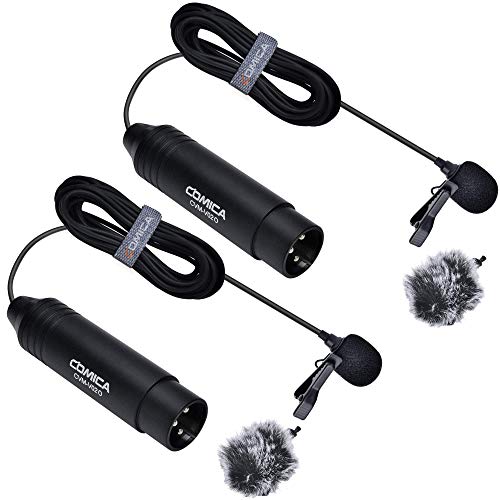
- Two omnidirectional XLR lavalier microphones included.
- Powered by 48V phantom power rather than separate mic batteries.
- Long 14.76-foot cables support flexible positioning.
Best For: Phantom-powered cameras, mixers, and field recorders
Best Wireless AI Option

- Dual AI noise cancellation with windscreen
- 48kHz/24-bit audio and real-time monitoring
- 50-hour case battery and 120m line-of-sight range
Best For: Filmmakers using USB-C phones, cameras, or computers
Best Dedicated DJI Add-On

- Designed for DJI Mic and DJI Mic 2
- Rotating design enables flexible placement
- Cable routing helps prevent unplugging
Best For: DJI users recording discreet interviews and vlogs
Best XLR Film Shoot Option
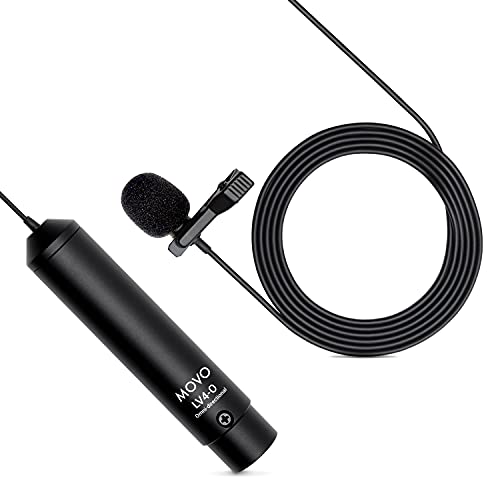
- Omnidirectional lav with 3-pin XLR connection
- Requires compatible 48V phantom power
- Includes six-foot cable, metal clip, and windscreen
Best For: Film crews using XLR mixers, recorders, or transmitters
Best Wireless Two-Person Pick
KUKIHO 2-Pack Wireless Lavalier

- Two transmitters support two-person recording.
- Plug-and-play pairing with noise reduction.
- Up to 66 feet of range and four hours of use.
Best For: Smartphone interviews and two-person mobile shoots
Best Wired Compact Pick

- Discreet miniature housing for on-camera use.
- 3.5mm TRRS connection with attached 1.3-meter cable.
- Includes clip, windscreen, and carrying pouch.
Best For: Wired recording on compatible phones, tablets, and laptops
Best USB-C Noise-Control Pick
GoorDik Wireless USB-C Lavalier

- Noise reduction, original-sound, and mute modes.
- Six to 12 hours of stated transmitter battery life.
- Includes two transmitters and multiple adapters.
Best For: USB-C mobile filming and longer outdoor recording sessions
Best Wireless Kit – NEEWER CM28 Dual-Transmitter Lavalier System
For filmmakers who need flexible audio capture, the NEEWER CM28 combines two wireless transmitters, a receiver, onboard recording, and broad device compatibility. Its noise-canceling mode, long transmission range, and charging case make it a versatile option among lavalier microphones for film.
Best For: Interviews, two-person shoots, outdoor filming, and creators who want backup recordings.
Pros:
- Includes two transmitters for recording two speakers.
- Each transmitter offers up to 9 hours of uncompressed 48 kHz WAV recording with 4GB storage.
- Supports up to 200m transmission in unobstructed areas.
- Works with phones, action cameras, computers, and DSLR cameras using the included adapters and cables.
Cons:
- Actual transmission range varies by location.
- The feature-rich system may be more equipment than a solo shooter needs.
The CM28 is especially compelling when a production needs two-person coverage or a self-recorded backup track. The LCD display, gain control, windshields, and charging case add practical flexibility for mobile shoots.
Best Wired Lav – RØDE Lavalier GO Professional Microphone
The RØDE Lavalier GO is a straightforward wired microphone for filmmakers who value discreet placement and broad 3.5mm compatibility. Its compact omnidirectional capsule and reinforced cable make it a dependable choice among lavalier microphones for film.
Best For: Filmmaking, broadcast work, streaming, and use with cameras or compatible wireless transmitters.
Pros:
- Discreet 4mm capsule delivers broadcast-grade audio capture.
- Omnidirectional pattern is forgiving when the mic is not perfectly placed.
- Standard 3.5mm TRS connector works with many cameras, interfaces, and transmitters.
- Includes a pop shield, cable-managed clip, pouch, and Kevlar-reinforced 1.2m cable.
Cons:
- It is a wired microphone, so the subject remains connected to the recording device or transmitter.
- The 3.5mm TRS connector may require an adapter for devices with other inputs.
Choose the Lavalier GO when you want a compact, familiar wired setup rather than a complete wireless system. Its durable cable and included mounting accessories suit fast-paced productions and repeat use.
Best Compact Wireless Option – Movo WMX-2 Camera Microphone
The Movo WMX-2 is a compact 2.4GHz wireless system built around a wearable transmitter, an auto-pairing receiver, and a charging case. For filmmakers using DSLR cameras or compatible Android devices, it offers a portable route to wireless lavalier audio.
Best For: Vlogging, filmmaking, interviews, and lightweight camera rigs.
Pros:
- Auto-pairing receiver simplifies setup.
- Adaptive Frequency Hopping supports a stable signal up to 328 feet.
- Transmitter provides up to 7 hours of battery life, with an additional charge from the case.
- Includes a lavalier microphone, windshields, carrying pouch, and USB-C cable.
Cons:
- Its listed compatibility is centered on DSLR cameras and Android devices with USB-C.
- Battery life is shorter than some systems designed for extended recording days.
The WMX-2 makes sense for creators who want wireless mobility without a large kit. Its charging case and compact transmitter are useful for run-and-gun production, while the 3.5mm receiver connection suits many cameras.
Best XLR Pair – COMICA CVM-V02O Dual Lavalier Microphones
The COMICA CVM-V02O two-pack is designed for cameras and recorders with three-pin XLR inputs and 48V phantom power. With long cables, metal construction, and omnidirectional pickup, it is a practical wired choice for productions using professional audio hardware.
Best For: Interviews, field recording, camcorder work, and two-microphone setups with phantom-powered equipment.
Pros:
- Two microphones are included for recording multiple speakers.
- Uses 48V phantom power, so no separate microphone batteries are required.
- 14.76-foot cables allow subjects to move away from the recorder.
- Flat frequency response is designed to preserve the original voice quality.
Cons:
- Requires equipment with three-pin XLR inputs and 48V phantom power.
- The long cables can be less convenient than a wireless setup.
- Omnidirectional pickup captures sound from all directions, so placement and environment matter.
For crews already working with XLR cameras, mixers, or field recorders, this pair offers a simple way to mic two people without managing wireless batteries. Confirm that the recording device supplies 48V phantom power before choosing it.
Best Wireless AI Option – NEEWER CM26 MAX
For creators seeking lavalier microphones for film, the NEEWER CM26 MAX is a flexible wireless option with adjustable AI noise cancellation, app controls, and broad USB-C compatibility. Its charging case, monitoring support, and included windscreen make it suited to mobile and camera-based production.
Best For: Filmmakers and content creators recording interviews, dialogue, and video on USB-C phones, cameras, tablets, or computers.
Pros:
- Two AI noise-cancellation modes, with up to -40dB outdoor reduction, plus a furry windscreen
- Records 48kHz/24-bit audio and supports Mono, Stereo, and Safety Track modes
- Up to 50 hours of total runtime and wireless transmission up to 120m in line-of-sight conditions
- App control, magnetic mounting, real-time monitoring, and one-touch mute
Cons:
- Some Android devices require OTG activation
- iPhone 14 and earlier models require a separately purchased MFi-certified USB-C-to-Lightning OTG adapter
- Its broad feature set may be more than needed for simple wired recording
The CM26 MAX stands out when you want a modern wireless lavalier system with strong battery endurance and hands-on control over noise reduction and recording modes. Check device compatibility before filming, particularly with older iPhones and select Android models.
Best Dedicated DJI Add-On – DJI Lavalier Microphone
The DJI Lavalier Microphone is a compact wired lav designed for DJI’s wireless microphone ecosystem. For lavalier microphones for film, its rotating design, concealable profile, and cable-routing feature make it a practical choice for interviews, vlogs, and other productions using a DJI receiver.
Best For: DJI Mic and DJI Mic 2 users who want a small wired lavalier for interviews, livestreams, and vlogs.
Pros:
- Compatible with DJI Mic 2 and DJI Mic
- Rotating design supports flexible microphone positioning
- Cable routing helps prevent accidental unplugging
- Compact, concealable form suits on-camera interviews and vlogs
Cons:
- Uses a 3.5mm TRS connection and is intended for a DJI digital receiver
- Single-channel microphone rather than a complete wireless system
- Its listed 74dB signal-to-noise ratio is more modest than the NEEWER option’s specification
This is a focused accessory rather than an all-in-one recording kit. It makes the most sense for filmmakers already using DJI Mic equipment and prioritizing a discreet, secure lav connection over standalone wireless features.
Best XLR Film Shoot Option – Movo LV4-O
The Movo LV4-O is a wired omnidirectional lavalier built for equipment with 48V phantom power. Among lavalier microphones for film, it is a straightforward choice for productions using XLR mixers, recorders, or compatible wireless transmitters and needing a six-foot cable with a metal clip.
Best For: Film crews, interview setups, livestreams, and podcasts using an XLR recorder, mixer, or phantom-powered wireless transmitter.
Pros:
- Connects through a 3-pin XLR plug to compatible 48V phantom-power equipment
- Omnidirectional pickup captures sound from all around the microphone
- Includes a six-foot attached cable, metal lapel clip, and detachable windscreen
- Designed for film shoots, interviews, livestreams, podcasts, and live performance
Cons:
- Requires 48V phantom power and is not a standalone wireless microphone
- Omnidirectional pickup may capture more surrounding sound than a directional design
- Its XLR connection is less convenient for direct use with phones and other consumer devices
The LV4-O is best suited to traditional production workflows built around XLR audio equipment. Its durable clip, long cable, and phantom-powered design make it a practical wired lav when mobility and phone-first connectivity are not priorities.
Best Wireless Two-Person Pick – KUKIHO 2-Pack Wireless Lavalier
For filmmakers recording interviews, conversations, or two-person scenes on a phone, this KUKIHO kit offers a practical wireless setup. It includes two transmitters, automatic pairing without Bluetooth or an app, omnidirectional pickup, and built-in noise reduction for more convenient mobile production.
Best For: Two-person smartphone interviews, vlogs, podcasts, and mobile film shoots.
Pros:
- Includes two microphones for recording two speakers simultaneously.
- Plug-and-play operation requires no Bluetooth or application.
- Noise reduction, windproof foam, and omnidirectional pickup support clearer speech.
- Offers up to 66 feet of transmission range in unobstructed conditions and up to four hours of working time.
Cons:
- The listed four-hour working time may limit longer shoots.
- Its compatibility and included adapters are oriented toward phones and common computer connections rather than dedicated camera inputs.
This is a flexible choice among lavalier microphones for film when your production centers on smartphone video and two-person dialogue. The charging receiver can also power the phone during use, which is useful for extended recording sessions.
Best Wired Compact Pick – Shure MVL Lavalier Microphone
The Shure MVL is a straightforward wired option for filmmakers who prefer a compact lavalier without wireless pairing or transmitter charging. Its 3.5mm TRRS connector is designed for compatible phones, tablets, laptops, and other devices with a headset microphone input.
Best For: Discreet, wired voice recording on compatible mobile devices and laptops.
Pros:
- Small housing provides a discreet appearance on camera.
- Uses a simple 3.5mm TRRS connection with a 1.3-meter attached cable.
- Includes a clip, windscreen, and carrying pouch.
- Shure lists RF/GSM interference protection and a 65 dB signal-to-noise ratio.
Cons:
- Requires a device with a 3.5mm headset microphone input.
- The wired design restricts movement compared with wireless systems.
- It is a single microphone rather than a two-transmitter kit.
For productions using compatible recording devices, the MVL keeps the setup simple and avoids wireless battery management. Check your device’s input requirements before buying, especially if it lacks a 3.5mm jack.
Best USB-C Noise-Control Pick – GoorDik Wireless USB-C Lavalier
For filmmakers working with USB-C phones, tablets, or computers, the GoorDik wireless kit combines mobile convenience with selectable audio modes. It provides noise reduction or original-sound modes, mute control, rotatable magnetic clips, and outdoor wind protection for flexible location recording.
Best For: USB-C smartphone filming, outdoor vlogging, podcasts, and creators needing longer battery life.
Pros:
- Dual noise-control modes and mute functionality are accessible through the transmitter interface.
- Each transmitter is rated for six to 12 hours of use.
- Includes two transmitters, furry windscreens, foam covers, and USB-C, USB, and Lightning connection options.
- Provides up to a 30-meter wireless range and can charge a phone through the receiver.
Cons:
- Some Android phones may require OTG activation.
- Computer users may need to select the receiver as the default input device.
- Its USB-C-focused setup may require adapters for devices with different ports.
This kit is a strong fit among lavalier microphones for film when battery endurance and adaptable mobile connectivity matter. Its included wind protection and adjustable audio modes make it particularly practical for outdoor creator workflows.
How We Picked These Lavalier Microphones for Film
We selected these 10 microphones across the main setups used in filmmaking: professional cameras with XLR inputs, DSLR and mirrorless cameras, smartphones, tablets, and computers. We considered connection type, compatibility, wireless range, battery life, onboard recording, audio resolution, noise-reduction features, included accessories, and the practical demands of hiding or securing a lav mic on talent.
The list includes established options from brands such as RØDE, DJI, Shure, COMICA, and Movo, along with affordable wireless kits designed for creators. Because no single microphone suits every production, the best choice depends on your camera inputs, crew size, shooting environment, and post-production workflow.
Quick Comparison
- Best for professional XLR setups: Choose an omnidirectional XLR lavalier with phantom-power support, such as the COMICA or Movo wired options.
- Best for fast wireless production: Consider a compact wireless system with a receiver, charging case, and built-in noise control.
- Best for phones: Select a USB-C or Lightning-compatible wireless microphone that works without extra adapters.
- Best for backup audio: A transmitter with internal recording can preserve dialogue if the wireless signal drops.
- Best for simple, low-cost rigs: Wired 3.5mm lavaliers are lightweight, dependable, and do not require wireless pairing or charging.
Key Buying Factors for Lavalier Microphones for Film
Connection and Compatibility
Check your camera or recording device before buying. XLR microphones generally require a compatible camera input or audio interface and may need phantom power. A 3.5mm TRS lav usually suits cameras, while smartphone systems may require TRRS, Lightning, or USB-C support. Wireless kits must also match the receiver connection to your camera, phone, or computer.
Wireless Range and Reliability
Advertised range is measured in open conditions, so walls, bodies, crowds, and radio interference can reduce performance. For narrative film or documentary work, look for stable transmission, clear pairing indicators, and a practical range that exceeds your normal distance from camera.
Sound Quality and Noise Control
Omnidirectional lavaliers provide consistent pickup when the subject moves, but they also capture nearby noise. Digital noise reduction can help with fans or light background ambience, though aggressive processing may make speech sound unnatural. A windscreen, careful placement, and proper gain settings remain essential.
Battery Life and Recording Options
Confirm the runtime for both transmitters and receivers, and favor charging cases when working long days. Internal recording is especially useful for critical dialogue, while 48 kHz/16-bit capture is a practical standard for video production.
Who Should Buy Which Lavalier Microphones for Film?
Film crews using professional cameras should prioritize XLR compatibility, phantom-power support, durable clips, and clean off-camera cable routing. Solo filmmakers and vloggers will usually benefit from a wireless kit with automatic pairing, a charging case, and simple camera or phone connectivity. Mobile creators should choose a native USB-C or Lightning solution to avoid unreliable adapters. Interview and documentary shooters may prefer internal recording or a long wireless range for added security. Budget-conscious beginners can start with a wired lavalier, provided its connector matches the recording device and they can manage cable movement.