Choosing among dynamic microphones with built-in preamps can simplify a podcast, streaming, or home-recording setup. These models combine strong background-noise rejection with extra output gain, helping you get a usable signal without immediately adding a separate booster or cloudlifter.
This roundup includes USB, XLR, and hybrid microphones from Shure, MAONO, FIFINE, and sE Electronics. Compare connectivity, controls, included accessories, and the type of voice setup each model best suits before you buy.
Best 10 Dynamic Microphones with Built in Preamp Picks for 2026
Best Premium Choice
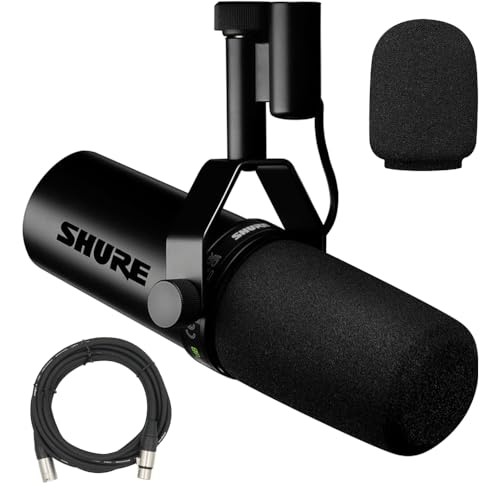
- Selectable +18 dB or +28 dB built-in gain
- Warm SM7B-style sound with cardioid pickup
- Includes windscreen and 20-foot XLR cable
Best For: Premium podcasting, streaming, and vocal recording
Best Wireless Flexibility
MAONO PD200W Hybrid Wireless Mic

- Wireless, USB, and XLR connection options
- Up to 60 hours of battery life with RGB off
- Supports two wireless mics with one receiver
Best For: Flexible podcasting across desktop, mobile, and camera setups
Best Streamlined SM7B Alternative

- Selectable +18 dB or +28 dB onboard gain
- Cardioid isolation with air suspension shock isolation
- Bass-roll-off and presence controls
Best For: Focused vocal recording with a simplified XLR signal chain
Best Complete USB/XLR Kit

- USB and XLR connectivity for flexible recording
- Includes boom arm, shock mount, and windscreen
- Mute button and headphone monitoring jack
Best For: Beginner podcast and streaming desks
Best Feature-Rich XLR Pick
sE Electronics DynaCaster DCM8

- Switchable +30 dB preamp gain
- Six EQ configurations
- Includes pop filter and shockmount
Best For: Content creators who want adjustable vocal shaping and included accessories
Best USB/XLR Upgrade

- USB-C and XLR outputs
- Auto Level and real-time denoising
- LED touch controls with mute
Best For: Podcasters and streamers who want flexible computer and studio connectivity
Best Simple Voice Setup
sE Electronics DynaCaster DCM6

- Switchable +30 dB preamp gain
- Speech-focused cardioid capsule
- Includes windscreen and shockmount
Best For: Voice-focused creators building an uncomplicated XLR setup
Best Plug-and-Play Kit

- USB/XLR connectivity
- Included boom arm and shock mount
- Onboard USB gain, mute, and monitoring
Best For: Complete podcast and streaming setups
Best Professional Vocal Mic
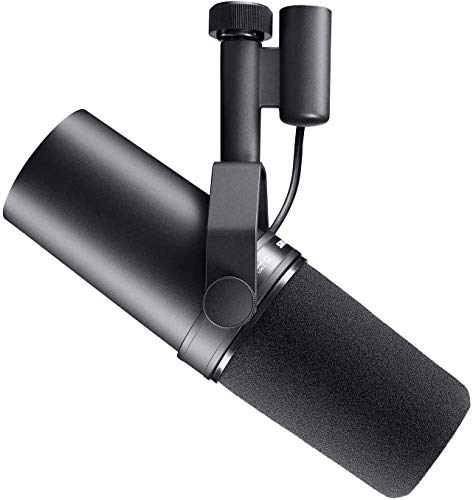
- Warm, balanced vocal reproduction
- Cardioid pickup with air-suspension isolation
- Requires substantial external gain
Best For: Professional podcasting, broadcast, and studio vocals
Best Flexible Value

- USB and XLR outputs
- USB gain, mute, and headphone controls
- Shock mount and windscreen included
Best For: Computer recording with future XLR expansion
Best Premium Choice – Shure SM7dB
For shoppers comparing dynamic microphones with built in preamp, the Shure SM7dB is a premium XLR option built around the familiar warm SM7B sound. Its selectable +18 dB or +28 dB gain, cardioid pickup, and adjustable tone controls make it practical for podcasting, streaming, vocals, and instruments.
Best For: Creators who want classic broadcast sound without adding an external inline preamp.
Pros:
- Built-in preamp provides selectable +18 dB or +28 dB low-noise gain.
- Cardioid pattern and rear rejection help isolate vocals from background noise.
- Preamp bypass and bass-roll-off/presence controls provide flexible tonal shaping.
- Includes a windscreen, thread adapter, and 20-foot XLR cable.
Cons:
- Requires an XLR interface or mixer with +48V phantom power when using the preamp.
- Premium features may be more than casual users need.
The SM7dB is a strong fit when clean gain and the recognizable SM7B-style vocal character are priorities. The bypass switch also gives experienced users a straightforward way to integrate it into a more advanced setup.
Best Wireless Flexibility – MAONO PD200W Hybrid Wireless Mic
The MAONO PD200W stands out among dynamic microphones with built in preamp by offering wireless, USB, and XLR connection options. It is designed for creators who want to move between a desktop, mobile device, camera, or conventional audio interface without being locked into one recording method.
Best For: Mobile creators, wireless podcasters, and flexible desktop recording setups.
Pros:
- Supports wireless, USB, and XLR connectivity.
- Offers up to a 60-meter wireless range and up to 60 hours of battery life with RGB off.
- Cardioid pickup and three-stage noise cancellation help focus on the voice.
- Supports two wireless microphones with one receiver for dual podcasts or interviews.
Cons:
- Camera and Lightning accessories are sold separately.
- Wireless operation requires battery management.
- App-based customization may be unnecessary for users who prefer a simple XLR setup.
This is the most versatile choice in the group for users who value cable-free recording and device compatibility. Its multiple connection modes make it easy to start simply and move to an XLR interface later.
Best Streamlined SM7B Alternative – Shure SM7dB Black
If you want dynamic microphones with built in preamp and a simplified signal chain, this Shure SM7dB pairs its familiar warm vocal character with selectable onboard gain. The cardioid design, air suspension shock isolation, and electromagnetic shielding are well suited to focused podcast, streaming, and recording work.
Best For: Vocal-focused creators who want built-in gain and strong isolation in a durable XLR microphone.
Pros:
- Selectable +18 dB or +28 dB preamp gain reduces the need for external boosters.
- Cardioid pickup and air suspension help reduce room reflections, handling noise, and background sound.
- Rear-panel bass-roll-off and presence controls allow direct tone shaping.
- All-metal construction and electromagnetic shielding support a durable setup.
Cons:
- Uses XLR connectivity, so an audio interface or mixer is required.
- Unlike the wireless and USB models in this roundup, it is not a plug-and-play computer microphone.
The SM7dB is a practical choice for users who want the SM7B-style approach with less reliance on outboard gain equipment. Its controls are especially useful when you want to adjust vocal character at the microphone.
Best Complete USB/XLR Kit – FIFINE AmpliTank K688T
The FIFINE AmpliTank K688T is a practical entry in the dynamic microphones with built in preamp category for desktop creators who want both USB convenience and XLR upgrade potential. The set includes a boom arm, shock mount, windscreen, mute control, and headphone monitoring features for a ready-to-use podcast or streaming station.
Best For: Beginners and desktop creators building a complete podcasting or streaming setup.
Pros:
- Provides both plug-and-play USB and traditional XLR connectivity.
- Includes a boom arm, shock mount, and windscreen to help manage vibration and harsh noise.
- Tap-to-mute, gain control, headphone monitoring, and volume adjustment are built in.
- Cardioid pickup and a stated 130 dB SPL handling capability support clear recording.
Cons:
- The included boom arm may require suitable desk space and positioning.
- Its listed frequency range extends to 16 kHz, which is narrower than some studio-oriented options.
- The kit is primarily intended for desktop and computer-based use.
For shoppers who want more than just a microphone, the K688T offers useful accessories and controls in one package. It is an accessible way to begin with USB and retain the option to move to an audio interface through XLR.
Best Feature-Rich XLR Pick – sE Electronics DynaCaster DCM8
The sE Electronics DynaCaster DCM8 is one of the most versatile dynamic microphones with built in preamp for podcasters, streamers, and studio users. Its switchable 30 dB gain boost, six EQ configurations, integrated pop filter, and shockmount help create a complete XLR recording setup.
Best For: Content creators who want adjustable vocal shaping and substantial included accessories.
Pros:
- Switchable +30 dB clean gain with 48V phantom power can help lower-gain interfaces.
- Six EQ configurations allow sound shaping before processing.
- Includes an integrated three-layer pop filter, shockmount, and swivel mount.
- Cardioid pickup is designed to focus on vocals and reduce ambient noise.
Cons:
- Requires an XLR connection and 48V phantom power to use the preamp.
- Its included features and 1.6-pound metal construction may be more than needed for a basic setup.
The DCM8 stands out when you want an XLR dynamic microphone with built in preamp functionality plus onboard tone controls. It is a strong all-in-one option for users who want to reduce the need for separate accessories.
Best USB/XLR Upgrade – Shure MV7+
The Shure MV7+ is a flexible choice for shoppers comparing dynamic microphones with built in preamp-style processing for podcasting, streaming, and recording. Its USB-C and XLR outputs support both plug-and-play computer setups and more customized interface or mixer workflows.
Best For: Podcasters and streamers who want USB-C convenience alongside XLR connectivity and onboard digital controls.
Pros:
- USB-C and XLR outputs support computers, mobile devices, interfaces, and mixers.
- Auto Level Mode adjusts gain based on speaking distance and volume.
- Real-time denoising can help reduce background noise.
- LED touch panel provides level monitoring, tap-to-mute control, and customizable lighting.
Cons:
- Its listed 50 Hz–16 kHz frequency range is narrower than some studio-oriented microphones.
- Built-in reverb and digital features may be unnecessary for users seeking a simple analog XLR microphone.
The MV7+ is the most convenient option here for moving between computer-based recording and traditional XLR equipment. Choose it if connectivity flexibility, automatic level control, and denoising matter more than a strictly analog workflow.
Best Simple Voice Setup – sE Electronics DynaCaster DCM6
The sE Electronics DynaCaster DCM6 is a practical XLR option among dynamic microphones with built in preamp, particularly for speech-focused recording. Its switchable 30 dB gain boost, front-addressed cardioid capsule, built-in pop filter, and included shockmount simplify podcasting, voiceover, and streaming setups.
Best For: Voice-focused creators who want an uncomplicated XLR microphone package with extra gain available.
Pros:
- Switchable +30 dB gain with 48V phantom power reduces the need for an external inline preamp.
- Speech-tailored cardioid capsule is designed for intelligible voice capture and background-noise reduction.
- Integrated pop filter, removable windscreen, shockmount, and mount are included.
- All-metal housing and gold-plated XLR contacts are designed for long-term use.
Cons:
- Requires an XLR connection and phantom power for the built-in gain boost.
- It offers fewer tone-shaping controls than the DCM8.
The DCM6 is a sensible pick when clear speech and a ready-to-use accessory package are the priorities. It keeps the core benefits of an active dynamic design while avoiding the extra EQ controls of its larger sibling.
Best Plug-and-Play Kit – FIFINE AmpliTank K688CT
If you want dynamic microphones with built in preamp-style convenience, the FIFINE AmpliTank K688CT offers a practical USB setup with onboard gain and headphone controls, while retaining an XLR connection for mixer or interface use. Its included boom arm, shock mount, and windscreen make it a complete starting point for podcasting, streaming, and voice recording.
Best For: Creators who want a bundled USB/XLR microphone kit with easy desktop setup and monitoring controls.
Pros:
- USB and XLR connectivity supports both plug-and-play and interface-based recording.
- Onboard USB gain, volume, mute, and headphone monitoring controls simplify sessions.
- Included boom arm, shock mount, and windscreen help reduce vibration and plosive noise.
- Cardioid pickup and a 130 dB SPL rating support focused, distortion-resistant vocal recording.
Cons:
- On-microphone controls work only over USB; XLR control requires a mixer or audio interface.
- The included C-clamp fits desks under 2 inches thick.
The K688CT is the most ready-to-use option here for someone building a compact recording station. Its USB controls and bundled arm reduce the need for extra purchases, while XLR keeps the setup upgradeable.
Best Professional Vocal Mic – Shure SM7B
The Shure SM7B is a focused XLR dynamic microphone for buyers prioritizing polished vocal capture over built-in controls. It uses a cardioid pattern, air-suspension isolation, pop filtering, and electromagnetic shielding to help keep speech clear in studio, broadcast, podcast, and streaming environments.
Best For: Experienced creators, broadcasters, and musicians with an audio interface or mixer that can provide substantial gain.
Pros:
- Wide-range response and a dynamic cartridge produce warm, balanced vocals.
- Cardioid pickup and air-suspension isolation help reduce room noise and handling vibration.
- Built-in pop filtering and included windscreens reduce plosives and breath noise.
- Rugged metal construction and shielding support reliable long-term studio use.
Cons:
- It is XLR-only and requires a mixer or audio interface.
- At least 60 dB of gain is recommended for its commonly associated tone.
- An external preamp such as the separately sold MVX2U may be needed for some setups.
The SM7B is not a microphone with a built-in preamp; it is better suited to a properly equipped signal chain. Choose it when you value refined vocal sound and durable construction and already have enough clean gain available.
Best Flexible Value – FIFINE AmpliTank K688
For shoppers comparing dynamic microphones with built in preamp-style USB convenience, the FIFINE AmpliTank K688 combines USB and XLR outputs with onboard USB gain, mute, and headphone controls. It is a flexible choice for recording directly to a computer now while leaving room to add a mixer or audio interface later.
Best For: Home podcasters, streamers, and voice-over users who want USB convenience without giving up XLR expansion.
Pros:
- USB connection works with Windows and Mac without additional software or settings.
- XLR output can work with a mixer or sound card for more advanced recording chains.
- USB gain, tap-to-mute, headphone monitoring, and volume controls are convenient for desk recording.
- Cardioid pickup, windscreen, and shock mount help limit background, plosive, and vibration noise.
Cons:
- Arm stand, mic stand, and XLR cable are not included.
- Onboard controls are available only when using USB.
- The microphone is intended for close recording, so placement matters.
The K688 offers a strong balance between simple computer recording and future expandability. It is less complete than the K688CT kit because accessories are sold separately, but its dual-output design and USB controls make it adaptable.
How We Picked the Best Dynamic Microphones with Built in Preamp
We selected microphones that offer a practical advantage for spoken-word recording, streaming, podcasting, or vocal work. Our comparison considers preamp implementation, connection options, gain requirements, pickup pattern, monitoring features, included accessories, and overall setup flexibility. USB/XLR models are especially useful for buyers who want simple computer recording now but may add an audio interface later.
We also separated true built-in-preamp designs from closely related dynamic microphones that rely on external gain. That distinction matters because a microphone’s output level, power requirements, and compatibility can vary considerably between models.
Quick Comparison
- Best-known broadcast option: Shure SM7dB, with an integrated preamp and familiar SM7B-style voicing.
- Most flexible for computer users: USB/XLR models such as the Shure MV7+ and MAONO PD200W.
- Accessory-focused choices: Several FIFINE and sE Electronics kits include mounting or vocal-recording extras.
- Best upgrade path: XLR microphones let you move to a dedicated interface or mixer later.
- Simple traditional setup: A standard dynamic such as the SM7B may suit users who already own substantial clean gain.
Key Buying Factors for Dynamic Microphones with Built-In Preamp
Connection Type and Power
XLR gives you compatibility with interfaces, mixers, and broadcast consoles, while USB connects directly to a computer. Hybrid models provide both, but check whether the built-in preamp operates only through XLR and whether USB features require computer software or bus power.
Gain, Noise, and Voice Matching
An integrated preamp can make a low-output dynamic microphone easier to use, but it does not eliminate room noise or poor microphone technique. Check available gain, self-noise specifications when provided, and whether the microphone needs phantom power for its active circuitry. A close, consistent speaking distance remains important.
Controls, Monitoring, and Accessories
Headphone monitoring, mute controls, onboard processing, shock mounting, pop filters, windscreens, and included cables can reduce the total cost of a working setup. Confirm thread sizes and stand compatibility if you plan to use a boom arm.
Size, Pattern, and Placement
Most options here use a front-addressed cardioid pattern, which helps reject sound from behind the microphone. They are often substantial broadcast-style microphones, so allow room for a sturdy arm and position the capsule correctly rather than speaking into the side or rear.
Who Should Buy Which Dynamic Microphones with Built in Preamp?
Choose the Shure SM7dB if you want a premium broadcast microphone with integrated gain and a proven, controlled vocal presentation. Choose the Shure MV7+ if direct USB recording, software features, and XLR expansion matter more than a traditional one-purpose setup.
Choose the MAONO PD200W if wireless flexibility is valuable for your podcast or computer workflow. Choose an sE Electronics DynaCaster if you prefer an XLR-focused broadcast microphone with an active preamp and included mounting accessories.
Choose a FIFINE AmpliTank model if you want a more budget-conscious USB/XLR entry point or a kit with useful extras. Choose the Shure SM7B if you already have a high-quality interface, mixer, or inline booster and prefer its established passive design.