Network audio players with preamp output make it easier to add streaming, digital processing, and modern multiroom features to an existing hi-fi system. They can feed a power amplifier, active speakers, or a traditional stereo setup without requiring a separate source for every service.
This roundup compares 10 options ranging from compact wireless preamps to premium DACs and full network receivers, helping you match features, connections, and system plans to your listening priorities.
Best 10 Network Audio Players with Preamp Output Picks for 2026
Maximum-Resolution All-in-One

- Streamer, DAC, preamp, and DAP in one unit
- Supports 768kHz/32-bit PCM and DSD512
- NAS, USB, CD-drive, and SSD support
Best For: High-resolution digital systems with large local libraries
Simple Wireless System Upgrade

- Adds streaming to existing hi-fi equipment
- Wi-Fi, AirPlay, Bluetooth, and Spotify Connect
- MusicCast and Alexa voice-control compatibility
Best For: Existing receivers and hi-fi systems needing wireless streaming
Premium Connectivity Hub

- Network streamer, DAC, and balanced preamp
- Ethernet, HDMI, and SFP fiber ports
- Isolation, OCXO clock, and room correction
Best For: Advanced systems needing flexible wired integration
Most Flexible Everyday Preamp

- AirPlay 2, Google Cast, and major Connect services
- HDMI eARC, phono, USB, optical, coaxial, and RCA inputs
- RCA, optical, subwoofer, and trigger outputs
Best For: Mixed-source living-room and two-channel systems
Versatile Hi-Fi Hub
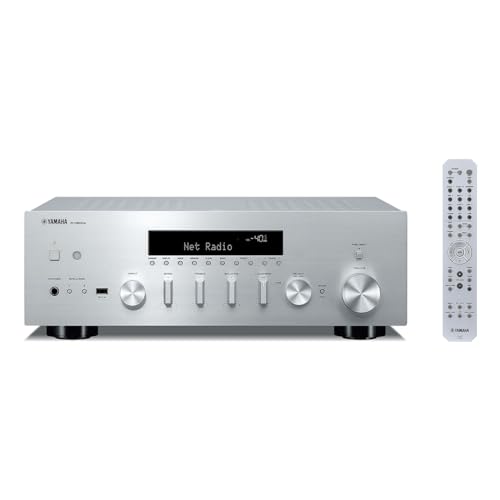
- ESS SABRE DAC with high-resolution playback
- Phono, USB, optical, Wi-Fi, and Ethernet connectivity
- 80-watt two-channel receiver design
Best For: Vinyl-and-streaming stereo systems
Feature-Rich Streamer
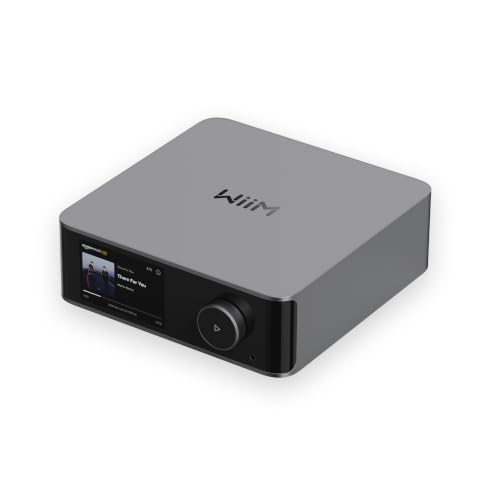
- ESS DAC with 24-bit/192 kHz streaming
- RCA, HDMI ARC, phono, headphone, and subwoofer connections
- Touchscreen, room correction, and multiroom control
Best For: Flexible modern stereo and home theater systems
Dedicated Audiophile Source

- Stereo RCA, coaxial, and optical outputs
- 24-bit/192 kHz, MQA, and DSD128 support
- Designed to integrate with select ARCAM Radia amplifiers
Best For: Dedicated streaming in an amplifier-based hi-fi system
All-in-One HiFi Pick

- Streamer, DAC, and amplifier in one unit
- Room correction and multi-room support
- Best with compatible bookshelf speakers
Best For: Streamlined bookshelf-speaker systems
Premium Connectivity Choice

- ESS Sabre DAC for digital conversion
- Balanced XLR and multiple digital inputs
- HDMI eARC supports home cinema use
Best For: Separates-based audio systems
Streaming Receiver with Vinyl Support

- Network receiver with built-in DAC and amplification
- Phono input for turntables
- YPAO room correction and MusicCast support
Best For: Streaming-and-vinyl stereo systems
Maximum-Resolution All-in-One – Kaiboer DMP-K7 Plus
The Kaiboer DMP-K7 Plus is a feature-rich choice for shoppers seeking network audio players with preamp output. It combines streaming, DAC, preamp, and digital-player functions, with NAS, USB, CD-drive, and high-resolution playback support.
Best For: Enthusiasts building a high-resolution digital system with extensive storage and format support.
Pros:
- Combines streamer, DAP, DAC, and preamp functions.
- Supports up to 768kHz/32-bit PCM and DSD512.
- Offers NAS access, USB storage support, CD ripping, and internal SSD compatibility.
- Uses four ESS9039Q2M DACs and dual femtosecond clocks.
Cons:
- Does not support Bluetooth.
- Its extensive feature set may be more than a basic streaming setup requires.
The DMP-K7 Plus stands out when maximum format support, local-library flexibility, and integrated preamp functionality matter more than simplicity. Its storage options and broad connectivity make it a strong centerpiece for a digital-first system.
Simple Wireless System Upgrade – Yamaha WXC-50
The Yamaha WXC-50 is a practical option for shoppers comparing network audio players with preamp output to modernize an existing hi-fi or home-theater receiver. It adds Wi-Fi, AirPlay, Bluetooth, Spotify Connect, MusicCast, and voice-control compatibility in a compact preamplifier design.
Best For: Owners of existing receivers or hi-fi systems who want straightforward wireless streaming.
Pros:
- Designed to connect with an existing AV receiver or hi-fi system.
- Supports Wi-Fi, AirPlay, Bluetooth, Spotify Connect, and MusicCast.
- Works with Alexa devices for voice control.
- Provides access to services including Pandora, Spotify, and Rhapsody.
Cons:
- Its listed high-resolution and service support is less extensive than newer premium streamers.
- Alexa control requires a separate Alexa device.
The WXC-50 is best viewed as a connectivity upgrade rather than an all-in-one high-resolution music server. Its broad wireless features and compact preamp format make it a convenient bridge between legacy audio equipment and streaming services.
Premium Connectivity Hub – Eversolo DMP-A10
The Eversolo DMP-A10 targets buyers seeking network audio players with preamp output and premium system integration. It combines network streaming, DAC, and balanced preamp functions with a large touchscreen, electrical and USB isolation, room correction, and Ethernet, HDMI, and SFP connectivity.
Best For: Advanced home audio systems that need flexible wired connectivity and integrated control.
Pros:
- Combines network streamer, DAC, and balanced preamp functions.
- Includes high-speed electrical isolation, advanced USB isolation, and an OCXO clock system.
- Offers Ethernet, HDMI, and SFP fiber connectivity.
- Features a 6.5-inch LCD touchscreen and digital room correction.
Cons:
- At 12.46 kg, it is a substantial component for a rack or shelf.
- The supplied notes do not specify individual streaming services or supported maximum sample rates.
The DMP-A10 is positioned for listeners who want a refined central component with extensive system connectivity and onboard processing. Its balanced preamp, isolation features, and room-correction capability suit ambitious setups, though buyers should confirm specific service and format requirements.
Most Flexible Everyday Preamp – Arylic LP100
The Arylic LP100 is a versatile choice among network audio players with preamp output, combining current streaming platforms with TV, turntable, computer, and analog-source connectivity. It supports AirPlay 2, Google Cast, Spotify, Tidal, Qobuz, Roon Ready functionality, and Bluetooth 5.4.
Best For: Mixed-source systems using streaming, television audio, turntables, and active speakers or amplifiers.
Pros:
- Supports AirPlay 2, Google Cast, Spotify Connect, Tidal Connect, Qobuz Connect, and Roon Ready.
- Includes HDMI eARC with CEC, phono, optical, coaxial, RCA, USB, and USB-B DAC inputs.
- Provides RCA, optical, subwoofer, and trigger outputs.
- Bluetooth 5.4 supports LDAC, aptX Adaptive, Auracast, and other codecs.
Cons:
- Some features depend on compatible services, devices, or the optional remote.
- The supplied notes list a one-year manufacturer warranty.
The LP100 is a strong fit when one preamp needs to handle more than network music. Its HDMI eARC, dedicated phono input, broad outputs, and modern wireless support make it especially adaptable for living-room and two-channel systems.
Versatile Hi-Fi Hub – Yamaha R-N600A
The Yamaha R-N600A is a practical choice for listeners seeking network audio players with preamp output in a full-size receiver. It combines Wi-Fi and Ethernet streaming with an ESS SABRE DAC, phono input, USB playback, and optical TV connectivity.
Best For: Vinyl listeners and stereo systems needing streaming, amplification, and flexible source connections in one component.
Pros:
- Supports high-resolution playback, including native DSD up to 11.2 MHz and PCM up to 384 kHz.
- Includes a dedicated phono input for connecting a turntable.
- Offers Wi-Fi, Ethernet, Bluetooth, USB, RCA, and optical connectivity.
- Provides 80 watts of output power for a two-channel system.
Cons:
- Its receiver design may be more hardware than buyers need if they only want a network source.
- The supplied notes identify Spotify support but do not list the full range of streaming services.
The R-N600A stands out when you want network playback and traditional stereo functionality together. Its built-in amplification and phono stage make it especially convenient for mixed digital-and-vinyl setups.
Feature-Rich Streamer – WiiM Ultra
The WiiM Ultra is a flexible pick among network audio players with preamp output, pairing a touchscreen interface with an ESS ES9038 Q2M DAC and extensive analog and digital connections. It can serve as a central source for an amplifier, powered speakers, headphones, or a home theater setup.
Best For: Modern systems that need broad source compatibility, app control, room correction, and direct integration with a powered subwoofer.
Pros:
- Features RCA, optical, coaxial, USB, HDMI ARC, headphone, and subwoofer outputs.
- Supports streaming up to 24-bit/192 kHz and services including Spotify, TIDAL, Qobuz, and Amazon Music.
- Includes a 3.5-inch touchscreen, Wi-Fi 6, Bluetooth 5.3, Ethernet, and voice-control compatibility.
- Offers EQ customization, room correction, multiroom support, and phono, RCA, and optical inputs.
Cons:
- It is incompatible with AirPlay and cannot function as an AirPlay receiver.
- The many features may be unnecessary for a simple, single-source streaming system.
For buyers prioritizing connection flexibility, the WiiM Ultra is unusually versatile. Its RCA preamp-style output, HDMI ARC, subwoofer output, and extensive app ecosystem make it a strong control center for a modern stereo setup.
Dedicated Audiophile Source – Arcam Radia ST5
The Arcam Radia ST5 is a focused network audio player for listeners who want high-resolution streaming and preamp-ready analog output without a built-in amplifier. It provides stereo RCA output alongside coaxial and optical S/PDIF, with Wi-Fi, Ethernet, USB media playback, and UPnP support.
Best For: Owners of an integrated amplifier or power-amplifier system who want a dedicated, high-resolution Arcam streaming source.
Pros:
- Provides stereo analog RCA plus coaxial and optical digital outputs.
- Supports streaming up to 24-bit/192 kHz, MQA, and DSD128.
- Uses an ESS ES9018-series DAC with stated jitter-control engineering.
- Includes a comms/control link for compatible ARCAM Radia A5+ and A15+ amplifiers.
Cons:
- It does not include built-in amplification, so a separate amplifier or compatible system is required.
- The comms integration is specifically intended for compatible ARCAM Radia amplifiers.
- Its supplied notes describe fewer connection types than the more feature-heavy WiiM Ultra.
The ST5 makes the most sense as a clean, dedicated source in a separates-based system. Its analog RCA output supports direct connection to an amplifier, while the digital outputs leave room to use another DAC if preferred.
All-in-One HiFi Pick – Eversolo Play
The Eversolo Play is a versatile choice among network audio players with preamp output, combining streaming, DAC functionality, room correction, and a stereo amplifier in one unit. Its 5.5-inch touchscreen, broad streaming support, phono input, and multi-room capability make it suitable for a streamlined home audio setup.
Best For: Listeners who want an all-in-one streamer and amplifier for bookshelf passive speakers.
Pros:
- Combines a music streamer, DAC, and 60W-per-channel amplifier.
- Supports room correction, multi-room playback, EQ presets, and FIR filters.
- Offers a large touchscreen, phono input, trigger control, and broad streaming compatibility.
Cons:
- Not designed to support large floor-standing speakers.
- Active speakers without a coaxial input are incompatible.
- Speaker matching requires attention to impedance, sensitivity, and power handling.
Choose the Eversolo Play when convenience and system integration matter as much as streaming performance. Its built-in amplification reduces component count, but its speaker limitations make careful system matching important.
Premium Connectivity Choice – Cambridge Audio EXN100
The Cambridge Audio EXN100 is a focused option among network audio players with preamp output, emphasizing high-quality digital conversion and flexible system connectivity. Its ESS Sabre DAC, balanced XLR output, HDMI eARC, USB, optical, coaxial, and Ethernet connections suit a refined separates-based setup.
Best For: Audiophiles building a flexible network streaming system around an external amplifier or active speakers.
Pros:
- Uses an ESS Sabre ES9028Q2M DAC chip for digital-to-analog conversion.
- Provides balanced XLR output alongside USB, Toslink, SPDIF, and Ethernet connectivity.
- Includes Bluetooth 5 with aptX HD and HDMI eARC for home cinema integration.
Cons:
- It is a network audio player rather than an integrated amplifier.
- The supplied notes do not specify supported streaming services.
- Software update support is listed as unknown.
The EXN100 makes the most sense when you already have amplification and want a well-connected streaming source. Balanced output and HDMI eARC broaden its usefulness beyond two-channel music, while the lack of built-in amplification should be planned for.
Streaming Receiver with Vinyl Support – Yamaha R-N800A
The Yamaha R-N800A is a practical network receiver for buyers who want streaming, amplification, and vinyl playback in one chassis. As a network audio player with preamp output, it adds MusicCast connectivity, a built-in DAC, YPAO-R.S.C. room optimization, and a dedicated phono input for a flexible stereo system.
Best For: Listeners who want one network receiver for streaming, high-resolution files, and a turntable.
Pros:
- Combines network streaming with receiver amplification and a built-in DAC.
- Supports DSD 11.2 MHz native playback and PCM playback up to 384 kHz through USB DAC functionality.
- Includes phono input, MusicCast, Wi-Fi, Bluetooth, Ethernet, and YPAO-R.S.C. room correction.
Cons:
- Its feature set is centered on a 2.1-channel network receiver configuration.
- The supplied notes identify Spotify support but do not list a broader service lineup.
- Its substantial receiver chassis may not suit compact installations.
The R-N800A is a strong fit for a traditional stereo system that also needs modern streaming. It is especially appealing if you want room calibration and turntable support without assembling separate amplification and DAC components.
How We Picked These Network Audio Players with Preamp Output
We focused on components that combine network playback with a usable preamp or variable-output stage. The selected models cover several system types: compact streamers, touchscreen music hubs, premium DAC/preamp units, and network receivers with amplification, phono inputs, or both.
We also considered streaming compatibility, digital and analog connectivity, control options, room-correction support, multiroom features, display quality, and upgrade flexibility. Because system requirements vary widely, this list is designed to show meaningful choices rather than identify one universal winner.
Quick Comparison
| System Type | Best For | Features to Check |
|---|---|---|
| Compact streamer/preamp | Adding modern streaming to an existing amplifier | Outputs, app control, wireless standards |
| Premium DAC/preamp | High-end separates and active speakers | DAC architecture, balanced outputs, room correction |
| Network receiver | One-box stereo systems | Amplifier power, phono input, speaker compatibility |
| Touchscreen music hub | Direct browsing and simplified control | Screen usability, library support, multiroom options |
Key Buying Factors
Outputs and System Matching
Confirm whether the unit provides fixed outputs, variable preamp outputs, or both. Variable RCA or balanced outputs are important when connecting directly to a power amplifier or active speakers. Balanced connections can also help reduce noise in longer cable runs.
Streaming and Network Support
Check for the services you actually use, such as Spotify Connect, Tidal Connect, Qobuz, AirPlay 2, Google Cast, or proprietary multiroom platforms. Ethernet is generally preferable for a fixed listening system, while dual-band Wi-Fi and Bluetooth add placement flexibility.
DAC, Formats, and Inputs
Higher-resolution support is useful only when it matches your library and subscriptions. More important for many buyers are dependable USB, optical, coaxial, HDMI, or analog inputs and a clean, intuitive volume-control system.
Room Correction and Control
Room correction can be valuable when speakers interact strongly with the listening room. A touchscreen may make browsing easier, but app quality, firmware support, remote control, and display readability can matter just as much in daily use.
Who Should Buy Which Network Audio Players with Preamp Output?
Choose a compact streamer/preamp if you already own an amplifier and want the simplest upgrade. Consider a premium DAC/preamp when you are building separates, using balanced connections, or need extensive digital connectivity. A touchscreen model suits listeners who prefer browsing from the equipment rather than relying entirely on a phone.
Choose a network receiver when you want amplification, streaming, and conventional inputs in one chassis. Models with phono inputs are especially practical for mixed digital-and-vinyl systems. Before buying, verify amplifier power, speaker impedance, room size, and whether you need a dedicated subwoofer or headphone connection.