The best audio mixers make it easier to combine microphones, instruments, music, and computer audio while giving you precise control over levels and effects. The right choice depends on your channel count, connectivity needs, workspace, and budget.
This roundup covers compact gaming mixers, straightforward analog boards, USB-equipped models, and flexible digital systems for home studios, content creation, rehearsals, and live performance.
Best 10 Audio Mixers Picks for 2026
Best Digital Mixer for Tablet Control
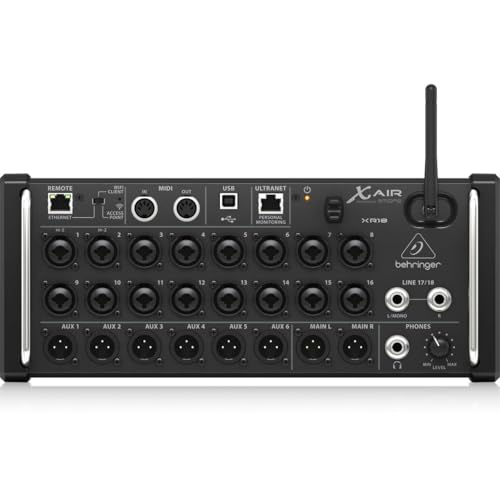
- 18 inputs and 12 buses
- 16 programmable Midas preamps
- Built-in Wi-Fi and 18 x 18 USB
Best For: Live sound, studio work, and tablet-controlled multichannel recording
Best Compact Analog Mixer with Effects

- 10 inputs with USB connectivity
- SPX digital effects included
- One-knob compressors and rugged chassis
Best For: Small live setups, rehearsals, and home recording
Best Gaming Mixer for Streaming Controls

- XLR input with 48V phantom power
- Independent mic, line, and monitor controls
- Sound effects, voice modes, and RGB
Best For: Beginner streamers and gamers using one XLR microphone
Best USB Mixer for Content Creation

- 12-channel analog mixer
- Onyx preamps and GigFX effects
- USB, XLR, and TRS connectivity
Best For: Content creation, live sound, and home recording
Large-Format Powerhouse

- 24 channels with 4/2-bus architecture
- British EQ, compressors, and XENYX mic preamps
- USB interface and Klark Teknik multi-FX processor
Best For: Large recording and live-sound setups
Compact Analog Essential

- Eight-channel compact mixer
- Three-band EQ on every channel
- Phantom power and aux send included
Best For: Small analog mixing setups
Streaming-Friendly Choice

- Eight-input analog mixer for streaming
- Stereo USB interface for computers or mobile devices
- Mixes PC and gaming audio into the stream
Best For: Streaming, podcasting, and recording
Compact Line Mixer

- Combines four audio sources
- Mono/stereo switching
- Low-noise compact design
Best For: Simple sub-mixing for instruments, computers, and gaming consoles
Streaming Control Center
MAONO G1 Neo Gaming Audio Mixer

- XLR input with 48V phantom power
- Voice effects and sound pads
- RGB controls for streaming
Best For: Gaming streamers and content creators using XLR microphones
Full-Size Performance Mixer

- Eight input channels
- Bluetooth, MP3, and USB playback
- 48V phantom power and reverb
Best For: Karaoke, live music, events, and multi-input sound systems
Best Digital Mixer for Tablet Control – Behringer X AIR XR18
The Behringer X AIR XR18 is a flexible choice among audio mixers for live sound and studio work. Its 18-input design, tablet control, programmable Midas preamps, built-in Wi-Fi, and 18 x 18 USB interface suit users who want extensive routing and recording options in a compact digital mixer.
Best For: Live performers, studios, and audio setups that need remote tablet control and multichannel USB recording.
Pros:
- 18 inputs and 12 buses provide substantial mixing capacity.
- 16 programmable Midas-designed mic preamps support detailed input control.
- Built-in tri-mode Wi-Fi enables direct tablet operation without an external router.
- 18 x 18 bidirectional USB connectivity supports multichannel recording.
Cons:
- The feature-rich digital workflow may require more setup than a basic analog mixer.
- Operation depends on a compatible iPad or Android tablet for remote control.
The XR18 is a strong fit when channel count, wireless control, and computer-based recording matter more than traditional hands-on faders.
Best Compact Analog Mixer with Effects – Yamaha MG10XU
The Yamaha MG10XU is a practical option among audio mixers for smaller live setups, rehearsals, and recording tasks. It combines 10 inputs, USB connectivity, SPX digital effects, one-knob compressors, three-band EQ, and high-pass filters in a rugged metal chassis.
Best For: Musicians, small live setups, and home users who want straightforward controls with built-in effects and USB.
Pros:
- 10-input layout fits compact performance and recording systems.
- SPX digital effects add onboard processing without separate equipment.
- One-knob compressors simplify control over guitars, bass, drums, and vocals.
- Rugged, impact-resistant powder-coated metal chassis is suited to regular use.
Cons:
- Its 10-input capacity is less suitable for larger ensembles or complex routing.
- The mixer uses corded power and is not designed around wireless control.
Choose the MG10XU if you prefer familiar physical controls and useful onboard processing in a compact, durable mixer.
Best Gaming Mixer for Streaming Controls – FIFINE Ampligame SC3
The FIFINE Ampligame SC3 is a streaming-focused choice among audio mixers, built around one XLR microphone input and separate controls for microphone, line-in, headphones, and line-out channels. It adds 48V phantom power, mute and monitor buttons, sound-effect pads, voice modes, and RGB lighting for gaming and content creation.
Best For: Beginner streamers, gamers, podcasters, and creators using a single XLR microphone with Mac or Windows.
Pros:
- XLR input with 48V phantom power supports compatible condenser microphones.
- Independent channel controls make it easier to balance mic, game, music, and monitoring levels.
- Mute and monitor buttons are positioned for quick front-panel access.
- Custom sound buttons, voice-changing modes, auto-tune changes, and RGB add streaming-oriented features.
Cons:
- It has one XLR microphone input and is aimed at single-mic streaming setups.
- USB microphones are not supported through the XLR input.
- XLR cable is not included.
The SC3 is a focused, accessible solution for streamers who want hands-on level controls and built-in effects rather than a traditional multichannel production mixer.
Best USB Mixer for Content Creation – Mackie ProFX12v3
The Mackie ProFX12v3 is a capable option among audio mixers for recording, live sound, and content creation. This 12-channel mixer combines USB connectivity, Onyx preamps, and a GigFX effects engine in a compact analog format supplied with a USB cable, power cord, and quick-start guide.
Best For: Content creators, performers, and home recording users who need 12 channels with USB and built-in effects.
Pros:
- 12-channel layout provides more capacity than a basic small-format mixer.
- Onyx preamps are designed for recording and live-sound applications.
- GigFX engine supplies built-in effects.
- USB, XLR, and TRS connectivity supports flexible system integration.
Cons:
- The larger 12-channel format may be more mixer than a simple one-mic setup requires.
- It is a corded, full-size mixer rather than a compact portable interface.
The ProFX12v3 makes sense for users who want physical mixer controls, multiple channels, USB connectivity, and effects in one unit.
Large-Format Powerhouse – Behringer XENYX X2442USB
For demanding audio mixers setups, the Behringer XENYX X2442USB offers 24 channels, a 4/2-bus design, USB connectivity, British EQs, and onboard effects. Its corded design and substantial 20.3-by-20.75-by-8.35-inch footprint make it better suited to a permanent or semi-permanent setup than a compact desktop rig.
Best For: Larger recording, live-sound, and multi-source mixing setups that need extensive channel capacity.
Pros:
- 24 input channels provide plenty of room for microphones and other sources.
- Includes XENYX mic preamps, compressors, and British EQs.
- Features a Klark Teknik 24-bit multi-FX processor with LCD display.
- USB connectivity supports computer-based audio use.
Cons:
- The larger chassis may be excessive for simple or highly portable setups.
- It requires corded power and weighs 13 pounds.
The X2442USB is the strongest choice here when channel count and integrated processing matter most. Choose it when you have the space and sources to justify a full-size mixer.
Compact Analog Essential – Mackie Mix Series Mix8
The Mackie Mix8 is a straightforward option among audio mixers for compact setups. It combines eight channels with two mic/line inputs, two stereo 1/4-inch line inputs, three-band EQ on every channel, and a small 9.6-by-7.8-by-2.1-inch design.
Best For: Home studios, small performances, and users who want essential analog mixing controls in a compact format.
Pros:
- Compact eight-channel layout is easy to place on a desktop.
- Two mic/line inputs include phantom power for studio condenser microphones.
- Three-band EQ is available on all channels for tone shaping.
- Includes one aux send and stereo 1/4-inch returns.
Cons:
- It uses wired connectivity rather than USB.
- Only two mic/line inputs are provided.
The Mix8 keeps the feature set focused and practical. It is a sensible pick for basic analog mixing, but users needing direct computer connectivity or more microphone inputs should consider a different model.
Streaming-Friendly Choice – Behringer XENYX 802S
Behringer XENYX 802S Premium Analog 8-Input Mixer with USB Streaming Interface
Check Price On AmazonThe Behringer XENYX 802S is one of the more streaming-focused audio mixers in this lineup. It provides eight inputs, analog mixing and equalization, a stereo USB audio interface, and direct mixing of computer or gaming sounds into the streaming output.
Best For: Streaming, podcasting, and recording workflows that need computer or mobile-device connectivity.
Pros:
- Stereo USB interface connects to a computer or mobile device.
- Designed for streaming, podcasting, and recording applications.
- Supports direct mixing of PC and gaming audio into the streaming output.
- Provides analog mixing and equalization controls.
Cons:
- It has eight inputs, giving it less capacity than the 24-channel X2442USB.
- Its corded design is less convenient for mobile use.
The 802S is a practical match for creators who want analog control while sending computer audio through a USB-connected workflow. Its streaming features make it more specialized than a general-purpose large mixer.
Compact Line Mixer – LZSIG 4-Channel Audio Mixer
If you need a straightforward way to combine several audio sources, this compact option is one of the more practical audio mixers to consider. It accepts up to four sources, supports 3.5mm and 6.35mm connections, and can route audio to a stereo or mono output.
Best For: Sub-mixing electronic drums, keyboards, guitars, computers, CD players, or gaming consoles in compact setups.
Pros:
- Combines up to four audio sources into one output.
- Supports both mono and stereo line-mixing modes.
- Uses low-noise components and power management designed to reduce ground noise.
- Compact 5V-powered design with USB-C cable included.
Cons:
- Power adapter is sold separately.
- Designed for line-level mixing rather than a full recording-console feature set.
The LZSIG is a sensible choice when space and simple routing matter more than extensive controls. Confirm your power-supply needs before ordering, and it can serve as a useful expansion mixer for a basic audio system.
Streaming Control Center – MAONO G1 Neo Gaming Audio Mixer
Built for gaming and live content, the MAONO G1 Neo combines an audio interface with streaming-focused controls. Among audio mixers, it stands out for its XLR input, 48V phantom power, one-click noise reduction, sound pads, Bluetooth accompaniment, and customizable RGB lighting.
Best For: Gamers and new streamers using XLR microphones with OBS, Discord, Twitch, YouTube, TikTok, or similar platforms.
Pros:
- Pro preamp and 48V phantom power support compatible XLR condenser microphones.
- Includes noise reduction, voice effects, reverb, sidechain, and customizable sound pads.
- Offers one-click mute, direct monitoring, loopback, and Bluetooth accompaniment.
- Compatible with phones, computers, tablets, PS4, and PS5.
Cons:
- Not designed for USB microphones or Xbox according to the supplied notes.
- 48V phantom power should remain off when using XLR dynamic microphones.
- Its gaming-focused controls and RGB lighting may be unnecessary for basic audio mixing.
The G1 Neo is a strong fit for interactive streaming rather than traditional multi-channel studio mixing. Its feature set is convenient for creators who want quick sound changes and monitoring controls, but microphone compatibility should be checked carefully.
Full-Size Performance Mixer – FULUODE 8-Channel Sound Board
The FULUODE CT-80S is a larger audio mixer for setups that need multiple microphone or instrument connections. It combines eight channels with 48V phantom power, Bluetooth, USB/MP3 playback, reverb, an LED display, and USB recording features for karaoke, live music, conferences, and studio-style use.
Best For: Family KTV, bands, campus events, conferences, karaoke, and live performances requiring several inputs.
Pros:
- Eight-channel design accommodates multiple microphones and instruments.
- Includes 48V phantom power, reverb, and DJ-style echo functions.
- Supports Bluetooth wireless playback plus MP3 and USB input.
- Ultra-thin 1.57-inch design with a large LED display.
Cons:
- The supplied specifications identify a 110V American-plug power setup.
- At 3.3 kg and roughly 15.75 inches wide, it is less portable than compact mixers.
- The broad feature set may be more than needed for simple two-source mixing.
This FULUODE model makes the most sense when channel count and built-in playback features are priorities. Its larger console format suits event and performance systems, provided the 110V power requirement matches your setup.
How We Picked These Audio Mixers
We selected these Audio Mixers across several common use cases rather than focusing on one type of buyer. The lineup includes compact controllers for gaming and streaming, analog mixers for simple live setups, USB models for recording and broadcast workflows, and larger boards for bands or event sound.
Our comparison emphasizes practical features: available inputs, microphone preamps, phantom power, USB connectivity, onboard effects, monitoring controls, portability, and ease of operation. A mixer should provide enough flexibility for your current setup without adding unnecessary complexity or cost.
Quick Comparison
| Best For | What to Prioritize | Typical Choice |
|---|---|---|
| Gaming and streaming | Simple controls, USB, headset support, sound pads | Compact gaming mixer |
| Home recording | Clean preamps, USB interface, phantom power | USB analog mixer |
| Small live setups | Enough channels, durable controls, effects | Powered-feature analog mixer |
| Bands and events | High channel count, monitor sends, flexible routing | Large analog or digital mixer |
| Basic playback or voice mixing | Low cost, small footprint, straightforward operation | Mini four- or eight-channel mixer |
Key Buying Factors for Audio Mixers
Channel Count and Inputs
Count every microphone, instrument, playback device, and stereo source you expect to connect at the same time. Leave a few spare channels for future expansion. Remember that a stereo input may use two channels, while a mono microphone input typically uses one.
USB and Computer Connectivity
USB can turn a mixer into a recording or streaming interface, but implementation varies. Check whether the mixer supports playback, recording, multitrack operation, and independent routing. If you only need to send a finished stereo mix to a computer, a basic USB connection may be sufficient.
Phantom Power, Preamps, and Effects
Condenser microphones generally need 48V phantom power. Look for reliable mic preamps and enough gain for your microphones. Built-in compression, reverb, delay, and equalization can simplify live performance, though external or software effects may offer more control.
Monitoring and Workflow
Headphone volume, main output control, auxiliary sends, mute buttons, and clear metering all affect usability. Digital mixers provide deeper routing and remote control, while analog models are often faster to operate at a glance.
Who Should Buy Which Audio Mixers?
Choose a compact gaming mixer if you prioritize streaming, voice chat, headset control, and quick access to music or sound effects. These models are convenient but usually offer fewer traditional mixing features.
Choose a small USB analog mixer for a home podcast, solo recording station, or simple livestream that needs microphone inputs and computer audio without a steep learning curve.
Choose a mid-sized mixer with effects for small bands, presenters, rehearsal spaces, or performers who need several inputs, onboard processing, and flexible outputs.
Choose a larger analog or digital mixer when you have multiple performers, monitor mixes, several microphones, or plans to expand. A digital model is especially useful when remote control, scene recall, and advanced routing matter.