The best voice recorders make it easier to capture important conversations, lectures, interviews, and ideas without relying on memory or hurried notes. Today’s options range from simple voice-activated dictaphones to AI-enabled devices that transcribe and summarize recordings.
We compare 10 voice recorders across storage capacity, recording controls, audio processing, connectivity, playback, and smart transcription features so you can choose the right fit for your workflow.
Best 10 Voice Recorders Picks for 2026
Best Overall Value

- 64GB capacity with up to 4,660 hours at low bitrate
- Noise reduction, adjustable gain, and voice activation
- Up to 32 hours of recording with USB-C transfer
Best For: Students, professionals, and everyday recording
Best AI Note Taker
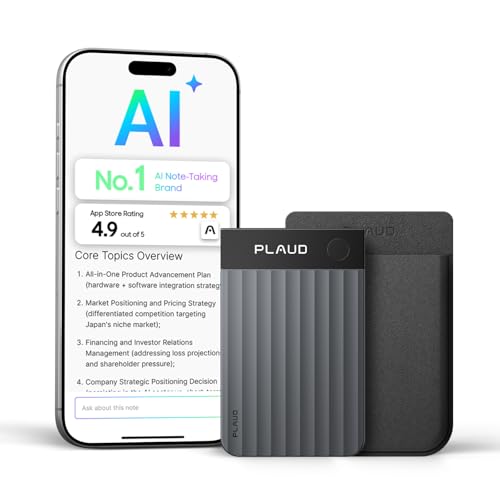
- Transcribes in 112 languages with speaker labels
- Creates summaries, action items, and follow-ups
- Handles in-person, phone, and online meetings
Best For: Professionals who want automated meeting notes
Best High-Capacity Pick

- 128GB storage with up to 9,800 hours at low bitrate
- Up to 35 hours of recording and low-battery auto-save
- Built-in USB-C plus headphones and accessory bundle
Best For: Long recordings and extensive file storage
Best for Meetings

- Three stereo microphones for distant speakers
- Remote control through a smartphone app
- Speech-to-text and multi-speaker meeting minutes
Best For: Meetings, interviews, and business documentation
Best AI Voice Recorder

- AI transcription in 113 languages with summaries
- 128GB storage and up to 33 hours of recording
- One-touch operation with encryption and OTG transfer
Best For: Students and professionals who want organized AI-generated notes
Best Long-Battery Voice Recorder

- Up to 100 hours of continuous recording
- 128GB storage for up to 9800 hours at 32kbps
- Triple noise reduction and voice activation
Best For: Long meetings, lectures, interviews, and extended recording sessions
Best Simple Voice Recorder

- Four recording scenes for quick setup
- Direct PC connection with Micro-USB
- 4GB memory and noise-cancelled playback
Best For: Basic notes, lectures, and straightforward computer file transfers
Best with Extra Features

- 128GB storage and up to 9,296 hours stated capacity
- WAV/MP3 recording with voice activation
- Password protection and four-folder organization
Best For: Frequent users who need extensive storage
Mobile Transfer Pick
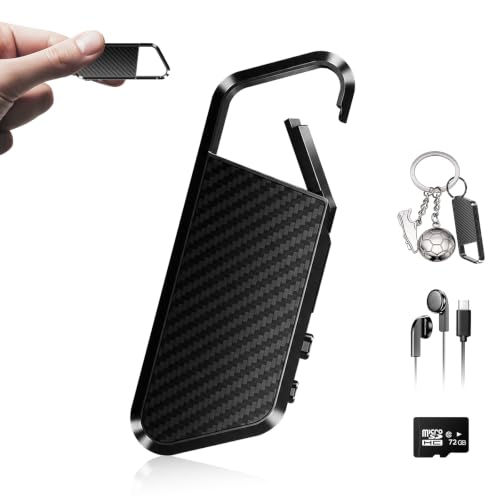
- OTG transfer to compatible phones and tablets
- DSP 6.0 noise reduction and voice activation
- 72GB storage with up to 10,860 hours stated capacity
Best For: On-the-go users transferring recordings to mobile devices
Compact Learning Option

- Stereo recording with noise reduction
- A-B repeat and variable playback speed
- MP3/WAV support with headphone jack
Best For: Students reviewing lectures and study recordings
Best Overall Value – EVISTR 64GB Voice Recorder
Among voice recorders, the EVISTR L357 stands out for combining high-capacity storage, straightforward controls, and flexible recording features. Its PCM noise reduction, adjustable gain, and voice activation make it suitable for capturing lectures, meetings, interviews, and personal notes.
Best For: Students, teachers, professionals, and anyone who wants a versatile recorder with ample storage and playback controls.
Pros:
- 64GB storage can hold up to 4,660 hours at 32Kbps.
- PCM noise reduction and seven recording-gain levels support clearer audio capture.
- Voice activation, scheduled recording, A-B repeat, and variable-speed playback add flexibility.
- Up to 32 hours of continuous recording and USB-C file transfer.
Cons:
- The extensive feature set may take time to learn.
- Voice activation can reduce silent sections but may not suit every recording situation.
This is a practical all-around choice if you want traditional recorder controls, long battery life, and plenty of space without relying on an AI subscription workflow.
Best AI Note Taker – Plaud Note Pro
For shoppers seeking voice recorders that turn conversations into usable notes, the Plaud Note Pro focuses on AI-assisted transcription and summaries. It supports in-person conversations, phone calls, and online meetings, then organizes recordings into transcripts, decisions, action items, and follow-ups.
Best For: Professionals and teams who want compact hardware paired with automated transcription, speaker labels, and meeting summaries.
Pros:
- Transcribes in 112 languages with speaker labels.
- Automatically creates action items, decisions, and follow-ups.
- Supports phone calls, in-person recording, and online meetings through Plaud software.
- Credit-card-sized design includes a 0.95-inch AMOLED display and magnetic accessories.
Cons:
- AI transcription and summary features are tied to Plaud’s plans, although a 300-minute monthly Starter Plan is included.
- Battery life is listed at 30 hours, less than some traditional recorders.
- It has no headphone jack.
The Note Pro is more than a basic audio recorder: it is best suited to users who value automated documentation and a connected workspace over standalone playback features.
Best High-Capacity Pick – Yegolito 128GB Recorder
Among voice recorders built for long-term storage, this Yegolito model offers 128GB of space and up to 9,800 hours at low bitrate settings. One-touch recording, voice activation, timestamped filenames, and a built-in USB-C connector keep routine recording and file management simple.
Best For: Users who need extensive storage, long recording sessions, and a complete accessory bundle for meetings, lectures, interviews, and notes.
Pros:
- 128GB memory stores up to 9,800 hours at low bitrate settings.
- Up to 35 hours of continuous recording with low-battery auto-save.
- Built-in USB-C supports convenient transfer and temporary external-drive use.
- Includes headphones, cables, replacement refills, a screwdriver, and a manual.
Cons:
- The advertised maximum recording time depends on low-bitrate settings.
- Its microphone operation is listed as mono.
- It provides WAV recording rather than the broader format support listed for some alternatives.
This model makes the most sense when storage capacity and included accessories matter more than advanced AI features or stereo recording.
Best for Meetings – Philips VoiceTracer DVT4115
The Philips VoiceTracer DVT4115 is one of the more meeting-focused voice recorders in this roundup. Three specialized stereo microphones are designed for distant speakers, while smartphone control, stereo recording, and the included Sembly AI trial support recording and transcription workflows.
Best For: Meeting attendees, interviewers, and business users who want stereo capture, remote control, and automatic speech-to-text capabilities.
Pros:
- Three specialized stereo microphones are designed to capture distant speakers.
- Smartphone app control allows recordings to be managed remotely.
- Supports stereo MP3 and PCM recording formats.
- Sembly features can provide speech-to-text and multi-speaker meeting minutes.
Cons:
- Its 8GB internal memory is smaller than several competing models.
- The speech-to-text functionality is described as a trial or included voucher.
- At 93g, it is heavier than ultra-slim alternatives.
This Philips recorder is a strong fit for structured meeting documentation, especially if stereo microphones and transcription assistance are more important than maximum onboard storage.
Best AI Voice Recorder – EVISTR L359
If you want voice recorders that do more than capture audio, the EVISTR L359 combines recording with AI transcription and organization. It records up to 3072Kbps, supports noise reduction and voice activation, and works with the AI DVR Link app for transcription, summaries, mind maps, speaker identification, and Ask AI insights.
Best For: Students, professionals, and anyone who wants recordings converted into organized notes.
Pros:
- Supports transcription in 113 languages plus smart summaries and mind maps.
- Offers 128GB of storage and up to 33 hours of continuous recording.
- One-touch recording, password encryption, HOLD switch, and wired OTG transfers.
Cons:
- AI features require the AI DVR Link app and a compatible phone connection.
- Its listed recording battery life is shorter than some high-capacity alternatives.
The L359 is a feature-rich choice for buyers who want an integrated record-to-notes workflow. Its compact 65g design and privacy features make it practical for classes, meetings, and interviews.
Best Long-Battery Voice Recorder – Elasound NZ007
Among voice recorders built for extended use, the Elasound NZ007 emphasizes storage, battery life, and hands-off recording. It combines triple intelligent noise reduction with voice activation, 128GB storage, and up to 100 hours of continuous recording.
Best For: Professionals, journalists, and students recording long meetings, lectures, and interviews.
Pros:
- Stores up to 9800 hours of audio at 32kbps.
- Provides up to 100 hours of continuous recording and headphone playback.
- Includes voice activation, USB-C transfer, clip-on microphone, headphones, and OTG adapters.
Cons:
- The product listing gives a 9800-hour capacity figure at a low 32kbps recording rate.
- The supplied details identify MP3 as the listed audio format, offering less format flexibility than some models.
The NZ007 is a practical pick when minimizing charging and storage concerns matters most. Its one-touch controls and included accessories also make it convenient for users who need a ready-to-use recording kit.
Best Simple Voice Recorder – Olympus VN-541PC
The renewed Olympus VN-541PC is one of the more straightforward voice recorders for basic capture and computer transfer. It has a built-in mono microphone, four recording scenes, noise cancellation for playback, and direct PC connection through the included Micro-USB cable.
Best For: Buyers who want a simple recorder for short lectures, notes, conversations, and basic file management.
Pros:
- Four recording scenes adjust settings for different uses.
- Direct PC connection and recording folders help organize files.
- Runs on two included AAA batteries and has noise cancellation for clearer playback.
Cons:
- Its 4GB memory and approximately 1200-minute recording capacity are modest compared with newer high-capacity models.
- It uses a 2.5mm headphone jack and Micro-USB rather than USB-C.
- This is a renewed product with a listed 90-day limited warranty.
The VN-541PC makes sense for buyers who value uncomplicated controls over AI features or very long battery life. Its scene selection and PC link keep everyday recording tasks easy to manage.
Best with Extra Features – EVIDA 128GB Voice Recorder
If you need voice recorders for long-term storage, lectures, meetings, or interviews, the EVIDA 9296 offers substantial capacity and flexible recording settings. It supports WAV and MP3 recording, voice activation, playback, password protection, and organized folder storage.
Best For: Students, teachers, business users, and writers who want high storage capacity and adjustable recording quality.
Pros:
- 128GB storage with up to 9,296 hours of stated recording capacity.
- Records in MP3 or high-quality WAV, including a 1536kbps setting.
- Voice activation, password protection, A-B repeat, bookmarks, and four-folder file organization.
- Up to 54 hours of continuous recording and customer support by phone.
Cons:
- Its 54-hour continuous recording figure is much lower than the total storage capacity.
- The built-in microphone operates in mono.
- No headphones jack is listed in the supplied specifications.
The EVIDA is a feature-rich option when storage and file organization matter most. Its voice activation and high-quality WAV mode add versatility, while the large memory is particularly useful for frequent recording.
Mobile Transfer Pick – NekSide 72GB Voice Recorder
For voice recorders that can move files directly to a mobile device, the NekSide combines OTG transfer with DSP 6.0 noise reduction and voice activation. Its 72GB memory is designed for extended storage, making it suitable for lectures, meetings, interviews, and personal notes.
Best For: Users who want portable recording with direct smartphone or tablet file transfer.
Pros:
- DSP 6.0 noise reduction is designed to filter background noise.
- OTG functionality supports direct transfers to compatible smartphones and tablets.
- 72GB storage is listed with up to 10,860 hours of recording capacity.
- Compact six-inch-long design is intended for carrying in a bag or pocket.
Cons:
- The default recording format is WAV; MP3 requires conversion on a computer.
- The supplied details list a mono microphone.
- Compatibility and transfer convenience depend on the connected mobile device.
The NekSide stands out for its OTG workflow, which can reduce reliance on a computer when transferring recordings. Choose it if mobile file access is a priority and WAV-to-MP3 conversion is acceptable.
Compact Learning Option – HoTiyan 8GB Voice Recorder
Among compact voice recorders, the HoTiyan H-10001 offers straightforward controls for lectures, meetings, interviews, and study sessions. It includes stereo recording, voice activation, MP3/WAV support, playback tools, and a rechargeable battery rated for up to 20 hours of continuous recording.
Best For: Students and casual users who want a small recorder with playback and study-focused features.
Pros:
- Stereo microphone recording with noise reduction and a professional recording chip.
- Voice activation can reduce silent sections and whisper-level clips.
- A-B repeat and variable playback speed support reviewing important passages.
- Includes MP3 playback, password protection, timestamps, and a 3.5mm headphone jack.
Cons:
- 8GB storage is considerably smaller than the other listed models.
- Continuous recording is rated for up to 20 hours.
- The supplied capacity figures vary by recording quality, from 128 to 560 hours.
The HoTiyan is a practical lower-capacity choice for focused recording and listening. Its stereo capture, headphone support, and study-friendly playback functions make it particularly useful for reviewing classes or meetings.
How We Picked the Best Voice Recorders
We evaluated these Voice Recorders by focusing on the features that matter during real-world use: recording clarity, microphone performance, storage, battery practicality, file transfer, playback controls, and ease of operation. We also separated conventional digital recorders from newer AI-focused devices, since transcription and summaries can be valuable but may involve apps, subscriptions, or cloud processing.
Capacity claims vary widely, and advertised recording hours depend on audio quality and file format. Treat storage figures as a guide rather than a guarantee, especially when recording at higher quality.
Quick Comparison
| Best For | Look For | Typical Strength |
|---|---|---|
| Lectures and meetings | Voice activation, playback, noise reduction | Simple hands-free recording |
| Interviews and research | Clear microphones, dependable file transfer | Easier review and archiving |
| AI notes and summaries | Transcription, speaker handling, companion app | Faster post-meeting organization |
| Occasional recording | Physical controls and USB connectivity | Low setup and maintenance |
Key Buying Factors for Voice Recorders
Recording Quality and Noise Control
Choose a recorder with suitable microphones and noise reduction for your environment. A quiet office requires less processing than a classroom, conference room, or outdoor interview. Voice activation can reduce silent sections, but it may miss very soft speech if sensitivity is poorly configured.
Storage, Battery, and File Access
High-capacity models are useful for frequent recording, while smaller devices may be enough for occasional notes. Check whether files transfer through USB Type-C, a direct USB connector, or a companion app. Battery life, charging time, and the ability to monitor remaining storage are just as important as headline capacity.
Transcription and Privacy
AI transcription and summaries can save time, but verify supported languages, accuracy expectations, smartphone requirements, and subscription terms. If recordings contain confidential information, review where files are processed and stored before enabling cloud-based features.
Controls and Playback
Physical buttons, pause and resume controls, timestamping, password protection, and headphone playback are valuable when you need to review recordings without opening a computer. A straightforward interface is often preferable for classrooms, interviews, and quick dictation.
Who Should Buy Which Voice Recorders?
Students and meeting attendees should prioritize voice activation, clear playback, long battery life, and enough storage for repeated sessions. Interviewers and researchers should look for better microphone performance, noise reduction, dependable file transfer, and easy file organization. Professionals who spend significant time writing minutes or follow-up notes may prefer an AI recorder with transcription and summaries, provided its app and privacy policies suit their work.
For occasional reminders or simple dictation, an affordable 8GB-class recorder with USB transfer may be all you need. Choose a large-capacity model if you record frequently, and select a renewed or established-brand option when straightforward operation and familiar controls matter more than AI features.