A single sensor can miss activity at a wide entrance, split drive, or long private lane. Driveway alarms with multiple sensors help cover more approach points while sending alerts to one convenient receiver.
This roundup compares 10 multi-sensor systems, including long-range, solar-powered, weather-resistant, and chime-focused options, so you can match coverage and installation needs to your property.
Best 10 Driveway Alarms with Multiple Sensors Picks for 2026
Best Long-Range Multi-Sensor Coverage
HTZSAFE 1/2-Mile Driveway Alarm

- Includes four sensors and supports expansion up to 32
- Up to 1/2-mile wireless transmission range
- 35- or 50-foot detection with customizable alerts
Best For: Large properties with several monitored zones
Best Flexible Alert Options
1byone 1000-Foot Driveway Alarm
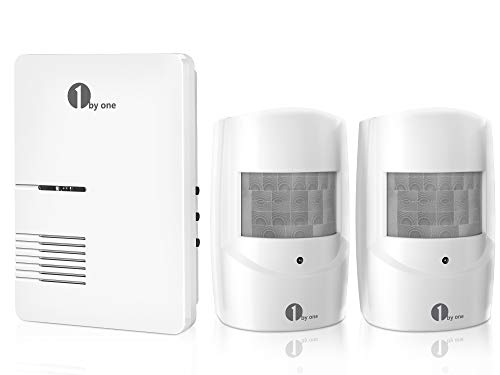
- Includes two weatherproof PIR detectors
- Sound, LED, or combined alert modes
- 36 chimes and support for up to five sensors per receiver
Best For: Homes wanting customizable alerts and simple setup
Best Expandable Single-Sensor Starter
Hosmart 1/2-Mile Driveway Alarm

- Starts with one sensor and expands to four
- Up to 1/2-mile receiving range in ideal conditions
- Weather-resistant housing with swivel mounting
Best For: Gradual expansion from one monitored entry point
Best Solar-Powered Multi-Zone System
FULNIX 3000-Foot Driveway Alarm

- Two solar-capable sensors with USB-C backup charging
- Up to 3,000-foot transmission range in open conditions
- Expandable to 84 sensors with adjustable detection
Best For: Large properties seeking low-maintenance, scalable coverage
Multi-Zone Alert Pick
Bistee 2-Sensor Driveway Alarm

- Two sensors support separate monitored zones
- 58 chimes, five volume levels, and flash alert
- 600-foot range with IP55 weather resistance
Best For: Homes needing distinct alerts for a driveway and nearby areas
Long-Range Solar Pick
eMACROS 4-Sensor Driveway Alarm

- Includes four sensors and one receiver
- 2,600-foot open-area wireless range
- Solar-powered sensors with expandable coverage
Best For: Farms and large properties without a need for app alerts
Expandable Coverage Pick

- Includes three sensors and one plug-in receiver
- Expandable to 32 sensors and unlimited receivers
- Adjustable 35- or 50-foot detection sensitivity
Best For: Properties needing a scalable, sensor-specific local alert system
Easy-Expand Coverage
1byone Two-Sensor Wireless Driveway Alarm

- Two PIR sensors with up to 1,000-foot wireless range
- Expandable to five sensors per receiver
- Sound, LED, or combined alerts
Best For: Modest properties needing simple multi-zone alerts
Maximum Perimeter Reach
HTZSAFE Half-Mile Two-Sensor Driveway Alarm

- Two sensors with up to half-mile transmission range
- Expandable to 32 sensors and unlimited receivers
- 35 melodies and two sensitivity settings
Best For: Large properties requiring extensive multi-sensor coverage
Solar-Powered Flexibility
Wuloo Solar 1800-Foot Two-Sensor Alarm
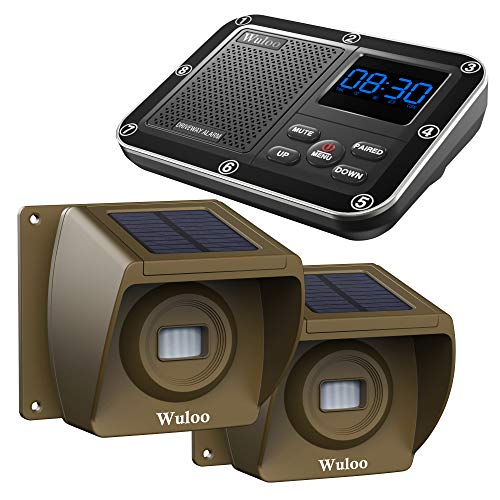
- Solar-assisted rechargeable weatherproof sensors
- About 1,760 feet of tested wireless range
- Expandable by up to eight additional sensors
Best For: Outdoor coverage with reduced battery maintenance
Best Long-Range Multi-Sensor Coverage – HTZSAFE 1/2-Mile Driveway Alarm
For shoppers comparing driveway alarms with multiple sensors, this HTZSAFE system stands out for its included four-sensor configuration, long wireless transmission range, and broad expandability. Adjustable detection sensitivity, weather resistance, and selectable alerts make it practical for monitoring several areas around a property.
Best For: Large properties needing multiple monitored zones and long-range wireless coverage.
Pros:
- Includes one receiver and four motion sensors, with expansion support for up to 32 sensors.
- Offers up to a 1/2-mile wireless transmission range in suitable conditions.
- Provides adjustable 35- or 50-foot detection sensitivity, four volume levels, and 35 melodies.
- Weather-resistant sensors are rated for operation across a wide temperature range.
Cons:
- The required AA batteries are not included.
- Actual transmission range can vary with terrain and surrounding conditions.
This is a strong fit when coverage and the number of included sensors matter most. Its flexible alert settings also help identify which monitored area triggered the notification.
Best Flexible Alert Options – 1byone 1000-Foot Driveway Alarm
This 1byone system is a practical option for driveway alarms with multiple sensors when you want simple setup and flexible notification choices. Its two weatherproof PIR detectors can monitor separate areas, while the receiver offers sound, LED, or combined alerts and a broad selection of chimes.
Best For: Homes that want customizable alerts for driveways, walkways, gates, or porches.
Pros:
- Includes two PIR sensors with up to 1,000 feet of wireless communication range.
- Detects people, vehicles, and animals within up to 24 feet of each sensor.
- Offers sound, LED flash, or combined alert modes, plus 36 chimes and three volume levels.
- Each receiver can pair with up to five sensors.
Cons:
- Its stated wireless range is shorter than the long-range systems in this roundup.
- AAA batteries are required for the sensors.
Choose this model if easy customization is more important than maximum perimeter range. The multiple alert modes and chime selection make it easier to tailor notifications to your household.
Best Expandable Single-Sensor Starter – Hosmart 1/2-Mile Driveway Alarm
For buyers exploring driveway alarms with multiple sensors but starting with one monitored entry point, this Hosmart system provides a long-range base unit and expandable design. The weather-resistant sensor detects people, vehicles, and large animals, while the system can grow to cover additional areas.
Best For: Buyers who want a durable starter system with room to add sensors later.
Pros:
- Offers up to a 1/2-mile receiving range in ideal conditions and has been tested in varied environments.
- Expandable to four sensors and unlimited receivers.
- Weather- and water-resistant housing includes a sunshade and swivel mount for positioning.
- Includes a two-year warranty on parts and workmanship.
Cons:
- The listed package includes only one sensor.
- AA batteries for the sensor are not included.
- Actual range depends on buildings, trees, terrain, and other conditions.
This Hosmart setup makes sense when you prefer to begin with a single sensor and expand as needed. Its adjustable mounting and rugged housing are useful for outdoor placement, while the warranty adds purchase reassurance.
Best Solar-Powered Multi-Zone System – FULNIX 3000-Foot Driveway Alarm
This FULNIX system is a compelling choice among driveway alarms with multiple sensors for shoppers seeking low-maintenance power and portable alerts. Its two solar-capable sensors, rechargeable receiver, adjustable detection ranges, and substantial expansion capacity suit large properties and multiple access points.
Best For: Large properties that need rechargeable equipment and extensive multi-zone expansion.
Pros:
- Includes two solar sensors with built-in rechargeable batteries and USB-C backup charging.
- Provides up to 3,000 feet of wireless transmission in open, unobstructed conditions.
- Offers adjustable 32- or 55-foot motion detection and independent sensor on/off switches.
- Expandable to up to 84 compatible sensors, with 37 chimes and 10 volume levels.
Cons:
- The maximum transmission range requires open, unobstructed conditions.
- Solar charging performance depends on available sunlight, though USB-C backup charging is provided.
If you want to reduce routine battery replacement while monitoring many zones, this is the most feature-rich option here. The portable receiver and independent sensor controls add flexibility for properties with changing monitoring needs.
Multi-Zone Alert Pick – Bistee 2-Sensor Driveway Alarm
For shoppers comparing driveway alarms with multiple sensors, this Bistee system offers two sensors that can monitor separate areas, with distinct alert sounds for each zone. Its 600-foot wireless range, weather-resistant design, and visual flash alert make it practical for driveways, yards, gates, garages, and walkways.
Best For: Homes that need zone-specific alerts for a driveway and another nearby outdoor or indoor area.
Pros:
- Includes one receiver and two sensors for multi-zone monitoring.
- Offers 58 chimes, five volume levels up to 110 dB, and a mute mode with flashing alerts.
- Uses microwave detection with a 20-foot detection width and claims resistance to several common false-alert causes.
- IP55 weather resistance and a stated battery life of up to three years.
Cons:
- The 600-foot wireless distance can vary with property layout and obstructions.
- It is battery powered, so eventual battery replacement is required.
This is a flexible choice when differentiated sounds and a visual alert matter more than app connectivity. The two-sensor configuration provides useful coverage without requiring a more extensive expandable system.
Long-Range Solar Pick – eMACROS 4-Sensor Driveway Alarm
Among driveway alarms with multiple sensors, this eMACROS setup is designed for large properties, offering a stated 2,600-foot open-area transmission range and solar-powered outdoor sensors. It can monitor long driveways, farms, and detached buildings without Wi-Fi, Bluetooth, or trenching.
Best For: Large rural properties that prioritize long wireless range and reduced manual battery maintenance.
Pros:
- The listed configuration includes one receiver and four sensors for broad multi-point coverage.
- Solar panels and rechargeable internal batteries reduce frequent battery changes for the outdoor sensors.
- Adjustable sensitivity detects motion up to 20 or 30 feet, depending on the setting.
- The receiver can pair with up to 64 eMACROS sensors, and additional receivers can monitor zones simultaneously.
Cons:
- The stated 2,600-foot range applies to open areas and may vary with terrain and obstructions.
- This is a local alert system without smartphone, Wi-Fi, or Bluetooth connectivity.
- Solar charging performance depends on available sunlight.
Its combination of solar sensors, multiple detection points, and extensive range makes it especially suited to farms and spread-out properties. Buyers wanting app notifications should look elsewhere, but those seeking a standalone system get a straightforward installation.
Expandable Coverage Pick – HTZSAFE 3-Sensor Alarm
This HTZSAFE system is a practical option for driveway alarms with multiple sensors, combining three listed sensors with a plug-in receiver and a stated half-mile transmission range. Adjustable detection sensitivity, selectable melodies, and expandable pairing make it suitable for monitoring several points around a property.
Best For: Homeowners who want a plug-and-play system that can grow to cover additional indoor or outdoor zones.
Pros:
- The listed package includes one receiver and three sensors for multi-point monitoring.
- Supports up to 32 sensors and unlimited receivers for expanded coverage.
- Offers low and high sensitivity settings with detection distances of about 35 and 50 feet.
- Provides four volume levels and 35 melodies, allowing different alerts for different sensors.
Cons:
- The sensors require three AA batteries each, and batteries are not included.
- The half-mile wireless range varies with local terrain.
- The system provides local receiver alerts rather than stated smartphone notifications.
With simple setup and substantial expandability, this model fits properties where monitoring needs may change over time. Its adjustable sensitivity and sensor-specific melodies also help distinguish activity by location.
Easy-Expand Coverage – 1byone Two-Sensor Wireless Driveway Alarm
If you need driveway alarms with multiple sensors for basic property coverage, this 1byone system includes two PIR sensors and one receiver. Its wireless range reaches up to 1,000 feet, while each sensor detects people, vehicles, and large animals within 24 feet. The receiver offers sound, LED flash, or both alert modes.
Best For: Homeowners who want a straightforward, expandable system for driveways, walkways, gates, porches, or restricted areas.
Pros:
- Includes two sensors and supports up to five sensors per receiver.
- Offers up to 1,000 feet of wireless communication range.
- Provides sound, LED, or combined alerts.
- Weatherproof, wall-mountable sensors support DIY installation.
Cons:
- Detection distance is limited to about 24 feet per sensor.
- Battery-powered sensors require battery maintenance.
- The system includes one receiver, so larger layouts may need additional compatible equipment.
This is a practical choice when you want multiple-sensor driveway monitoring without a complicated setup. Its five-sensor expansion limit is useful for modest properties, though larger perimeters may require a more expandable system.
Maximum Perimeter Reach – HTZSAFE Half-Mile Two-Sensor Driveway Alarm
For large properties, this HTZSAFE system is one of the more capable driveway alarms with multiple sensors. It includes two outdoor motion sensors and a plug-in receiver, with a claimed wireless transmission range of up to one-half mile. Adjustable detection sensitivity covers approximately 35 to 50 feet in front of each sensor.
Best For: Large homes, businesses, offices, or properties where sensors may be positioned far from the receiver.
Pros:
- Includes two sensors and supports expansion up to 32 sensors.
- Supports unlimited receivers for broader coverage.
- Offers up to one-half mile of wireless transmission range, depending on terrain.
- Provides two sensitivity settings and 35 selectable melodies.
Cons:
- The three AA batteries required for each sensor are not included.
- Actual wireless range can vary with local terrain.
- The extensive melody and sensor options may be more than small properties need.
With its high expansion capacity and long-range transmission, this system is suited to substantial perimeters. The adjustable sensitivity and multiple melodies can also help distinguish activity by sensor location, while the plug-in receiver keeps indoor setup simple.
Solar-Powered Flexibility – Wuloo Solar 1800-Foot Two-Sensor Alarm
This Wuloo kit is a useful option among driveway alarms with multiple sensors when reducing battery upkeep matters. It includes a receiver and two weatherproof motion sensors with solar-assisted rechargeable power. The system has a tested wireless range of about 1,760 feet and detects movement within roughly 30 feet, with adjustable sensitivity and customizable receiver alerts.
Best For: Outdoor installations where solar charging, weather resistance, and flexible alert customization are priorities.
Pros:
- Includes two sensors and can expand by up to eight additional sensors.
- Solar-assisted rechargeable sensors can provide up to 24 months on a full charge.
- Weatherproof design is intended for rain and snow.
- Receiver includes adjustable chimes, sounds, volume, clock, and alarm functions.
Cons:
- Solar charging performance depends on available sunlight.
- Each sensor’s detection zone is approximately 30 feet.
- More limited expansion than systems supporting dozens of sensors.
This model balances long-range communication with lower routine battery maintenance. Its rechargeable solar sensors and customizable receiver make it appealing for outdoor coverage, while the eight-sensor expansion limit is better suited to medium-sized layouts than very large properties.
How We Picked These Driveway Alarms with Multiple Sensors
We focused on systems that include two or more outdoor sensors and a dedicated receiver, since the main advantage is broader detection from one alert setup. We compared sensor counts, advertised range, power options, receiver features, weather-oriented design, and installation flexibility. Because real-world range varies with walls, trees, terrain, interference, and mounting height, advertised distances should be treated as best-case guidance rather than a guarantee.
We also included a mix of solar and battery-powered sensors, plug-in and portable receivers, and models with different chime selections. That makes the list useful for compact driveways, larger properties, lanes with multiple entry points, and locations where running power outdoors is difficult.
Quick Comparison
- Best for maximum sensor coverage: Four-sensor kits can monitor more approaches with fewer blind spots.
- Best for flexible placement: Wireless systems with portable or battery-powered components simplify installation.
- Best for lower maintenance: Solar sensors can reduce battery changes when they receive adequate sunlight.
- Best for customization: Models with many melodies or chimes make it easier to assign a recognizable alert.
- Best for long driveways: Long-range systems are worth considering, but verify line-of-sight conditions before relying on the maximum claim.
Key Buying Factors for Driveway Alarms with Multiple Sensors
Sensor Count and Detection Zones
Choose enough sensors to cover the driveway entrance, garage approach, side path, gate, or other likely access points. More sensors are useful only when each can be positioned to avoid overlapping coverage or false triggers.
Range and Signal Reliability
Compare the stated transmission distance with your property layout. A system advertised at half a mile may perform very differently across dense landscaping or masonry than across open ground. Place sensors and receivers where they have the clearest practical signal, then test every zone.
Power and Upkeep
Solar-powered sensors are convenient for remote locations, but shade and short winter days can affect charging. Battery-powered units may be easier to place under trees, while a plug-in receiver usually provides dependable indoor operation. Check battery type, charging method, and expected maintenance before buying.
False Alarms and Weather Protection
Motion sensors can react to animals, blowing vegetation, direct sun, or extreme temperature changes. Look for adjustable positioning and weather-resistant outdoor housings, and mount sensors away from moving branches and heat-reflective surfaces.
Receiver and Alert Controls
Consider volume range, melody selection, mute or silent modes, portability, and whether one receiver can identify alerts from separate sensors. A simple, audible chime is often more useful than a large melody library if you need fast recognition.
Who Should Buy Which Driveway Alarms with Multiple Sensors?
Choose a four-sensor kit if you have multiple gates, a broad frontage, or several paths to monitor. A three-sensor system suits larger driveways that need coverage at the entrance, midpoint, and house-side approach. Two-sensor models are a practical fit for a straightforward driveway with one secondary access point.
Solar systems are best when sensors can receive consistent sunlight and you want fewer battery changes. Choose a plug-in receiver when the alert location is near an outlet, or a portable rechargeable receiver when you need to move it between rooms or take it outdoors. For long rural lanes, prioritize a clear signal path and test placement rather than choosing by advertised range alone.