Adding wired connections does not require a full-size rack or complicated installation. The best compact network switches give homes, offices, gaming setups, and small workspaces more Ethernet ports while keeping cable management simple.
This roundup covers easy plug-and-play models alongside smart switches with VLAN and QoS controls, plus a multi-gigabit option for faster local networking. Use the guide below to match port count, speed, management features, and placement to your setup.
Best 10 Compact Network Switches Picks for 2026
Best Value
TP-Link TL-SG105 5-Port Gigabit Switch
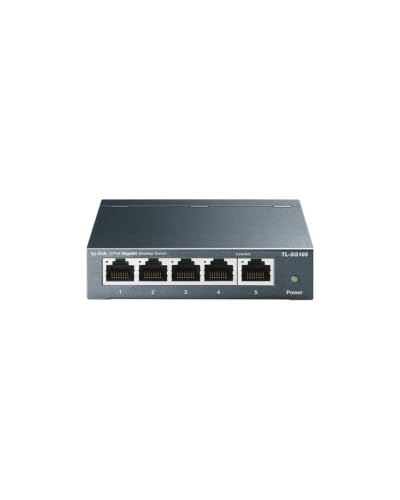
- Five gigabit Ethernet ports
- Fanless metal housing
- Plug-and-play setup
Best For: Quiet, simple network expansion
Easy Management Pick
NETGEAR GS305E 5-Port Smart Switch

- Five 1Gbps ports
- VLAN and QoS support
- Silent desktop or wall-mount design
Best For: Small networks needing manageable traffic controls
Best Multi-Gig Upgrade
TP-Link TL-SG108S-M2 8-Port 2.5G Switch

- Eight 2.5Gbps ports
- Up to 40Gbps switching capacity
- Silent fanless operation
Best For: High-speed local transfers and multi-gig devices
Best Managed 8-Port Option

- Eight 1Gbps ports
- VLAN, QoS, and monitoring tools
- Silent metal housing
Best For: Organized home, office, and small-business networks
Best Budget Pick
TP-Link LS1005G 5-Port Gigabit Switch

- Five Gigabit Ethernet ports
- Tiny, lightweight fanless design
- Plug-and-play setup
Best For: Simple home or small-office wired expansions
Best for Network Control
TP-Link TL-SG108E 8-Port Smart Switch
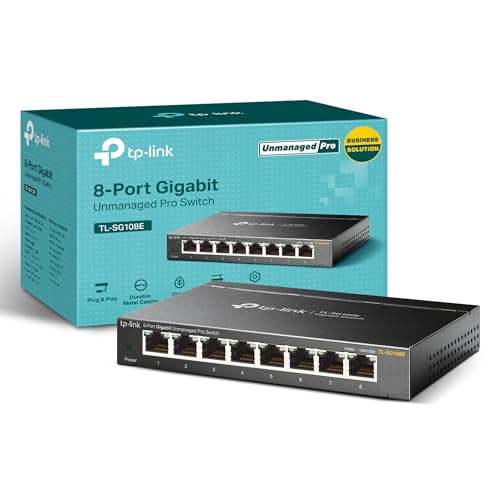
- Eight Gigabit Ethernet ports
- VLAN, QoS, and monitoring features
- Desktop or wall-mount installation
Best For: Small networks needing basic traffic management
Best Plug-and-Play Option
NETGEAR GS305 5-Port Gigabit Switch

- Five 1Gbps Ethernet ports
- Silent, energy-efficient fanless design
- Desktop or wall-mount options
Best For: Quiet, simple home and small-office networking
Best Compact 5-Port Pick

- Five Gigabit RJ45 ports
- Plug-and-play, fanless operation
- Desktop or wall-mount installation
Best For: Small homes, offices, and basic wired expansions
Best High-Capacity Pick
TP-Link TL-SG116 16-Port Switch
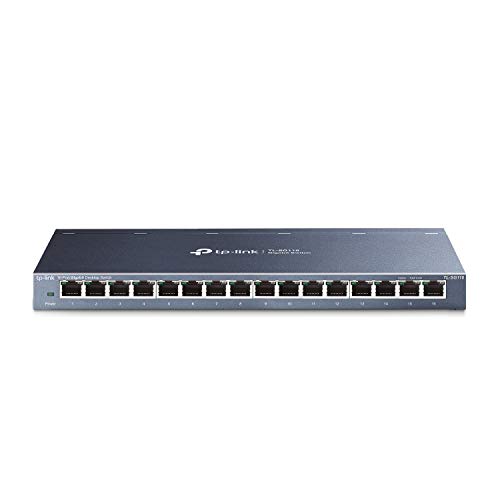
- Sixteen Gigabit RJ45 ports
- Fanless metal enclosure
- QoS and IGMP Snooping support
Best For: Busy home offices and small business networks
Best 8-Port Value
TP-Link TL-SG108 Gigabit Switch

- Eight Gigabit Ethernet ports
- Quiet fanless metal design
- Plug-and-play with energy-efficient operation
Best For: Home offices and small wired networks
Best Value – TP-Link TL-SG105 5-Port Gigabit Switch
The TP-Link TL-SG105 is a practical choice for anyone who needs compact network switches with straightforward plug-and-play setup. Its five gigabit ports, fanless metal housing, and desktop or wall-mount design suit small home or office networks.
Best For: Expanding a basic wired network with quiet, reliable gigabit connectivity.
Pros:
- Five 10/100/1000Mbps ports with auto-negotiation and Auto MDI/MDIX.
- Fanless operation and a durable metal case.
- Supports QoS and IGMP Snooping for prioritizing voice and video traffic.
Cons:
- Unmanaged design does not provide advanced configuration controls.
- Only five ports are available.
With energy-efficient operation and flexible placement, the TL-SG105 is a sensible, low-maintenance option when you want more wired ports without adding network-management complexity.
Easy Management Pick – NETGEAR GS305E 5-Port Smart Switch
The NETGEAR GS305E adds smart-management features to the compact network switches category. Its five gigabit ports support VLAN configuration, traffic prioritization, port monitoring, and network-security management through an intuitive interface.
Best For: Small businesses and home networks that need basic traffic and security controls.
Pros:
- Five auto-negotiating 1Gbps Ethernet ports.
- Supports VLANs, QoS, port monitoring, and security management.
- Fanless metal design supports desktop or wall mounting.
Cons:
- Regional compatibility is listed for the U.S. and Canada only.
- Management features require more setup than an unmanaged switch.
The GS305E is a strong middle ground for users who want compact hardware but still need control over traffic segmentation and prioritization.
Best Multi-Gig Upgrade – TP-Link TL-SG108S-M2 8-Port 2.5G Switch
The TP-Link TL-SG108S-M2 stands out among compact network switches by giving all eight ports 2.5Gbps capability. Auto-negotiation supports 100Mbps, 1Gbps, and 2.5Gbps devices, making it suitable for faster Wi-Fi access points, NAS devices, workstations, and gaming setups.
Best For: Multi-gig home offices, media systems, LAN parties, and high-speed local transfers.
Pros:
- Eight 2.5Gbps ports provide up to 40Gbps of switching capacity.
- Works with 100Mbps, 1Gbps, and 2.5Gbps connections.
- Fanless operation provides silent performance.
Cons:
- Unmanaged design offers no VLAN or traffic-management controls.
- The larger eight-port enclosure may take more room than five-port models.
For networks already using multi-gig hardware, the TL-SG108S-M2 offers a simple way to add eight faster wired connections without requiring a move to Cat6 cabling.
Best Managed 8-Port Option – NETGEAR GS308E Gigabit Switch
The NETGEAR GS308E combines eight gigabit ports with management features that are useful in homes, offices, and small businesses. It supports VLANs, QoS, IGMP snooping, port mirroring, loop detection, and broadcast-storm control through a web-based interface.
Best For: Users who need an organized, monitored, and more resilient eight-port wired network.
Pros:
- Eight auto-negotiating 1Gbps Ethernet ports.
- Supports up to 64 VLANs, QoS, IGMP snooping, and port mirroring.
- Fanless metal housing operates silently and supports 24/7 use.
Cons:
- Managed features require configuration through the web GUI.
- It does not provide 2.5Gbps multi-gig ports.
The GS308E is a capable choice when a compact switch needs to do more than add ports, particularly for networks handling separate voice, video, and data traffic.
Best Budget Pick – TP-Link LS1005G 5-Port Gigabit Switch
If you need a simple way to add wired connections, the TP-Link LS1005G is one of the most compact network switches in this roundup. Its five Gigabit ports, plug-and-play setup, and small fanless housing suit basic home or small-office expansions.
Best For: Buyers who want an inexpensive, quiet switch for adding a few wired devices.
Pros:
- Five 10/100/1000Mbps RJ45 ports with auto-negotiation and auto MDI/MDIX
- Very small, lightweight housing that can be tucked away easily
- Fanless operation and energy-efficient technology help reduce noise and power use
- No software or configuration required
Cons:
- Only five ports, with four available for connected devices when one port is used as the uplink
- Unmanaged design lacks VLAN, QoS, and monitoring features
The LS1005G is a straightforward choice when size and simplicity matter more than advanced controls. It is especially practical for extending a router or modem connection to a few nearby devices.
Best for Network Control – TP-Link TL-SG108E 8-Port Smart Switch
The TP-Link TL-SG108E stands out among compact network switches for its eight Gigabit ports and easy smart-management features. It adds room for more wired devices while supporting VLANs, QoS, IGMP Snooping, monitoring, and flexible desktop or wall-mount installation.
Best For: Home offices and small networks that need traffic control and basic management without a fully complex setup.
Pros:
- Eight 10/100/1000Mbps RJ45 ports provide more expansion capacity
- Supports VLAN, QoS, IGMP Snooping, port mirroring, loop prevention, and cable diagnostics
- Can be configured through a web interface or free software
- Sturdy metal case supports desktop or wall-mount placement
Cons:
- More setup and management than a basic unmanaged switch
- Larger and heavier than the five-port compact models in this roundup
Choose the TL-SG108E if you expect your network to benefit from segmentation, traffic prioritization, or diagnostics. Its eight-port layout also leaves more room for future wired additions.
Best Plug-and-Play Option – NETGEAR GS305 5-Port Gigabit Switch
The NETGEAR GS305 is a practical pick for buyers comparing compact network switches for everyday wired connectivity. Its five auto-negotiating Gigabit ports, metal enclosure, silent fanless design, and desktop or wall-mount flexibility keep installation simple.
Best For: Homes and small offices that want a durable, quiet switch with minimal setup.
Pros:
- Five 1Gbps Ethernet ports work with existing Cat5e or Cat6 cables
- Plug-and-play operation requires no software or configuration
- Compact metal design supports desktop or wall mounting
- Fanless operation and IEEE 802.3az energy efficiency help limit noise and power use
Cons:
- Unmanaged design does not provide VLAN, QoS, or network-monitoring controls
- Listed for use in the U.S. and Canada only
The GS305 makes sense when reliability, quiet operation, and easy placement are priorities. It offers the core Gigabit features needed for everyday wired devices without adding management complexity.
Best Compact 5-Port Pick – UGREEN 5-Port Gigabit Switch
For a small home office, desk, or basic wired setup, this UGREEN model is one of the most compact network switches to consider. It provides five Gigabit RJ45 ports, requires no configuration, and can sit on a desk or mount to a wall.
Best For: Homes, small offices, NAS setups, and security-monitoring installations that need a quiet, simple network expansion.
Pros:
- Five auto-negotiating 10/100/1000Mbps ports support Gigabit connections.
- Plug-and-play unmanaged design requires no drivers or setup.
- Fanless construction provides quiet operation.
- Desktop placement and wall-mounting options help save space.
Cons:
- Does not support Power over Ethernet (PoE).
- Five ports may be limiting for larger device collections.
- It is an unmanaged switch, so advanced configuration is not available.
Choose this UGREEN switch when you want a compact, energy-conscious way to add a few Gigabit connections without managing network settings. Its small footprint and mounting flexibility make it especially practical for straightforward installations.
Best High-Capacity Pick – TP-Link TL-SG116 16-Port Switch
When a compact network switch needs to support many wired devices, the TP-Link TL-SG116 offers 16 Gigabit ports in a sturdy metal enclosure. Its plug-and-play design keeps installation simple while traffic-management features add flexibility for busy networks.
Best For: Offices, workspaces, and home networks with numerous computers, access points, printers, or other Ethernet devices.
Pros:
- Sixteen 10/100/1000Mbps RJ45 ports provide substantial expansion capacity.
- Fanless design supports quiet operation.
- Metal case and shielded ports are built for durability and heat dissipation.
- Port-based QoS and IGMP Snooping help optimize traffic for video or voice data.
Cons:
- The 16-port enclosure is larger and heavier than smaller desktop switches.
- As an unmanaged Layer 1 switch, it does not offer full network-management controls.
- It may provide more ports than a small, lightly connected setup needs.
The TL-SG116 is a strong choice when port count matters more than the smallest possible footprint. Its quiet metal design and traffic-optimization features make it well suited to expanding wired networks without adding configuration complexity.
Best 8-Port Value – TP-Link TL-SG108 Gigabit Switch
The TP-Link TL-SG108 balances a compact desktop design with eight Gigabit ports, making it a practical middle ground among compact network switches. It is ready to use without configuration and includes a fanless metal housing for quiet, dependable placement.
Best For: Home offices, bedrooms, conference rooms, and small networks connecting computers, printers, consoles, and other Ethernet devices.
Pros:
- Eight RJ45 ports support 10/100/1000Mbps wired connections.
- Plug-and-play operation requires no software installation or configuration.
- Fanless design keeps operation quiet in noise-sensitive rooms.
- Metal housing and shielded ports support durability and interference protection.
Cons:
- It is an unmanaged switch without advanced network controls.
- Eight ports may not be enough for larger expansions.
- The supplied specifications list a data transfer rate of 142.8 megabits per second, so buyers should review their intended workload carefully.
For most small wired networks, the TL-SG108 offers a useful combination of port capacity, silent operation, and simple installation. Its automatic energy adjustment and metal construction further suit long-term desktop use.
How We Picked the Best Compact Network Switches
We compared these Compact Network Switches by looking at the features that matter most in real installations: port count, Ethernet speed, unmanaged versus smart management, enclosure design, power and cooling requirements, and placement flexibility. We also considered whether each model suits a simple home expansion, a small office, a media setup, or a more demanding local network.
Unmanaged switches are prioritized for straightforward plug-and-play use. Smart managed models are included for buyers who need traffic controls, VLAN support, monitoring, or more deliberate network segmentation. The 2.5Gbps model stands apart for compatible computers, storage devices, and internet connections that can benefit from multi-gigabit throughput.
Quick Comparison
- Best basic 5-port expansion: TP-Link TL-SG105, NETGEAR GS305, TP-Link LS1005G, or UGREEN 5-Port Gigabit Switch.
- Best for smart controls: NETGEAR GS305E or GS308E, or one of TP-Link’s Easy Smart 8-port models.
- Best for multi-gigabit networking: TP-Link TL-SG108S-M2 with 2.5Gbps ports.
- Best for many wired devices: TP-Link TL-SG116 with 16 Gigabit ports.
Key Buying Factors for Compact Network Switches
Port Count and Uplink Planning
Count the devices you will connect now, then leave room for growth. A five-port switch is suitable for a few computers, consoles, access points, or smart-home hubs, while an eight-port model offers more flexibility. A 16-port switch makes better sense for a home office, lab, or media cabinet with several permanently wired devices. Remember that one port connects back to your router, leaving fewer ports for endpoints.
Gigabit Versus Multi-Gigabit Speed
Gigabit Ethernet is sufficient for most internet plans and everyday wired devices. Choose a 2.5Gbps switch only when your computers, network-attached storage, Wi-Fi access point, or broadband service also supports multi-gigabit connections. A faster switch will not increase speeds when connected equipment remains limited to 1Gbps.
Unmanaged or Smart Managed
Unmanaged models require virtually no configuration: connect cables and use the network. Smart managed switches cost more but can provide VLANs, QoS, traffic controls, and status information. These features are valuable for separating guest or work devices, prioritizing calls and gaming, or troubleshooting a busier network.
Build, Cooling, and Placement
Metal housings can provide a sturdier fit for desks, shelves, and equipment cabinets, while fanless designs avoid added noise. Check dimensions, power-adapter placement, port orientation, and whether wall mounting is supported before buying. Shielded ports can also be useful in environments with more electrical interference.
Who Should Buy Which Compact Network Switches?
Choose a five-port unmanaged switch for a simple desk, entertainment center, or small room where you only need a few extra wired connections. Pick an eight-port unmanaged model when you want additional capacity without configuration. Smart managed options are better for home offices, small businesses, and technically minded users who need VLAN or QoS controls. Select the TP-Link 2.5Gbps model for a modern multi-gigabit setup, and choose the 16-port TP-Link when expansion and maximum port capacity matter more than the smallest footprint.