Universal laptop docking stations make it easier to turn a single notebook into a full desktop setup with external monitors, wired networking, and extra ports.
Below, we’ve narrowed the field to 10 standout options for different laptops, display needs, and power requirements so you can choose with confidence.
Best 10 Universal Laptop Docking Stations Picks for 2026
Flexible Dual-Display Workstation
Plugable UD-3900 Universal Dock

- Dual HDMI for up to 1920x1200@60Hz
- USB 3.0 and USB-C hybrid connection
- Includes Ethernet, audio, and 6 USB ports
Best For: Productivity-focused users needing dual monitors and reliable connectivity
Simple Universal Office Hub

- Accepts USB-C or USB-A connections
- Designed for displays, audio, and peripherals
- Compact 3.1-inch square footprint
Best For: Dell-focused users needing a simple universal office dock
High-Power Dual-4K Hub

- 160W max output with multi-device charging
- Dual HDMI and up to 10Gbps data ports
- 14-in-1 design with audio and Ethernet
Best For: USB-C laptop users who need charging and dual-display expansion
Dual-Monitor USB-C Hub

- Dual HDMI with 4K support
- 1Gbps Ethernet and card readers
- Up to 85W pass-through charging
Best For: Windows and ChromeOS users needing a compact dual-monitor dock
Triple-Display Workstation Dock

- Three HDMI outputs for multi-monitor setups
- 100W charging plus 6 USB ports
- Broad Windows, macOS, and ChromeOS support
Best For: Hybrid teams and power users needing triple-display expansion
Dual-4K Travel Dock

- Dual HDMI with 4K@60Hz support
- 100W PD charging and USB 3.0 ports
- SD and microSD card slots included
Best For: Windows users wanting a compact dual-4K USB-C dock
Dual-HDMI Office Dock
Plugable UD-3900Z Dual HDMI Universal Dock

- Dual HDMI output up to 1920x1200.
- USB-C and USB-A host cables included.
- Works across Windows, macOS, and ChromeOS.
Best For: office productivity and mixed-device deployments
Dual-4K Multiscreen Hub
WAVLINK Dual 4K DisplayLink Dock

- Runs dual 4K@60Hz monitors on compatible systems.
- Adds HDMI and DisplayPort flexibility.
- Works with Windows, macOS, and ChromeOS.
Best For: home offices and multi-screen productivity
Power-First Business Dock
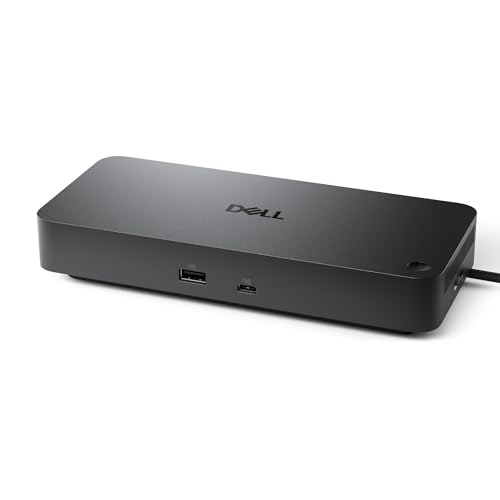
- Provides up to 100W charging for supported PCs.
- Native support for up to four high-res displays.
- Built for commercial manageability and daily office use.
Best For: business workspaces needing charging and multi-display support
Flexible Dual-Display Workstation – Plugable UD-3900 Universal Dock
If you want a straightforward universal laptop docking station for everyday work, the Plugable UD-3900 focuses on broad compatibility and practical expansion. It uses a hybrid USB 3.0/USB-C cable and adds dual HDMI outputs, wired networking, audio jacks, and multiple USB ports for office-style setups.
Best For: Windows users, ChromeOS users, and Mac users who need dual HDMI monitors plus plenty of USB ports for productivity.
Pros:
- Dual HDMI outputs support up to 1920×1200 at 60Hz on two displays.
- Hybrid USB 3.0 and USB-C connection works with a wide range of laptops and Chromebooks.
- Includes Gigabit Ethernet, audio in/out, and 6 total USB ports.
- Backed by a 2-year warranty and lifetime support.
Cons:
- 4K output is not supported.
- Does not charge the host laptop.
- Requires a DisplayLink driver on macOS and is not compatible with Linux/Unix.
For productivity, web work, and simple multi-monitor use, this dock covers the essentials without unnecessary complexity. It is best suited to buyers who value broad system support over premium display specs.
Simple Universal Office Hub – Dell D6000S Universal Dock
The Dell D6000S is a universal laptop docking station built for easy office connectivity through USB-C or USB-A. It is positioned as a simple way to attach displays, keyboard and mouse, and audio devices from a single dock.
Best For: Users who want a basic universal dock for connecting peripherals and external displays from either USB-C or USB-A.
Pros:
- Works with laptops that have USB-C or USB-A.
- Designed to connect displays, keyboard and mouse, and audio devices.
- Compact footprint with a small 3.1-inch square design.
- Includes PowerShare options and a 65W power rating.
Cons:
- Product notes only list compatibility with Dell devices.
- Only one HDMI port is listed in the specs.
- Limited public detail here on exact external display configurations.
This dock makes sense if you want a streamlined universal connection point and are already in a Dell-centered environment. It is more of a practical desk hub than a feature-heavy multi-monitor solution.
High-Power Dual-4K Hub – Anker Prime 14-in-1 Dock
For buyers comparing universal laptop docking stations with charging and fast data in mind, the Anker Prime Docking Station stands out as a feature-packed option. It combines dual HDMI display support, high-wattage charging, and 10Gbps data ports in one 14-in-1 unit.
Best For: USB-C laptop users who want dual displays, strong charging output, and fast peripheral connectivity in one dock.
Pros:
- 14-in-1 layout with 10 total USB ports and audio/Ethernet support.
- 160W max output can charge up to four devices at once.
- Dual HDMI supports up to 2K@60Hz with DP 1.4 laptops or 1080p@60Hz with DP 1.2 laptops.
- Up to 10Gbps data transfer speeds for connected devices.
Cons:
- Mac external monitors mirror the same image.
- Not compatible with Linux.
- Does not support 5120×1440 monitors.
This is a strong pick if you want one dock to handle displays, charging, and high-speed data at the same time. Its biggest appeal is convenience for modern USB-C systems that need a lot of connectivity.
Triple/Quad Monitor Power Dock – TobenONE DisplayLink Dock
If your workflow depends on lots of screen space, this universal laptop docking station is built around DisplayLink multi-monitor expansion. The TobenONE dock combines triple or quad 4K display support with a 120W adapter, making it a strong desk anchor for demanding productivity setups.
Best For: Power users who need multiple 4K monitors, lots of ports, and included laptop charging for a workstation-style setup.
Pros:
- Supports triple or quad 4K@60Hz display configurations.
- 18 total ports, including 3 HDMI, 3 DisplayPort, 2 USB-C, and 4 USB 3.2 ports.
- Includes a 120W power adapter and can charge laptops up to 100W.
- Works with macOS, Windows, ChromeOS, Ubuntu, and Android when using the required driver.
Cons:
- Requires downloading the correct DisplayLink driver before use.
- macOS supports only 3 monitors.
- Not suitable for watching Netflix or other paid streaming services.
This dock is aimed at users who need serious multitasking capability more than minimalist simplicity. If multiple high-resolution displays are the priority, the TobenONE offers a lot of expansion in one unit.
Dual-Monitor USB-C Hub – Anker 8-in-1 Dock
If you want a practical universal laptop docking station for a dual-screen setup, this Anker hub covers the essentials in a compact 8-in-1 design. It combines dual HDMI outputs, Ethernet, SD/microSD support, USB-A ports, and USB-C power pass-through, making it a straightforward way to expand a USB-C laptop workstation.
Best For: Windows, ChromeOS, and USB-C laptop users who want a simple dual-monitor dock with wired networking and card readers.
Pros:
- Dual HDMI output supports one 4K display at 60Hz or two 4K displays at 30Hz.
- Includes 1Gbps Ethernet plus SD and microSD card readers.
- Provides up to 85W pass-through charging with a compatible 100W charger.
- Supports USB-C, USB4, and Thunderbolt connections on compatible laptops.
Cons:
- Dual external monitors mirror on macOS instead of extending separately.
- Power adapter and USB-C cable are not included.
- Not compatible with Linux.
This is a solid pick if you want a balanced dock that adds monitor output and everyday connectivity without a lot of extra bulk. It fits well for general productivity, though Mac users should note the mirrored-display limitation.
Triple-Display Workstation Dock – Plugable 12-in-1 Dock
For buyers comparing universal laptop docking stations for a multi-monitor desk, this Plugable model is built around triple-display expansion and broad OS support. It adds three HDMI outputs, six USB ports, Ethernet, audio, and charging in one dock, which makes it a strong fit for hybrid offices and managed workspaces.
Best For: Teams and power users who need a reliable triple-monitor dock for Windows, macOS, or ChromeOS setups.
Pros:
- Supports up to three HDMI displays, including one 4K at 30Hz and two 1080p at 60Hz.
- Uses DisplayLink plus native USB-C video output for broader multi-monitor support.
- Offers 100W USB-C Power Delivery and 6 USB 3.0 ports for peripherals.
- Compatible with USB-C, USB4, and Thunderbolt systems across Windows, macOS, and ChromeOS.
Cons:
- macOS requires driver installation for full functionality.
- Not compatible with Linux.
- HDCP is not supported.
This dock stands out if you care most about expanding to three displays and keeping a busy workstation organized. It is especially useful when you need flexible compatibility across mixed laptop fleets.
Dual-4K Travel Dock – Selore 8-in-1 Hub
If you need a versatile universal laptop docking station with strong display support, this Selore 8-in-1 model focuses on dual HDMI output and fast charging in a lightweight package. It is built for full-featured USB-C or Thunderbolt laptops and adds the core ports most people want for home or office use.
Best For: Windows laptop users who want dual 4K monitor support in a compact USB-C dock.
Pros:
- Two HDMI ports support dual 4K@60Hz on compatible DP1.4 Windows laptops.
- Includes 100W PD charging support and USB-C/USB-A 3.0 ports.
- Adds SD and microSD card slots for quick media access.
- Works with a wide range of USB-C and Thunderbolt laptops when the port is full-featured.
Cons:
- macOS only supports mirror mode, not dual-screen extension.
- The charger and charging cable are not included.
- Video output will not work on USB-C ports that lack full features.
This is a good choice if you want a slim dock that can handle dual monitors and basic peripherals without overcomplicating setup. Just be sure your laptop’s USB-C port supports video output before buying.
Dual-HDMI Office Dock – Plugable UD-3900Z Dual HDMI Universal Dock
If you need one of the more practical universal laptop docking stations for mixed-device offices, the Plugable UD-3900Z is built around straightforward dual-monitor expansion and broad OS support. It adds two HDMI displays from a single USB connection, works with both USB-C and USB-A hosts, and is aimed squarely at productivity setups rather than media-heavy or gaming use.
Best For: Office teams, IT-managed deployments, and users who want a simple dual-HDMI dock across Windows, macOS, and ChromeOS.
Pros:
- Supports dual HDMI output up to 1920×1200 from one connection.
- Includes both USB-C and USB-A host cables for newer and older laptops.
- Works with Windows, macOS, and ChromeOS, with Windows auto-driver support and ChromeOS plug-and-play.
- Compact vertical design helps reduce desk clutter.
Cons:
- Does not charge laptops.
- macOS requires DisplayLink software installation for external displays.
- Not suitable for HDCP-protected streaming, gaming, or full-screen video playback.
For organizations standardizing workstation setups, the UD-3900Z is a dependable fit because it keeps the feature set focused on everyday business productivity. If your priority is dual HDMI output and broad compatibility over high-end display or charging features, this dock is easy to justify.
Dual-4K Multiscreen Hub – WAVLINK Dual 4K DisplayLink Dock
The WAVLINK DisplayLink dock is a strong pick among universal laptop docking stations if you want flexible dual-monitor expansion with a wide mix of display outputs. It supports up to two 4K@60Hz monitors on compatible systems and gives you multiple ways to connect HDMI or DisplayPort displays from a single USB connection.
Best For: Home offices, remote workers, and multitaskers who want flexible dual-4K display support without laptop charging.
Pros:
- Supports up to two 4K@60Hz monitors on compatible systems.
- Offers 2 HDMI ports and 2 DisplayPort ports for flexible monitor combinations.
- Compatible with Windows, macOS, and ChromeOS, with DisplayLink driver installation required for video output.
- Includes 6 USB 3.0 Type-A ports, Gigabit Ethernet, and a 3.5mm audio jack.
Cons:
- Does not provide laptop charging.
- Not compatible with Linux systems.
- Not designed for gaming, high-frame-rate video editing, or DRM-protected streaming.
This dock makes sense if your setup values display flexibility and everyday productivity over charging capability or media-focused performance. For users who switch between USB-A, USB-C, and Thunderbolt laptops, it offers a versatile, office-friendly way to keep a clean dual-screen workspace.
Power-First Business Dock – Dell Pro WD25 USB-C 100W Dock
The Dell Pro WD25 is a business-oriented option in the universal laptop docking stations category, especially if charging and manageability matter as much as display expansion. It delivers up to 100W of power to supported PCs and is designed to help modern workspaces drive multiple high-resolution displays while keeping accessories connected.
Best For: Office users and IT teams who want a managed USB-C dock with laptop charging and support for up to four displays.
Pros:
- Delivers up to 100W of power to supported Dell and non-Dell PCs.
- Native support for up to four high-res displays.
- Includes Ethernet plus USB-A and USB-C ports for accessories.
- Built for modern commercial manageability and durable daily use.
Cons:
- Only one HDMI port is listed in the supplied details.
- Requires compatible operating systems such as Windows 10/11, select Linux distributions, or ChromeOS 137.
- Larger and heavier than lighter travel-style docks.
Compared with simpler universal docks, the WD25 is the most office-ready of the group if you need charging plus broader display expansion. Its value is strongest in managed environments where IT wants a dock that is easy to deploy, efficient to support, and built for everyday business workflows.
How We Picked These Universal Laptop Docking Stations
We focused on docks that balance broad compatibility, monitor support, charging output, port variety, and real-world usability. Since Universal Laptop Docking Stations are often used across mixed fleets of Windows, macOS, and ChromeOS devices, we prioritized models that clearly support multiple connection types and common office workflows.
We also considered whether a dock is better suited for simple dual-monitor expansion, high-resolution creative work, or workstation-style setups with Ethernet and lots of peripherals.
Quick Comparison: Which Dock Type Fits Your Setup?
If you need basic dual displays and everyday USB expansion, an 8-in-1 or 10-port dock is usually enough. If your workflow involves multiple monitors, higher refresh needs, or heavier accessory use, a larger DisplayLink-based dock may be a better fit. USB-C-only docks are generally simpler, while USB-C/USB-A universal models offer the widest compatibility with older laptops.
Key Buying Factors for Universal Laptop Docking Stations
Monitor Support
Check how many displays the dock can drive and at what resolution. Some docks support dual 4K outputs, while others are designed for triple-display setups with mixed resolutions. Make sure the dock matches your laptop’s operating system and graphics limitations, especially on Mac systems.
Charging Power
USB-C power delivery matters if you want one cable to handle both docking and charging. Look for enough wattage to support your laptop under load, not just when idle. Power-hungry notebooks typically benefit from higher-output docks.
Ports and Peripheral Mix
Think beyond video. Ethernet, SD card slots, USB-A ports, and fast USB-C data connections can make a dock far more useful day to day. The best Universal Laptop Docking Stations reduce cable clutter while still leaving room for printers, storage drives, headsets, and keyboards.
Compatibility and Drivers
Some docks are plug-and-play, while others require DisplayLink or manufacturer software. Driver-based solutions can unlock more display options, but they may add setup steps and can be less ideal for users who want a simple plug-in experience.
Who Should Buy Which Universal Laptop Docking Stations?
Buy a compact dual-monitor dock if you mainly work from a desk and want a clean, affordable setup. Choose a higher-wattage universal dock if you charge your laptop through the dock and connect several devices at once. If you use a MacBook or need more than two displays, prioritize compatibility carefully and check the dock’s display rules before buying.
For most shoppers, the right choice comes down to matching your laptop’s ports, your monitor count, and how much charging power you need. That approach will help you avoid overpaying for features you won’t use or underbuying and hitting limitations later.