The best wireless driveway alarms provide an early warning when a vehicle or person approaches your driveway, gate, or outbuilding. The right system can improve awareness without requiring buried wiring or a complicated installation.
This roundup compares 10 options with different sensor counts, detection methods, power sources, and claimed ranges so you can choose a setup that fits your property and monitoring needs.
Best 10 Wireless Driveway Alarms Picks for 2026
Best Long-Range Coverage
Half-Mile Driveway Alarm with Two Sensors

- Up to half-mile wireless transmission range
- Includes two motion sensors
- Expandable to 32 sensors
Best For: Large properties needing two sensors and expandable coverage
Best Flexible Alert Options
1byone Wireless Driveway Alarm

- Up to 1,000-foot wireless range
- Sound, LED, or combined alerts
- Includes two infrared sensors
Best For: Homes wanting flexible alerts and simple installation
Best Starter System
Half-Mile Driveway Alarm with One Sensor
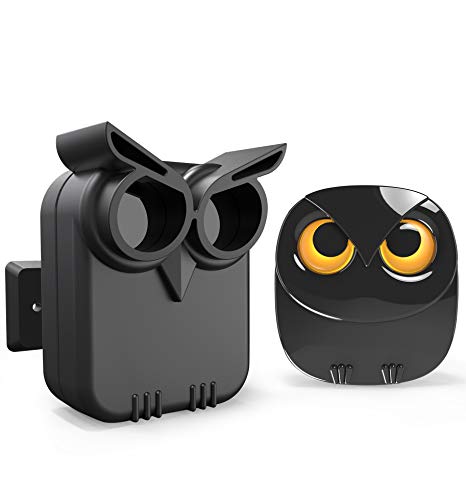
- Up to half-mile wireless transmission range
- 35- or 50-foot detection settings
- Expandable to 32 sensors
Best For: One monitored entry point with room to expand
Best Solar-Powered Option

- Solar-assisted rechargeable sensors
- Portable receiver with up to 30-day battery use
- Expandable to 84 sensors
Best For: Large properties wanting lower-maintenance monitoring
Best Long-Range Pick
Hosmart 1/2-Mile Wireless Driveway Alarm

- Long claimed range with real-world testing
- Expandable sensor and receiver setup
- 38 chimes plus weather-resistant construction
Best For: Large properties needing flexible, long-range coverage
Best Solar Two-Sensor System
eMACROS 1/2-Mile Solar Driveway Alarm

- Includes two solar-powered outdoor sensors
- Adjustable 20- or 30-foot sensitivity
- No Wi-Fi or smartphone app required
Best For: Farms and properties needing two low-maintenance detection zones
Best Customizable Solar Option
Wuloo 1/3-Mile Wireless Driveway Alarm
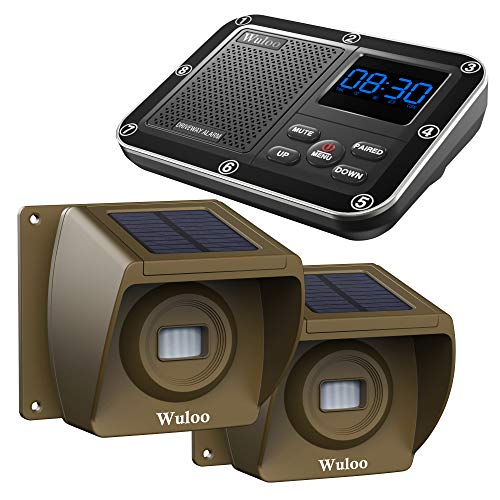
- Solar sensor with rechargeable battery
- Customizable chimes, volume, clock, and alarm
- Expandable to eight additional sensors
Best For: Homeowners wanting flexible, low-maintenance solar alerts
Long-Range Solar Pick

- Up to 2,640-foot wireless range
- Solar-powered outdoor sensor
- Supports up to 64 sensors
Best For: Long driveways and larger properties
Vehicle-Only Specialist
Mighty Mule FM231 Vehicle Alarm

- Electromagnetic vehicle detection
- 400-foot wireless range
- Expandable with extra receivers
Best For: Vehicle-focused driveway alerts
Multi-Sensor Coverage Pick

- Includes three motion sensors
- Up to 1/2-mile transmission range
- 35 melodies and expandable coverage
Best For: Monitoring multiple property zones
Best Long-Range Coverage – Half-Mile Driveway Alarm with Two Sensors
This wireless driveway alarm is designed for larger properties that need coverage from two outdoor monitoring points. Its claimed half-mile transmission range, adjustable detection distance, and weather-resistant sensors make it a flexible option for driveways, gates, pools, garages, and sheds.
Best For: Large properties needing two sensors and expandable coverage.
Pros:
- Up to half-mile wireless transmission range, depending on terrain.
- Includes two motion sensors and one plug-in receiver.
- Adjustable 35- or 50-foot motion detection range.
- Expandable to up to 32 sensors and unlimited receivers.
Cons:
- Sensors require three AA batteries each, which are not included.
- Receiver needs an electrical outlet.
- Actual transmission range can vary with local terrain.
With two sensors included and multiple alert customization options, this HTZSAFE system is a practical choice when one monitoring point is not enough. It is especially useful for spreading coverage across a large outdoor area.
Best Flexible Alert Options – 1byone Wireless Driveway Alarm
This wireless driveway alarm offers a straightforward way to monitor driveways, porches, gates, walkways, and other areas. The system combines two infrared sensors with a receiver that can provide sound alerts, LED flashes, or both.
Best For: Homeowners who want multiple alert modes and simple DIY installation.
Pros:
- Communication range reaches up to 1,000 feet or 300 meters.
- Two sensors detect people, vehicles, and large animals up to 24 feet away.
- Choose sound, LED flash, or combined alerts.
- Expandable to up to five sensors per receiver.
Cons:
- Detection range is shorter than the system’s wireless communication range.
- Supports fewer sensors than the larger HTZSAFE systems in this roundup.
- Receiver must be within the stated wireless range of each sensor.
The 1byone stands out for alert flexibility rather than maximum range. Its sound-and-light options can suit homes where a traditional chime alone may be easy to miss, while the included mounting hardware supports a quick setup.
Best Starter System – Half-Mile Driveway Alarm with One Sensor
This wireless driveway alarm provides the same long-range platform as the two-sensor version while focusing on a single monitored area. The weather-resistant sensor offers adjustable 35- or 50-foot detection, making it a sensible starting point for a driveway, gate, garage, or walkway.
Best For: Buyers who need one monitoring point now but may expand later.
Pros:
- Wireless transmission reaches up to half a mile, depending on terrain.
- Adjustable motion detection from 35 to 50 feet.
- Pre-paired plug-and-play setup with a wall-mounted sensor.
- Expandable to up to 32 sensors and unlimited receivers.
Cons:
- Includes only one sensor.
- Sensor batteries are not included.
- Receiver requires a wall outlet.
This single-sensor package keeps the initial setup focused while preserving substantial expansion potential. It is a good fit for a primary driveway or entry point, especially if you expect to add monitoring zones over time.
Best Solar-Powered Option – 3000-Foot Driveway Alarm
This wireless driveway alarm is built for lower-maintenance monitoring across large properties. Its two solar-assisted sensors, portable rechargeable receiver, 3,000-foot stated transmission range, and adjustable detection distance make it suited to long driveways, gates, farms, barns, and detached buildings.
Best For: Large properties seeking solar-assisted sensors and a portable receiver.
Pros:
- Solar-assisted sensors include built-in rechargeable batteries and USB-C backup charging.
- Portable receiver has a built-in battery rated for up to 30 days under stated usage.
- Up to 3,000-foot transmission range in open, unobstructed conditions.
- Offers 37 chimes, 10 volume levels, and expansion to 84 sensors.
Cons:
- Actual range depends on obstructions and property conditions.
- Solar charging performance depends on available sunlight.
- Includes a one-year manufacturer warranty.
The FULNIX system is the most feature-rich option here for broad property monitoring. Its rechargeable design reduces routine battery replacement, while independent sensor switches and zone-specific chimes make it easier to manage multiple monitored areas.
Best Long-Range Pick – Hosmart 1/2-Mile Wireless Driveway Alarm
For shoppers comparing wireless driveway alarms, the Hosmart system stands out for its long claimed receiving range, weather-resistant outdoor sensor, and flexible receiver setup. It detects people, vehicles, and large animals, while the receiver offers a choice of 38 ringtones.
Best For: Large properties needing a long-range alarm with expandable coverage and customizable chimes.
Pros:
- Claims up to a 1/2-mile range in ideal conditions and about 1,500 feet in many real-world settings.
- Weather-resistant sensor with a swivel mount for adjusting the detection angle.
- Expandable to four sensors and unlimited receivers, with a two-year warranty.
- Receiver includes 38 ringtone options and can use an adapter or batteries.
Cons:
- The outdoor sensor requires four AA batteries, which are not included.
- Actual range varies with trees, buildings, walls, vehicles, and other obstructions.
The Hosmart is a practical choice when range and expansion matter most. Its battery-powered sensor is convenient for placement, though buyers should plan for battery maintenance and realistic range limits.
Best Solar Two-Sensor System – eMACROS 1/2-Mile Solar Driveway Alarm
This eMACROS system is one of the more convenient wireless driveway alarms for covering multiple approach points. It includes two solar-powered outdoor sensors, a plug-in receiver, and adjustable sensitivity to help tailor detection for driveways, paths, and entrances.
Best For: Farms, long driveways, and detached garages where solar charging and two detection zones are useful.
Pros:
- Two sensors provide coverage for separate areas out of the box.
- Built-in solar panels and rechargeable batteries reduce routine battery replacement.
- Claims up to a 2,600-foot range in open areas and testing in forests, rain, and snow.
- High and low sensitivity settings help adjust detection distance and reduce some false alarms.
Cons:
- It does not support Wi-Fi, Bluetooth, smartphone apps, or remote notifications.
- Solar charging performance depends on available sunlight.
- The stated maximum range is based on open-area conditions.
Choose this model if you want a straightforward local alert system with two solar sensors and minimal wiring. It is less suitable if app control or phone alerts are essential.
Best Customizable Solar Option – Wuloo 1/3-Mile Wireless Driveway Alarm
The Wuloo system combines solar-powered sensing with a receiver that also functions as a clock and alarm. Among wireless driveway alarms, it is a useful option for buyers who want adjustable sounds, sensitivity controls, and room to add more sensors over time.
Best For: Homeowners who want solar operation, customizable indoor alerts, and expandable property coverage.
Pros:
- Claims a 1/3-mile range, or about 1,760 feet, based on real-world testing.
- Solar panel and rechargeable battery can provide up to 24 months on a full charge.
- Receiver offers adjustable chimes, sounds, volume, clock, and alarm functions.
- Supports up to eight additional sensors and includes adjustable sensitivity.
Cons:
- The detection zone is listed as up to 30 feet, which may require careful sensor placement.
- Solar charging depends on sunlight and outdoor conditions.
- Wireless range can be affected by trees, buildings, walls, and vehicles.
Wuloo is a strong fit for buyers prioritizing low-maintenance solar power and customization. Its expandable design can grow with your security needs, but the relatively close motion-detection zone makes placement important.
Long-Range Solar Pick – 1/2-Mile Solar Driveway Alarm
For homeowners comparing wireless driveway alarms for a long driveway or larger property, this eMACROS system combines a claimed 1/2-mile transmission range with a solar-powered outdoor sensor. Its plug-in receiver and adjustable detection settings keep installation and everyday operation straightforward.
Best For: Long driveways, large properties, detached garages, barns, sheds, and multiple entry points.
Pros:
- Up to 2,640 feet of wireless range for expansive properties.
- Solar-powered sensor helps reduce routine battery replacement.
- Adjustable detection distance and support for up to 64 sensors.
- Non-app system installs without trenching or complex wiring.
Cons:
- This package includes only one sensor and one receiver.
- The outdoor sensor still needs careful placement and mounting.
- Detection distance is limited to about 20 or 30 feet depending on sensitivity.
This is the strongest fit when transmission distance and low-maintenance outdoor monitoring matter most. Choose it over a shorter-range option if you need to connect separated areas of a larger property.
Vehicle-Only Specialist – Mighty Mule FM231 Vehicle Alarm
The Mighty Mule FM231 takes a more targeted approach to wireless driveway alarms by using electromagnetic detection for vehicles rather than general motion sensing. It includes an indoor chime receiver and a transmitter designed to be buried beside the driveway.
Best For: Driveways where you primarily want an alert when vehicles enter or leave the property.
Pros:
- Electromagnetic sensing is designed specifically for vehicle detection.
- Indoor receiver provides an audible chime when a vehicle is detected.
- Wireless range reaches up to 400 feet.
- System can be expanded with additional indoor receivers.
Cons:
- The sensor requires burial next to the driveway.
- Two AA batteries are required but not included.
- It is less suitable if you also need to detect pedestrians or animals.
For vehicle-focused monitoring, the FM231 offers a purpose-built alternative to motion-based wireless driveway alarms. Its buried installation takes more effort than a surface-mounted sensor, but it avoids alerts for ordinary nonvehicle movement.
Multi-Sensor Coverage Pick – 1/2-Mile Alarm with 3 Sensors
This HTZSAFE kit is a flexible choice among wireless driveway alarms because it combines long-range transmission with multiple motion sensors. The included receiver and three-sensor setup can monitor a driveway, gate, porch, garage, or other areas, with adjustable sensitivity and selectable chimes.
Best For: Homeowners who want to monitor several outdoor or indoor locations from one receiver.
Pros:
- Transmission range reaches up to 1/2 mile, depending on terrain.
- Includes three sensors for broader coverage out of the box.
- Adjustable detection range spans roughly 35 to 50 feet.
- Supports up to 32 sensors, unlimited receivers, and 35 melodies.
Cons:
- AA batteries for the sensors are not included.
- Actual wireless range can vary with local terrain.
- Motion sensing may still require placement adjustments to limit unwanted alerts.
This kit stands out when coverage across multiple entry points matters more than having a solar-powered sensor. Its three-sensor package and customizable melodies make it practical for identifying activity in different areas of a property.
How We Picked These Wireless Driveway Alarms
We selected systems that cover common residential and rural use cases, including long-range motion alarms, solar-powered models, multi-sensor kits, and vehicle-detection systems. We considered the number of included sensors, receiver capacity, power requirements, weather exposure, claimed transmission range, and whether the system can be expanded later.
Range claims are typically measured in unobstructed conditions. Buildings, trees, terrain, metal structures, and interference can reduce real-world performance, so treat advertised distances as comparison points rather than guarantees.
Quick Comparison
- Best for broad coverage: Kits with two or three sensors can monitor multiple approaches with fewer additional purchases.
- Best for low-maintenance placement: Solar sensors reduce battery changes when they receive adequate sunlight.
- Best for simple installation: Wireless motion systems avoid trenching and are generally easier to reposition.
- Best for vehicle-focused detection: Electromagnetic systems are designed to detect vehicles rather than general movement.
- Best for flexible expansion: Systems with expandable receivers let you add sensors as your property needs change.
Key Buying Factors for Wireless Driveway Alarms
Detection Type
Infrared motion sensors can detect people, vehicles, and animals moving through their detection zone, but placement and sensitivity settings affect false alarms. Electromagnetic vehicle detectors focus on metal vehicles and may be preferable when pedestrian or wildlife alerts are not needed.
Range and Placement
Choose a claimed range with some margin for your property. Position sensors toward the approach rather than directly at a busy road, and check whether the detection angle suits a narrow driveway or a wider entrance.
Power and Weather Protection
Battery-powered sensors are easy to place but require periodic maintenance. Solar models can be convenient in sunny locations, while rechargeable receivers may need access to an outlet or regular charging. Look for outdoor-rated construction and protect components from standing water.
Sensor Count and Alerts
One sensor may be enough for a single straight driveway. Two or three sensors are more useful for multiple entrances, side paths, gates, or long driveways. Confirm that the receiver supports the number of sensors you plan to use and that its alert volume and tones are suitable for your home.
Who Should Buy Which Wireless Driveway Alarms?
Choose a single-sensor system for a compact property or one clearly defined approach. Select a two-sensor kit when you need coverage at both ends of a drive or want a backup detection point. Three-sensor packages are better suited to larger properties with several access paths.
Solar Wireless Driveway Alarms make the most sense where sensors receive dependable sunlight and you want to reduce battery replacement. A long-range motion system is a practical choice for rural lots, but verify line-of-sight conditions before installation. If your main concern is knowing when a vehicle enters rather than detecting people or animals, consider the vehicle-specific Mighty Mule option. Finally, prioritize an expandable system if your monitoring needs may grow after installation.